

Covid cases rise again in Co Derry but hospitalisations down


There was a 13% rise in the number of cases identified in the county last week.
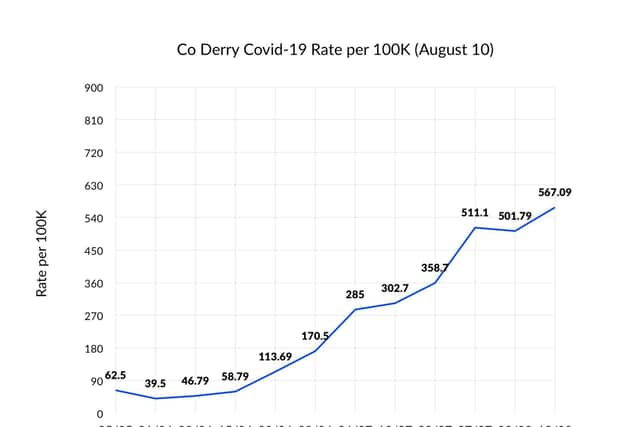
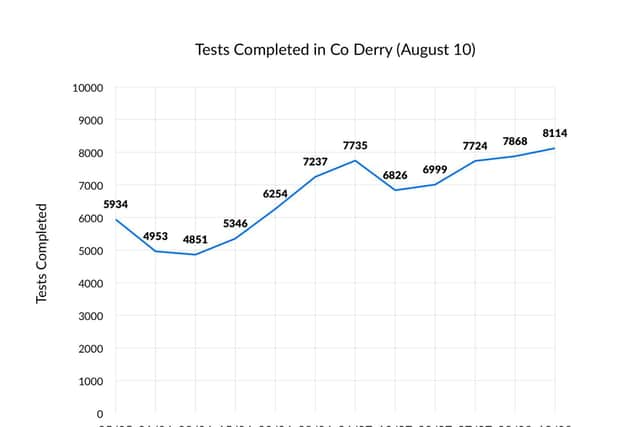
There was a further rise in the number of Covid-19 cases identified in County Derry over the past seven days, but the number of inpatients has taken a slight dip.
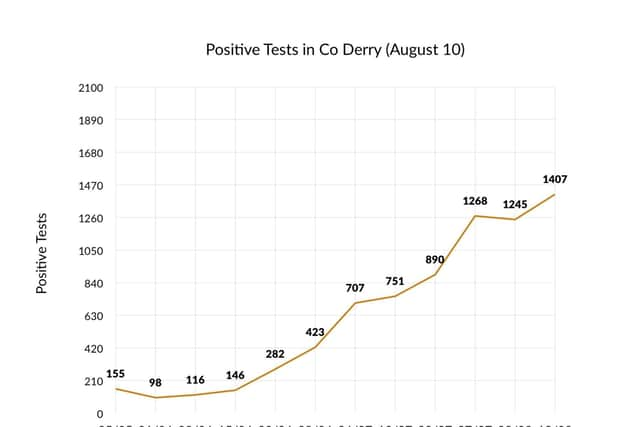
All but one of the county's postal areas experienced an increase, with Magherafelt (BT45) the exception, recording a 10% decrease in comparison to the previous week.
The largest increases were found in Garvagh (BT51) and Coleraine (BT52), where 43.6% and 45.3% increases were recorded respectively.
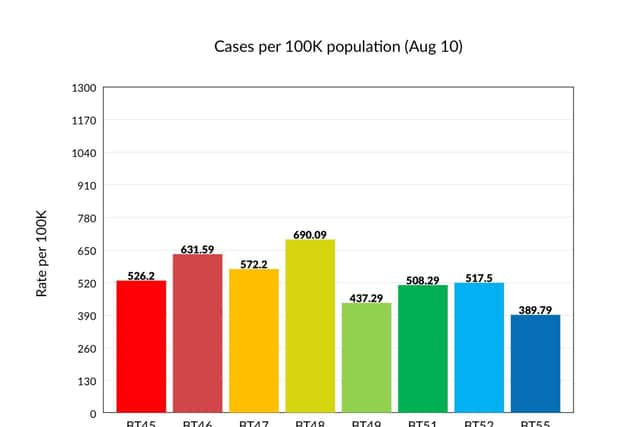
Derry's only other area inside the NI top ten is Maghera (BT46), which recorded a figure of 631.6, while the county's lowest rate was recorded in Portstewart (BT55) at 389.8.
There have been nine further Covid-related deaths across County Derry's three local government districts, a reduction of one from last week's figure of ten.
Five of the deaths came in Derry City and Strabane, with three more in Mid Ulster and one in the Causeway Coast and Glens area.
The number of new Covid inpatients admitted to the area's hospitals over the last seven days has also decreased in comparison to the previous week.
An increase of ten was recorded at Antrim Area Hospital, with the number rising from 18 to 28, while Causeway admitted an extra three inpatients, taking their current figure from six to nine.
The total number of Covid inpatients across Altnagelvin, Antrim Area, Mid Ulster and Causeway Hospitals rose from 64 the previous week to 75 this week.
Meanwhile, NI's Chief Scientific Adivser, Prof Ian Young, has said the benefits of the Covid-19 vaccine are 'indisputable'.
“Back in December last year, for every 1000 cases of COVID-19 in NI, around 80 were admitted to hospital here.
“Now it’s in the region of 22 hospitalisations per 1000 cases,” he said.
“That’s a dramatic reduction. Clearly, the vaccination programme has made a significant difference. Its benefits are indisputable.
“I would again encourage anyone who has not been vaccinated to get the jab. This will help us get through the current surge in cases and any further surges in the autumn and winter.
“The more we increase our take-up rate, the more we will be able to move forward.”
The Department of Health is also today publishing a COVID-19 fact-file, bringing together already published materials debunking anti-vaccination myths.
It will be circulated online, complementing ongoing vaccination messages via TV and radio advertising and social media/digital channels.
A UK-wide social media push, encouraging younger people not to miss out on the benefits of vaccination, will also cover Northern Ireland.
“I have seen some people questioning the effectiveness of vaccines because the virus is still circulating and some vaccinated people are still getting it.
“This argument is entirely misplaced,” added Professor Young.
“The truth is that while vaccination does not entirely eradicate the COVID risk, it reduces it substantially.
“It cuts your risk of getting seriously ill or dying from the virus by around 95% and it reduces your risk of catching or spreading it.
“Getting jabbed makes it less likely you will get infected. And if you still do, it will be less likely that you get seriously ill with the virus, or will pass it on to others.”