

Derry mothers lodge complaint over handling of domestic abuse cases
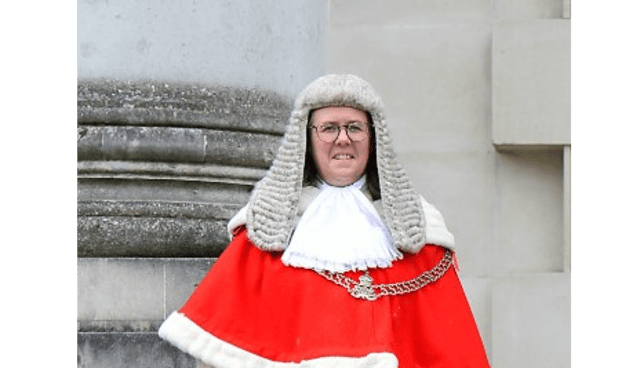

Two Derry mothers have submitted a complaint to the Judicial Appointments and Conduct Ombudsman (JACO) regarding the handling of domestic abuse cases within the North’s judicial system.
JACO is the body which investigates complaints about the judicial conduct investigations process and the judicial appointments process.
The women who wished to remain anonymous out of fear and concern for their safety and the safety of their children, are members of ‘Protective Mothers NI’ - a group of women protesting against what they describe as “Family Court injustices”.
‘Protective Mothers NI’ staged a protest outside Belfast High Court on May 8 calling for reform of the Family Court system.
Speaking to The Derry News, the two mothers said judges are prioritising maintaining contact between children and abusive parents, even when clear evidence of harm or risk is presented.
“The decision-making process appears to be heavily weighted toward facilitating contact, rather than prioritising the safety and well-being of the children involved. This has led to cases where children are placed in situations where they are exposed to further harm,” one of them said.
Their JACO complaint focused on how domestic violence cases are handled in Family Court.
Their concerns stemmed from the procedural handling of such cases.
“We also believe there is a broader failing within Family Court to adequately consider the dynamics of domestic abuse in judicial decision making,” she said.
“We have attempted to address these issues through multiple communications with the office of Lady Chief Justice Dame Siobhan Keegan, but have received no response, which has led to a sense of frustration and abandonment for those affected by this issue,” she added.
“Domestic abuse encompasses a wide range of behaviours, including physical, psychological, emotional, financial, and coercive control. These cases require judges to not only assess evidence but also to understand the nuanced, often hidden, patterns of abuse that victims experience.
“However, there is widespread concern that judges are not sufficiently attuned to the complexity of domestic abuse or the broader dynamics of power and control that underpin it.”
According to the mother, a number of issues have emerged from legal professionals, support organisations and victims and survivors, including limited understanding of coercive control and non-physical abuse.
“While physical abuse is often recognised in court proceedings, other forms of abuse, such as psychological abuse, coercive control, and financial manipulation, are not given equal weight,” she said.
“This gap in understanding leads to skewed decision-making, where the experiences of victims and survivors of ongoing, invisible abuse are overlooked. Judges fail to recognise coercive control as a significant factor, resulting in an inadequate protection framework for victims.
“Critical evidence, such as corroborative testimonies, expert reports, or documented patterns of behaviour, have been dismissed or inadequately considered.
“Such evidence often highlights the escalating nature of abuse and the long term risks victims and survivors face.
“This lack of attention to comprehensive evidence not only undermines the victim’s case but also jeopardises their safety and that of their children,” said the second mother, who added that the legal process itself “often re-traumatises victims, especially when judges fail to adopt an approach that is sensitive to the psychological and emotional toll of domestic abuse”.
She highlighted the fact victims and survivors repeatedly asked to recount traumatic experiences in a setting that lacks sufficient support mechanisms, can feel silenced, disbelieved, or dismissed.
“This process exacerbates the very harm the legal system is intended to address,” she added.
“The challenges in handling domestic abuse cases are particularly acute within the Family Court system, where decisions regarding child custody and welfare are of paramount importance.
“Judges are tasked with making decisions that will have lifelong implications for victims and survivors and their children, yet several patterns indicate systemic failures in protecting victims and children.
“Legal representatives, victims themselves, have reported instances where judicial decisions appear to be influenced by a judge’s temperament or mood.
“Statements such as, ‘The judge will not want to hear that’ or ‘The judge is in a bad mood today’ are disconcertingly common.
These remarks suggest that judicial temperament may be influencing decisions in ways that are inconsistent with fair and impartial adjudication,” she said.
The mother said she felt another critical failure in Family Court has been the insufficient emphasis placed on the safety of victims and survivors.
“I am thinking particularly about situations involving allegations of ongoing coercive control,” she added.
“Victims and survivors report feeling compelled to make concessions or take undertakings, as they fear that the court will not grant them the protection they need if they continue to assert their case.
“This approach undermines the ability of victims and survivors to assert their rights and secure adequate protection from further harm.
“Victims of stalking and harassment are often pressured into accepting undertakings instead of being granted the protection of a non-molestation order. This is particularly concerning in cases where there is a clear history of ongoing abuse.
“Victims and survivors have been advised by legal representatives that the judge is unlikely to grant a non-molestation order, especially when the judge is described as being ‘in bad form’ or ‘saying no to every non-molestation order being granted today’. This has created a climate in which victims feel coerced into accepting undertakings, even though these do not offer the level of protection or justice to which they are entitled,” she said.
Despite the established procedures for lodging complaints about judicial conduct, the attempts by the two mothers have been met with “silence”.
They said they had made “multiple submissions” to the Lady Chief Justice’s office.
“The failure to engage with such complaints suggests a wider systemic issue regarding accountability within the judiciary, particularly when it comes to addressing issues as critical as the safety and well-being of vulnerable victims and children,” said the first mother.
To address the systemic issues outlined both women have called for an independent investigation into judicial practices, by the Judicial Appointments and Conduct Ombudsman, in terms of the judicial handling of domestic abuse cases, particularly in the family court system.
“This investigation should consider patterns of judicial decision-making, the adequacy of training on domestic abuse, and the ways in which evidence, particularly regarding coercive control, is treated,” they said.
“It is essential that all judges, particularly those involved in family law and domestic abuse cases, undergo mandatory, in-depth training on the dynamics of domestic abuse,” they added.
“This training should focus on recognising and addressing both physical and non-physical forms of abuse, understanding trauma, and developing sensitivity to the needs of victims.
“Family courts should also adopt a more victim centered approach, ensuring that judicial decisions are based on a comprehensive understanding of the safety needs of victims and children.
“This includes revisiting custody and contact decisions to ensure that the safety of children is the paramount consideration, with robust safeguards in place to prevent further harm.
“A clear and transparent mechanism for addressing complaints about judicial conduct must be established.
“This includes ensuring that complaints are not only acknowledged but investigated thoroughly, with appropriate follow-up and outcomes that restore confidence in the judicial system,” said the mothers, adding: “The failure to adequately address domestic abuse within the judicial system in Northern Ireland is a matter of grave concern.
“The safety of victims and children must be the highest priority, and the judiciary must be held accountable for decisions that perpetuate harm. The absence of meaningful response to these concerns has only heightened the urgency of this issue.
Judges are responsible for making life-altering decisions that directly affect victims' safety and futures. Yet, when these decisions are influenced by a judge’s personal mood or temperament, such as a judge being ‘in a bad mood’, the very foundation of justice is undermined.
“Victims are left vulnerable, their lives at the mercy of a system that appears arbitrary and unreliable. How can this be just, when the lives of victims depend on the emotional state of a judge, rather than on fair and consistent application of the law?”
A spokesperson for the Lady Chief Justice told The Derry News: “Outside her role as an appellate judge, when matters come before her for determination, it is not appropriate for the Lady Chief Justice or her office to comment or express any opinion on individual cases.
“The Lady Chief Justice recognises the impact that family law cases can have on the parties involved, however she is satisfied that the judiciary take their role in the family courts extremely seriously ensuring all matters are dealt with in a fair and impartial way, with the welfare of the child(ren) paramount to any decisions made.
“Matters before the family courts, and appeals from decisions of the family courts, will depend on the specific circumstances that pertain to that case and are decided in accordance with relevant statute and case law.
“The Judiciary are aware of the devastating impact on families experiencing domestic abuse and want to ensure complainants who have suffered domestic abuse are heard, supported and have access to the full suite of special measures and orders which the court can provide to ensure the protection of them and their families.
“Within the court system, the judiciary are committed to continuing to ensure that cases involving domestic abuse are treated with sensitivity and that appropriate support measures are in place.”