Search


12 Mar 2026
Search
12 Mar 2026

Please allow ads as they help fund our trusted local news content.
Kindly add us to your ad blocker whitelist.
If you want further access to Ireland's best local journalism, consider contributing and/or subscribing to our free daily Newsletter .
Support our mission and join our community now.
To continue reading this article, you can subscribe for as little as €0.50 per week which will also give you access to all of our premium content and archived articles!
Alternatively, you can pay €0.50 per article, capped at €1 per day.
Thank you for supporting Ireland's best local journalism!


A £14,000 pay increase has been recommended for Northern Ireland Assembly members.
The Independent Remuneration Board has proposed an uplift in salaries for MLAs from £53,000 to £67,200 per year, a rise of 26.8%, from April 1 2026.
MLA salaries are lower than those received by Members of the Scottish Parliament (£74,507), Assembly Members at the Welsh Assembly (£76,380), MPs (£93,904) and Members of the Irish Parliament (117,113 euros/£102,369).
However, in recognition of public frustration at recent collapses in devolved government “significant financial sanctions” are proposed if an Executive is not formed following an election, or if at any time the offices of First Minister and deputy First Minister become vacant.
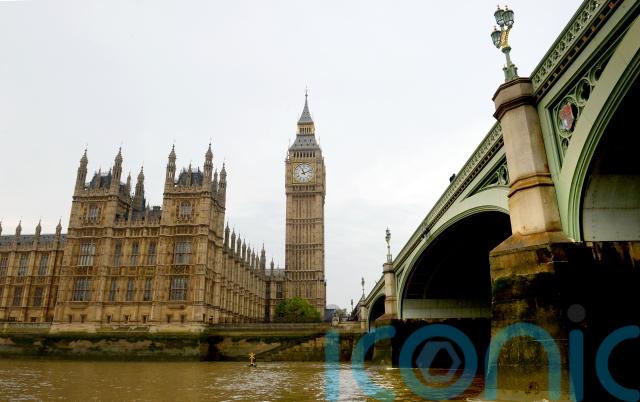
These include a reduction of 10% to MLA salaries after six weeks and again at weeks 12 and 18 – if a government had not been formed in line with the Northern Ireland Act 1998 which allows six months for its formation.
Board chairman Alan Lowry said they aim to ensure public money is spent with accountability.
“The board’s objectives are to provide MLAs with a level of remuneration which fairly reflects the complexity and importance of their work and does not deter anyone from seeking election on financial grounds,” he said.
“Our MLAs are elected to demanding roles which they perform within their own constituencies and at Parliament Buildings. They make important decisions around legislation, holding ministers and departments to account and their work on the Assembly’s scrutiny committees. It is important this work, as well as representing the views and concerns of their constituents, is recognised and valued.
“It is not appropriate, or fair, to expect MLAs to set their own salaries and the board operates completely independently of the Assembly and the Assembly Commission.
“We want to ensure that public money is spent with probity, accountability, value for money and transparency. We have made this draft determination having regard to the current financial circumstances in Northern Ireland.”
He added that in making their determination they took into account the current salaries of elected representatives in the Scottish and Welsh parliaments as well as those in Westminster and Dublin.
“Between 2016-25, an MP’s salary went up by 25%, while Members of the Welsh Senedd, Scottish Parliament and Irish Dail saw increases of 19%, 23% and 34% respectively. In the same period, MLA pay increased significantly less, by 8%,” he said.
“With the previous Independent Financial Review Panel last making a determination in 2016, it is clear the system of MLA pay has not been functioning normally for a decade.
“Today’s announcement is a corrective measure and, without prejudicing future determinations, the board would expect those to be considerably smaller adjustments, and more in line with inflationary and other pay trends of the day.”
In relation to the sanction mechanism, Mr Lowry said that in the past when the Northern Ireland Secretary has “made determinations and reductions it’s been quite an onerous process”.
“What we’ve sought to do in our determination is to safeguard that and make sure that we have those in writing,” he said.
“It’s as much of an encouragement as a deterrent, because we all want to see devolved government succeed.
“I think we all want to champion Northern Ireland and make sure that we’re doing the best we can and to do that, we need government, we need good governance, and we need good legislation.
“So it’s as much an encouragement for the MLAs as much as anything else.”
Asked if the board had any mechanism to adjudicate if recruitment quality or retention of MLAs would improve as a result of the pay rise, Mr Lowry said, “we don’t have any say in who the MLAs are”, adding “that’s up to the voting public”.
“What we as a board need to ensure is that we’re making sure they’re remunerated for the job that they’re being voted to do,” he said.
There will be a two-week consultation on the proposals which closes on March 5, after which the board will present a final determination to the Assembly Commission.
It is the first draft determination by the new board which was established last year, and replaced the previous Independent Financial Review Panel which had been defunct for a number of years.
It is responsible for setting the salaries and pensions of Stormont MLAs.

Subscribe or register today to discover more from DonegalLive.ie
Buy the e-paper of the Donegal Democrat, Donegal People's Press, Donegal Post and Inish Times here for instant access to Donegal's premier news titles.
Keep up with the latest news from Donegal with our daily newsletter featuring the most important stories of the day delivered to your inbox every evening at 5pm.

This publication supports the work of the Press Council of Ireland and Office of the Press Ombudsman, and our staff operate within the Code of Practice of the Press Council. You can obtain a copy of the Code, or contact the Council, at www.presscouncil.ie, Lo-call 1800 208 080 or email: info@presscouncil.ie.