Search


12 Mar 2026
Search
12 Mar 2026

Please allow ads as they help fund our trusted local news content.
Kindly add us to your ad blocker whitelist.
If you want further access to Ireland's best local journalism, consider contributing and/or subscribing to our free daily Newsletter .
Support our mission and join our community now.
To continue reading this article, you can subscribe for as little as €0.50 per week which will also give you access to all of our premium content and archived articles!
Alternatively, you can pay €0.50 per article, capped at €1 per day.
Thank you for supporting Ireland's best local journalism!


A boost from the Treasury is a “de facto bailout” that “masks deeper fiscal strain” in Stormont’s budgetary situation, a fiscal watchdog has said.
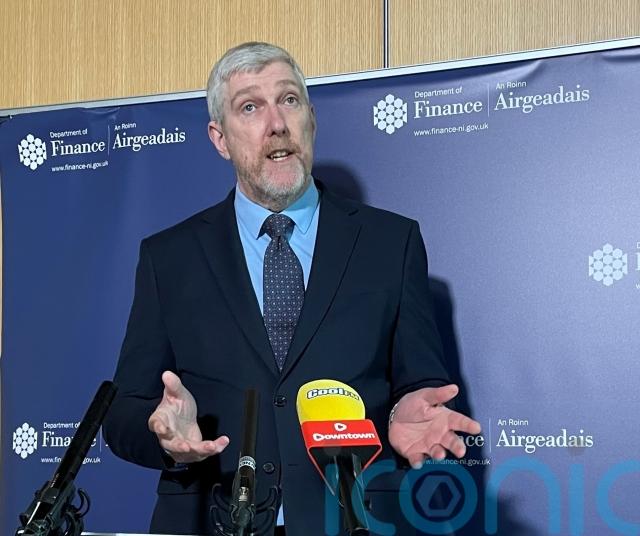
The NI Fiscal Council has published its assessment of Finance Minister John O’Dowd’s multi-year budget, and warns the Executive needs to “address the underlying causes of overspending”.
NI departments are on course to overspend their budgets again this year by almost £460 million, but the UK Treasury has agreed to provide a loan of £400 million from its reserve, to be repaid over three years.
The Fiscal Council has said this support “reduces, but does not remove, the cliff-edge reduction in real funding for public services in 2026-27”.
Its analysis claims: “The Treasury loan acts as a de facto bailout. By offering substantial assistance without any significant conditionality, the Treasury risks signalling that similar interventions are likely to be available in future years.
“This could dull the Executive’s incentive to take difficult fiscal decisions on revenue, the size of the public sector workforce and the sustainability of pay parity with Great Britain.
“Health and education will enter 2026-27 with opening budget allocations that are lower than the amounts they expect to spend this year despite these departments being responsible for this year’s overspend.”
It has further analysed that public sector pay remains the dominant structural pressure, as NI’s comparatively large public sector workforce means that when the UK Government increases spending to deliver a particular percentage pay deal in England, the block grant does not rise sufficiently to finance the same deal in NI.
The body predicts rising pay settlements, overspend recovery and restricted flexibility due to earmarked funding heighten the likelihood of renewed overspending in the next budget period.
The draft budget has not been accepted by Mr O’Dowd’s colleagues in the Executive, with DUP leader Gavin Robinson having said there is no point agreeing to a budget which “doesn’t work”, just because it lasts for three years.
The Fiscal Council has acknowledged the budget is therefore “unlikely to unfold as presented”, but it warns it is not clear there is “an alternative configuration of the available resources that would command widespread support”.
The body concludes there is a significant risk that no budget will be agreed before the new financial year.
Sir Robert Chote, chairman of the council, said the Treasury loan “has softened what would otherwise have been a much steeper fall in real spending power next year”.
He added: “But repeated exceptional support risks making such interventions appear routine rather than exceptional and may reduce the incentive to address the underlying causes of overspending.”

Subscribe or register today to discover more from DonegalLive.ie
Buy the e-paper of the Donegal Democrat, Donegal People's Press, Donegal Post and Inish Times here for instant access to Donegal's premier news titles.
Keep up with the latest news from Donegal with our daily newsletter featuring the most important stories of the day delivered to your inbox every evening at 5pm.

This publication supports the work of the Press Council of Ireland and Office of the Press Ombudsman, and our staff operate within the Code of Practice of the Press Council. You can obtain a copy of the Code, or contact the Council, at www.presscouncil.ie, Lo-call 1800 208 080 or email: info@presscouncil.ie.