Search


12 Mar 2026
Search
12 Mar 2026

Please allow ads as they help fund our trusted local news content.
Kindly add us to your ad blocker whitelist.
If you want further access to Ireland's best local journalism, consider contributing and/or subscribing to our free daily Newsletter .
Support our mission and join our community now.
To continue reading this article, you can subscribe for as little as €0.50 per week which will also give you access to all of our premium content and archived articles!
Alternatively, you can pay €0.50 per article, capped at €1 per day.
Thank you for supporting Ireland's best local journalism!


Stormont’s main parties remain at loggerheads over proposals for a new multi-year budget after the Finance Minister published his version of the spending plan.
John O’Dowd’s move to initiate an eight-week public consultation exercise on a draft budget came amid an ongoing disagreement within the powersharing administration on how funds will be allocated to individual departments.
The Sinn Fein minister urged Executive colleagues to engage with his proposals in a “constructive manner” and keep their “eyes on the prize” of setting a multi-year budget – something Stormont has been unable to do for more than 10 years.
However, in a signal of how far apart the two lead Executive parties remain on the issue, the DUP rejected the draft spending plan as “deeply flawed” and in need of “significant changes”.
DUP Education minister Paul Givan said Sinn Fein had to travel a “long road away” from the current plan if his party was to consider backing it.
Mr O’Dowd outlined a three-year budget for day-to-day resource spending and a four-year budget for capital investment in infrastructure projects.
It will see £26 billion spent on health provision across the coming three years, including almost £500 million on initiatives to tackle the region’s lengthy waiting lists.
The budget also will see £10 billion allocated to education while the costs for a plan to increase police officer numbers in the region will also be fully covered, as will the compensation bill for officers whose details were made public in a major data breach by the Police Service of Northern Ireland in 2023.
Mr O’Dowd has also earmarked more than £1 billion across the coming four years to fund the upgrade of the A5 transport corridor – a troubled project that is currently stalled as a result of a legal challenge.
The minister is also proposing more than £100 million for the long-delayed redevelopment of the Casement Park GAA ground in west Belfast.
That is significantly more than the £62.5 million the Executive originally ringfenced for the project in 2011, with Mr O’Dowd applying an uplift based on an estimate of construction cost inflation in the intervening years.
The plan also allocates around £67 million to the sub regional stadia programme to upgrade and improve smaller stadiums and sporting venues across Northern Ireland – a sum that has also been enhanced with an inflationary uplift.
The draft budget includes £442 million for building social homes and £434 million to address some of the capacity issues with Northern Ireland’s outdated water and wastewater infrastructure systems.
A total of £24 million has been allocated for capital building projects within the special needs education sector.
On rates bills, the budget proposes a 5% increase on the domestic regional rate in each of the next three years, with a 3% year on year increase to the non-domestic region rate – uplifts that will generate an additional £250 million.
Across the budget period, the next financial year is set to be the most challenging for Stormont departments, as it will see the smallest overall increase in funding from the previous year (0.8%).
That increase does also not account for any potential overspend of this year’s budget.
The overspend, if there is one, will only be factored in at the end of the current financial year but Mr O’Dowd recently warned that departments were collectively overcommitted to the tune of almost £400 million.
Any overspend would need to be taken off next year’s allocation – so Stormont could ultimately be dealing with a lower baseline next year than it had in 2025/26.
Under Mr O‘Dowd’s current plan, without an overspend factored in, only four departments would receive an uplift in 2026/27 – Health, Education, Justice and Infrastructure – while two would see their baseline drop – Agriculture, Environment and Rural Affairs (Daera) and Finance.
All departments are in line for a funding increase in 2027/28.
Responding to criticism of his draft plan, Mr O’Dowd challenged the other three Executive parties – DUP, Alliance and Ulster Unionists – to present alternatives.
“I look forward to hearing other parties’ alternatives,” he said.
“We’re now at that stage of the discussions on the engagements where there’s no point in saying to someone else ‘your proposals are flawed’ – let’s see your proposals. And I say this to the DUP, and I say it to other parties, and I say to the general public as well, let’s hear your proposal. I’m in listening mode.
“I have set forward a paper today, which I believe is a way forward. If others have proposals on alternative proposals, be assured I’m in listening mode, and I’ll sit down with other ministers, other parties, and engage in a constructive manner so we can bring forward a final budget by the 1st of April, because we have to keep our eyes on the prize.
“The prize is a three-year budget. That three-year budget will allow us to transform our public services moving forward.
“There’s no question, (there are) huge financial constraints imposed upon us by successive British governments, but we still have a responsibility to lead.”
The minister denied he was trying to force the hand of other parties by pressing ahead with the public consultation exercise.
“I have a statutory obligation to consult on the budget,” he said.
“And when you work your way back from the 1st of April, I’m proposing an eight-week consultation, which will allow the Executive time to consider the consultation responses and bring forward a budget in the time for the 1st of April.
“So I’m not trying to force anybody’s hand. I am working on a statutory timeframe.”
He added: “I firmly believe that each of the Executive parties want to see a multi-year budget. There are huge challenges in it.
“And I think even if we were a single party government, we would have huge challenges, or I would have huge challenges as a Finance Minister trying to deliver the budget in the constrained financial terms we’re dealing with.
“But we are leaders, and we have to lead. And I intend to use my role as Finance Minister to lead on this subject.”
Mr O’Dowd said he remained confident that agreement could be reached around the Executive table.
“Solo runs aren’t going to resolve any of the issues that we face collectively, so we have to work in a partnership way,” he said.
“We have to work collectively, and we’re going to have to reach an agreement on this budget, because our public services, our economy, our people, rely on it.
“So let’s keep focused on the goal, and I believe we’ll be able to achieve it.”
The DUP made clear it did not support Mr O’Dowd’s plans.
“The DUP will not accept a budget that fails to properly prioritise frontline services, particularly education, while wasteful and unnecessary spending continues elsewhere,” said a party statement.
“The Finance Minister must return with proposals that put essential public services first, ensure taxpayers’ money is used efficiently, and deliver for families and communities across Northern Ireland.”
Mr Givan later described the proposals as “fundamentally flawed”.
In respect of his own department, he said the budget had not allocated enough to the special educational needs sector or to a childcare subsidy scheme.
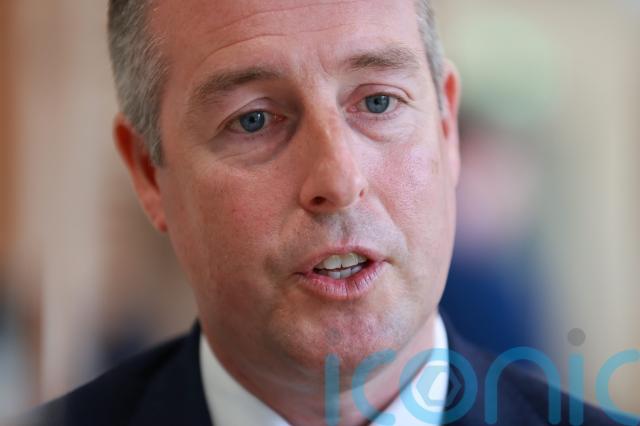
He said the proposals did also not acknowledge the pressures created by the need to fund annual pay awards for teaching staff.
“The plans lack credibility because they are Sinn Fein’s budget,” he said.
“It isn’t an Executive-agreed draft budget, and I think that then does undermine its credibility.
“Public consultation can take place on the Sinn Fein budget over the next eight weeks, but the real budget, and the most important one, will have to be agreed by the Executive at the end of March, and that’s where my focus and the party’s focus will be in terms of trying to reach an agreement.
“But the Sinn Fein budget doesn’t cut it. It didn’t cut it before Christmas, and it doesn’t cut it now in the new year.
“John O’Dowd has said that he is in listening mode. Well, I hope that’s true, because he wasn’t listening before Christmas, and obviously he decided unilaterally to take this action.
“But, nevertheless, despite the DUP not being in a position where we would support this for a number of different reasons, I’ll engage with colleagues in good faith to try and reach an agreed position, but that will necessitate Sinn Fein travelling a long road away from the John O’Dowd budget that was published today.”
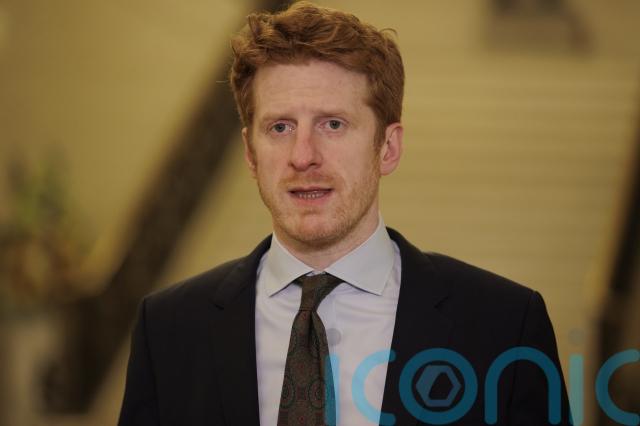
Leader of Stormont’s opposition, SDLP MLA Matthew O’Toole branded the plan an “unambitious ghost budget, bereft of vision”.
He described the proposals as a “shabby attempt” to cover for the failure of ministers to agree a “proper multi-year budget”.
“Before Christmas, the Finance Minister gave the impression that an ambitious multi-year budget to deal with the multitude of challenges facing our public services was on the way,” he said.
“Indeed, a multi-year budget has been promised as key to unlocking real change for our people.
“Today’s document isn’t just a let-down, it’s an unambitious ghost budget bereft of vision.
“Rather than setting out a plan to transform services and improve people’s lives, it has a few pages of text blaming others and then tables setting out essentially more status quo.”
He added: “The minister has published his plan today without Executive agreement amid much speculation that no agreement will be forthcoming.
“This is the latest attempt by this do nothing Executive to hoodwink the public into believing that they are doing something, while all they are delivering is more of the same.”

Subscribe or register today to discover more from DonegalLive.ie
Buy the e-paper of the Donegal Democrat, Donegal People's Press, Donegal Post and Inish Times here for instant access to Donegal's premier news titles.
Keep up with the latest news from Donegal with our daily newsletter featuring the most important stories of the day delivered to your inbox every evening at 5pm.

This publication supports the work of the Press Council of Ireland and Office of the Press Ombudsman, and our staff operate within the Code of Practice of the Press Council. You can obtain a copy of the Code, or contact the Council, at www.presscouncil.ie, Lo-call 1800 208 080 or email: info@presscouncil.ie.