Search


02 Apr 2026
Search
02 Apr 2026

Please allow ads as they help fund our trusted local news content.
Kindly add us to your ad blocker whitelist.
If you want further access to Ireland's best local journalism, consider contributing and/or subscribing to our free daily Newsletter .
Support our mission and join our community now.
To continue reading this article, you can subscribe for as little as €0.50 per week which will also give you access to all of our premium content and archived articles!
Alternatively, you can pay €0.50 per article, capped at €1 per day.
Thank you for supporting Ireland's best local journalism!

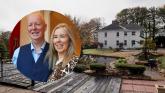
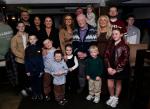
Derry News journalist Catherine McGinty at Catholic Chaplaincy, UU, Magee event 'Faith Lives' conversation with Richard Moore. From left: Katherine Shaw (Chaplaincy) and Fr Patrick Lagan (Chaplain).

Well known Derry man Richard Moore was the inaugural speaker in the ‘Faith Lives’ series of lunchtime conversations hosted by the Catholic Chaplaincy at Ulster University, Magee.
Welcoming Mr Moore and the audience to the event on Wednesday, Chaplain Fr Patrick Lagan, described the Children in Crossfire CEO as having a “very powerful story to tell about the witness of faith in his life”.
Born and raised in Creggan, Mr Moore was left blind at the age of ten when he was shot in the face by a rubber bullet fired by a British soldier, Captain Charles Inness. On the fateful day, Thursday, May 4, 1972, Mr Moore had been running out of Rosemount Primary School with his classmates. It was hometime and they were all going to play a game of football.
Explaining how faith and the faith community in which he was reared shaped him, Mr Moore credited the response of his family and community, and people farther afield, to his sight loss, for helping him to cope with what had happened.
“When I lost my eyesight in such a traumatic way, in such a terrible way, it was a real challenge for me but it was also a challenge for my parents and my family,” said Mr Moore.
“There were a lot of responses to that from my family, from the community, and further afield which I relied on to help me cope with what actually happened.
“I did bounce back quite well from being shot and blinded,” he added. “I never look back on my childhood as a traumatic one and that might sound strange for somebody who basically lost his eyesight overnight.
“I often ask myself, ‘Why was that? How is it possible for a 10-year-old boy who lost his eyesight
t in such a traumatic way, to bounce back the way I did and have the life I have had up to now, which is a very happy and contented life?’
“I think it is down to a number of things. I come from a good family. I come from a good community. And, despite the poverty and the challenges which existed in Northern Ireland back in those days, I still had opportunities available to me.
“But, it is more than that and I honestly think faith played a big part in helping my parents cope with what happened. Many’s a time my mother talked about when she was going through the most difficult times, and they were very difficult times for her, she went and sat in the chapel in Creggan and that is where she got her strength from. Strength from prayer. Strength from her conversations with God. And also, the support she got from that faith community.
“For me, I have never taken for granted the blessed position I was in. I am a very lucky and a very blessed person to be able to cope with what happened and I boil it down to the fact faith played a big part in my life too.
“My mammy’s prayers were I would get my eyesight back. She always prayed for that and I honestly, genuinely believe that I got a hell of a lot more back. I think my mammy's prayers were answered in a way that she never, ever envisaged.
“You can't take away the power of prayer. You can't take away the power of that faith my mammy had and imparted to me and the rest of the family, let alone the whole forgiveness thing,” he added.
“All of that played a part in my life and played a part in our house. That whole presence of faith, presence of hope the faith gave my mammy and daddy and the rest of the family, and the strength that I have really, the spirit that I have was very much entrenched in our faith.”
Remarkably, Mr Moore said after losing his sight, he “learned to see life in a different way” because he did not want to let being blind dominate his whole sense of joy and happiness, especially around his children and grandchildren.
“I just have to learn to look at the things I can do, not what I can't do,” he said stoically.
Turning to the soldier who shot him, Mr Moore said he was very fond of Charles Inness with whom he is now good friends.
“How did that come about? Well, the single most significant thing in my life was being shot and blinded,” he said.
“The person I am, the work I do, the life I have led, the challenges that I have met, and the happy things that have happened to me, have all come about as a result of being blind.
“So, when you peel everything back, there are only two people involved and that's me and the person that fired the rubber bullet. So I have always felt I was in a relationship with somebody who played a big part in my life and I didn't know who they were, didn’t know anything about them.
“I was always curious about the soldier. I was curious about whether he ever thought about me. I was curious about the type of person he was. And I also wondered, was he depressed because of what he had done to me? Was he feeling bad about what he had done to me?
“And I wouldn't want him feeling bad about that because I have had a happy life. I have my own logic as well. Some people do things that they may live to regret for the rest of their lives and I often wondered did Charles, the soldier, regret what happened.
“I wanted him to know there was no animosity on my side. I wanted to meet him. I wanted to meet this person who played a big role in my life and eventually, after 33 years, I found out his name and then it was organised for me to go and meet him over in Scotland,” said Moore who admitted he had had some misgivings before the meeting.

“I felt guilty about the other victims of The Troubles,” he recalled, “the Bloody Sunday families, for example. You know, my own uncle [Gerard McKinney] was shot the other Bloody Sunday.
“I felt guilty about my own family, my mammy and daddy and my brothers and sisters. They had all gone through the mincer when I was shot, and they had to deal with it as well. I questioned if I was letting my own side down a bit by going to meet a British soldier.
“But, I wanted to do it and it was fantastic. I always say, it is one thing to forgive somebody. It is another thing to be able to tell them you forgive them and I would describe that as the fullness of forgiveness,” said Mr Moore, who also spoke about his celebrated friendship with the Dalai Lama and the work of the charity he founded “to give something back” - Children in Crossfire - which supports children in Tanzania and Ethiopia.
Summing up his faith in one word, Mr Moore said, “Hope”.
“I think faith provides hope. It provides direction. It provides a light. It provides support. When you have faith, I think you are in a very comfortable place.
“I genuinely believe I would not be the person I am today, I would not have had the life I have, and my family the same, if we had not got that faith and from that faith the hope they had for me and my future.”

Subscribe or register today to discover more from DonegalLive.ie
Buy the e-paper of the Donegal Democrat, Donegal People's Press, Donegal Post and Inish Times here for instant access to Donegal's premier news titles.
Keep up with the latest news from Donegal with our daily newsletter featuring the most important stories of the day delivered to your inbox every evening at 5pm.

This publication supports the work of the Press Council of Ireland and Office of the Press Ombudsman, and our staff operate within the Code of Practice of the Press Council. You can obtain a copy of the Code, or contact the Council, at www.presscouncil.ie, Lo-call 1800 208 080 or email: info@presscouncil.ie.