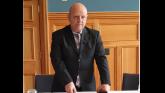
Human Rights activist Edwin Duggan launching campaign to have Jade's Law equivalent enacted in the North.
Search


17 Apr 2026

Please allow ads as they help fund our trusted local news content.
Kindly add us to your ad blocker whitelist.
If you want further access to Ireland's best local journalism, consider contributing and/or subscribing to our free daily Newsletter .
Support our mission and join our community now.
To continue reading this article, you can subscribe for as little as €0.50 per week which will also give you access to all of our premium content and archived articles!
Alternatively, you can pay €0.50 per article, capped at €1 per day.
Thank you for supporting Ireland's best local journalism!

Derry schoolgirl challenges Education Department’s allocation of RAISE funding.

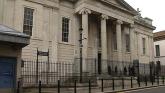
A Derry schoolgirl is one of two young people granted a judicial review challenging the selection methodology used by Education Minister Paul Givan to allocate funding. The students are also challenging Department of Education.
The girls’ legal team argued the criteria used discriminated against Catholics and girls.
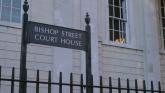
High Court judge Mr Justice Humphreys gave his decision on Wednesday, June 17, 2025 and the cases have been set for full hearing on the 8th and 9th September 2025.
The girls’ challenge relates to the objects of the RAISE [Raising Achievement in Integrated Schools and Education] Programme - an initiative which aims to raise achievement to reduce educational disadvantage.
Announced by Minister Givan in May 2024, the RAISE programme followed a report from an expert panel on educational underachievement in the North.
RAISE attracted criticism with some people claiming it failed to effectively address educational underachievement and had a lack of transparency in its targeting of schools.
Concern was voiced by principals that schools in deprived areas were being excluded from funding while others, including private fee-paying schools, were included.
The judicial review was sought on behalf of two school children, one from Derry and one from Derry.
It challenges the selection methodology used by the Minister for Education and Department of Education to identify locations, known as Specific Output Areas (SOAs) to which funding will be allocated.
Lawyers on behalf of the two students argued the methodology used meant those who have suffered the greatest educational disadvantage might not necessarily benefit.
The selection methodology selected a number of locations (Super Output Areas) which were not in the topmost deprived areas identified as objective levels of deprivation in education skills and training by NISRA (NI Statistics and Research Agency).
Lawyers for the Applicants said that the identification of some of these areas was discriminatory - discriminating against Catholics in urban areas, and against children actually suffering significant educational disadvantage.
The two Applicants also argued the overweighting criteria used in the RISE programme on the attainment of GCSE acted so as to discriminate against Catholics and girls.
The Department of Education has confirmed that funding will not be released prior to 30 the September 2025.

Nichola Harte, solicitor, acting for the two child Applicants, said: "This is an important legal challenge for all school children and across all areas of Northern Ireland.
“The purpose of the challenge is to ensure transparency in the selection process for funding purposes. Schools in Northern Ireland are in financial crisis at both primary and secondary levels.
“Any allocation of resources under the RAISE program must be fair, transparent. The High Court granted leave for careful judicial scrutiny of the methodology of the program is lawful."
The two Applicants are represented by solicitors Nichola Harte of Harte Coyle Collins, Solicitors & Advocates, Belfast, with senior barrister Karen Quinlivan KC and junior barrister Aidan McGowan BL.

Subscribe or register today to discover more from DonegalLive.ie
Buy the e-paper of the Donegal Democrat, Donegal People's Press, Donegal Post and Inish Times here for instant access to Donegal's premier news titles.
Keep up with the latest news from Donegal with our daily newsletter featuring the most important stories of the day delivered to your inbox every evening at 5pm.

This publication supports the work of the Press Council of Ireland and Office of the Press Ombudsman, and our staff operate within the Code of Practice of the Press Council. You can obtain a copy of the Code, or contact the Council, at www.presscouncil.ie, Lo-call 1800 208 080 or email: info@presscouncil.ie.