

'It is so important our children are heard'
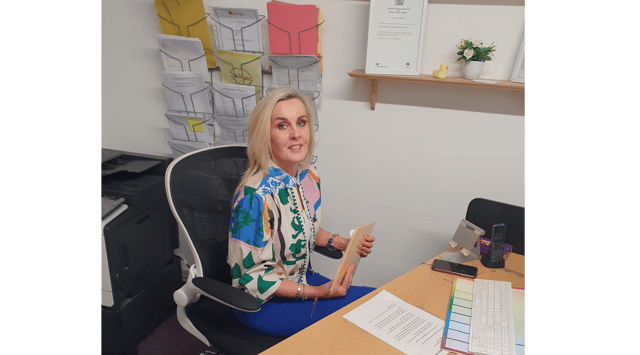

Donna Maria Bradley secures historic degree as her local charity faces closure
Derry woman Donna Maria Bradley has become the first person in the North to obtain a Master’s Degree in Parental Alienation Studies from the Institute of Family Therapy and Systematic Practice - Malta.
The founder and CEO of My Family Matters achieved a distinction in the process.
My Family Matters is a service for individuals and families experiencing domestic abuse, or who are separating, separated or divorced. It aims to promote a child-focused approach to achieve better outcomes for children.
Parental alienation occurs where one parent (the alienating parent) manipulates a child to unjustly fear, reject, or show contempt toward the other parent (the targeted parent). It is recognised by experts as a form of psychological abuse that damages the child’s relationship with a previously loved parent and can have long-lasting mental health consequences for the child.
However, in the midst of celebrating her academic success, Ms Bradley revealed she was also overseeing the organisation’s imminent closure, due to what she described as “prevalent” funding cuts.
Speaking to The Derry Journal in her Queen Street office, Ms Bradley said: “Unfortunately at this time we are at quite a crossroads. My Family Matters lost significant funding over the past couple of months. We have had to go on a reduced timetable. We are operating on our exit strategy so I don’t know what’s ahead.
“That is the regrettable sight happening [to many groups] right here in our city. My Family Matters is at the packing up stage. That is the sad reality when your own government doesn’t back you up,” she added.
“If My Family Matters is forced to close, we won’t be there to help families navigate the court process, to bring them into a place of balance or help them with their emotional regulation so they can present their cases. A lot of these parents are in trauma. They are grieving the bond between themselves and their child. It is a significant loss.
“They say to lift the phone, ring, get help, but if your government is not standing behind you, supporting you, not giving long-term funding, how can long-term plans be put into place for families and the children that are growing up.
“We are going to see intergenerational abuse spike and if the services are not there to meet the needs of families, to intervene earlier, then we are going to see an even more significant increase in poor mental health in children,” warned Ms Bradley.
“There are so many children growing up feeling abandoned and rejected when that wasn’t the case. They have been alienated. Yes, there are others that have witnessed domestic abuse and every form of abuse matters. What is important is that children are heard and when you are losing services right, left and centre, people have nowhere to turn,” she added.
Referencing her thesis ‘The thematic analysis on how court experts interpret the voice of the child in the context of parental alienation,a passionate Ms Bradley asserted the voice of the child mattered in many ways.
“The UK is so advanced, not only on alienating behaviours, but look at Jade’s Law [the withdrawal of parental rights from someone who murders a co-parent]. I know there is a huge campaign around that at the minute. It shouldn’t take a person to die for something to be done about it. I have lost parents because people weren’t listening,” she said.
It is important to note, Ms Bradley’s research findings reflect the professional experience of a small number of court experts. It is not intended to generalise the experiences of all families.
“All the data was anonymised,” she said, “and I am speaking on broad themes that emerged.
“Because the issues we were seeing here were directly related to assessments and evaluations in Family Court, I put a call out to court experts - social workers, independent social workers, family therapists and Guardian ad Litems,” she added.
“These court experts detailed how complex it actually was to interpret the ‘voice of the child’. It wasn’t straightforward, particularly when, it was being indicated in reports, the child had expressed the wish not to see mum or dad.
“A court-appointed official would go out, see the child with the parent they were ‘resisting’ and the child is coming in saying, ‘Love you’ and hugging and being all playful, so, the child’s expressed wishes contradicted their observed behaviours.
“Something else that came up was that the child's behaviour would be different depending on which parent they were with - what the child expressed, contradicted the observed behaviours with the other parent.
“There was also a huge reliance from the court experts carrying out these assessments on their observations, professional judgements and self-directed learning to inform the assessment. This was down to a lot of systemic constraints around thresholds and time,” said Ms Bradley.
“Say a judge ordered a report in so many weeks, what is not taken into consideration is maybe whoever is appointed to the case has 20 other family cases. They have to get out, speak to both parents, speak to other family members, and speak to the child on their own. They don’t have the time,” she added.
“Sometimes they only had eight hours to conduct and write a report. What is concerning about that is how much time are they really getting to spend with the child. Time constraints are putting pressure on them to conduct robust assessments.
“In addition, outcomes for children sometimes depended on the presiding judge or the strategies employed by the legal representatives. So, the reports submitted by court experts were not being evaluated on accuracy or ethical basis, but also on its defensibility in court.”