

Derry drivers urged to try 10-second tyre ‘birthday’ hack ahead of winter
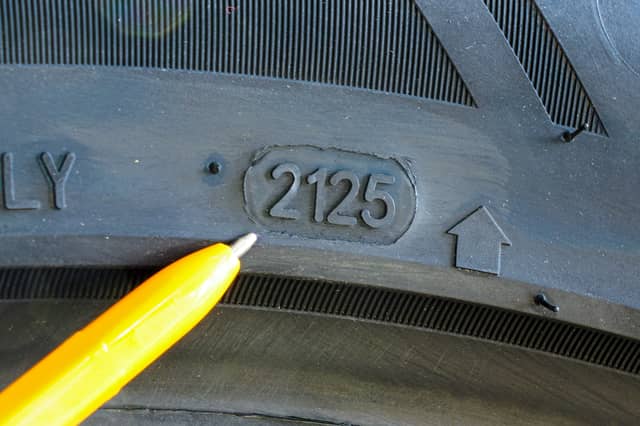

Motorists are being urged to check how old their tyres are ahead of the colder months, as experts reveal how a simple four-digit code shows when they were manufactured.
Car insurance experts at CompareNI.com are highlighting a quick tyre ‘birthday’ hack that helps drivers check when their tyres were made and assess whether they may need replacing.
As temperatures drop and wet weather sets in, now is the time for drivers to make sure their tyres are in good condition and ready to cope with potentially hazardous roads.
Under Irish law, drivers found with defective or worn tyres face a €80 fixed charge and two penalty points, rising to four points if convicted in court.*
Every tyre has a four-digit date code stamped on its sidewall, usually found at the end of the tyre identification markings.
The first two digits indicate the week the tyre was manufactured, while the last two show the year. For example, a tyre marked 3526 was manufactured in the 35th week of 2026, meaning it was made between late August and early September this year.
This simple check gives drivers an idea of how old their tyres are, even if the tread still looks in good condition.
A tyre’s average lifespan is three to five years, or 30,000 km to 50,000 km - front tyres usually wear out faster.** However, it will also depend on how they are driven and in what conditions.
In the National Car Test (NCT), tyres that are more than six years old will receive a ‘pass advisory’ note, warning the motorist of the potential risks of ageing rubber.***
Most tyres have built-in wear indicators - small raised bars in the grooves that show when the tread has worn down to the legal limit.****
If the tread is level with these bars, the tyre needs replacing. However, drivers should consider replacing them before they reach the legal minimum of 1.6mm, as deeper tread can help maintain grip on wet and slippery roads.
Cold temperatures can also cause tyre pressures to drop, so motorists should check them regularly when the tyres are cold and follow the manufacturer's recommended settings.
Ian Wilson, car insurance expert and Managing Director at CompareNI.com, said: “While many motorists know to check their tread depth, not everyone knows that the age of the tyre is also important when it comes to safety.
“Winter is when tyres are really put to the test, with wet and greasy roads meaning grip matters more than ever.
“Rubber hardens and cracks with age, no matter what the tread looks like, so a tyre can look fine and still be past its best.
“Checking the four-digit date code is a quick and easy way to find out a tyre’s ‘birthday’ and get a better idea of its age, helping drivers to catch issues before they become a problem.
“Worn or damaged tyres can lead to a fine and penalty points, so drivers are urged to check the code next time they are putting air in their tyres. It only takes a few seconds and could save drivers money and help them stay safer on the roads this winter.”
CompareNI’s top tips for checking tyres ahead of colder months:
1.Check your tyre ‘birthday’
Look for the four-digit date code on the sidewall of each tyre. The first two digits show the week of manufacture, while the last two indicate the year. Most manufacturers recommend replacing tyres every six to ten years, regardless of wear, as a precaution.*****
2.Check the tread depth
The legal minimum tread depth for cars is 1.6mm across the central three-quarters of the tyre, around its entire circumference. Drivers can check their tread depth by running a €1 coin along the centre of the wheel. If the gold part of the coin is visible, the tyre could be approaching the minimum legal depth so they should be checked.
3.Keep tyre pressures topped up
Cold temperatures can cause tyre pressures to drop, potentially affecting handling, braking and fuel efficiency. Check your tyre pressures regularly when the tyres are cold and follow the manufacturer's recommended settings - which can usually be found in the vehicle handbook or on a sticker inside the driver's door.
4.Check for damage
Inspect all four tyres for cuts, cracks, bulges or other signs of deterioration. Older tyres may be more prone to damage, so pay particular attention to their condition. If you spot anything unusual or are unsure whether a tyre is safe, seek advice from a tyre professional.
5.Adapt your driving to weather conditions
Even tyres in good condition can’t eliminate the risks posed by icy roads or heavy rain. In these conditions, make sure to reduce speed, leave a greater distance between your vehicle and the one in front – and brake, accelerate and steer smoothly to help maintain control.
6.Tyres on EVs tend to wear out faster
Tyres on EVs are estimated to wear out up to 20% faster, given the increased battery weight and instant torque of electric vehicles, so it’s good to be aware and check regularly, especially if this is your first EV.******
CompareNI.com helps drivers of all ages compare and find savings on car insurance.