

Talking Business with Deborah O'Donnell: How to sort out your tax bits!
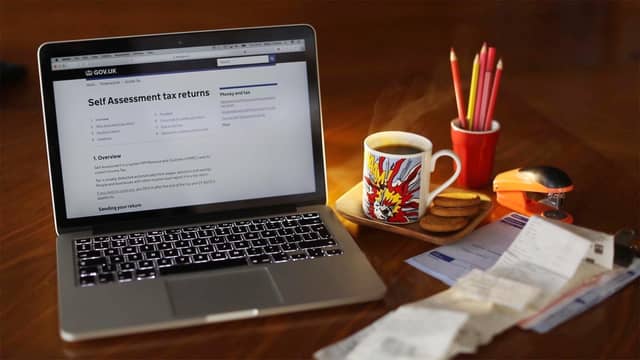

Time and time again I get asked the same questions. And I find it’s usually after a weekend when people have been chatting over a pint! So today I’ve included some answers to a few of the most
Frequently Asked Questions:
What does my tax code mean?
Your tax code appears on your payslips and your end of year P60. It is used by your employer or your pension provider to determine how much tax they should deduct from your pay. This is provided by HMRC so the right amount of tax is collected throughout the year, rather than you being hit with a big bill at the end of the year!
Tax codes usually start with a number and end with a letter e.g. 1150L is the tax code currently used for the 2017/18 tax year for those who only have one job or pension, therefore you have your full personal allowance of £11,500 to use before paying any tax.
It gets a bit complicated when you have other income that you haven’t paid tax on e.g. untaxed interest or income from a rental property. In this case, the income is estimated by HMRC and deducted from your personal allowance. The balance is treated as tax free income. However, it is possible to speak to HMRC and ask that you pay your tax at the end of the year with your self-assessment.
Why am I on an emergency tax code?
You may be put on an emergency tax code if you’ve started a new job, you start working as an employee after being self-employed, or you have more than one job. This happens as HMRC don’t know how much tax you have paid to date in the tax year.
If you are on an emergency tax code, your tax code may show 1150 W1/M1 or X.
HMRC have set up a system wherein everyone can go online and register to have a personal tax account to keep their details up to date. Otherwise you can phone HMRC to review your tax code. Once you phone HMRC and review your tax code position with them, they will then issue a new tax code meaning any refund will be added to your wages and paid out by your employer. Alternatively, if it is towards the end of year and you have already received your final pay from your employer, HMRC will issue the refund direct to you.
How many holidays am I entitled to?
Almost all workers are legally entitled to 5.6 weeks paid holidays per year i.e. 28 days for workers who work a 5 days a week. Your employer may include bank holidays as part of your statutory leave.
Things get a bit more complicated when you work part time. If you work part time and work set days e.g. 3 days per week, your leave is also calculated by multiplying 3 by 5.6, therefore your entitlement is 16.8 days of annual leave. However, for those working irregular hours, entitlement is calculated differently.
The link below provides a great tool for calculating holidays based on hours worked per week. If you are calculating holiday entitlement for 16 hours for the course of a year, the entitlement is 89 hours and 36 minutes!
The best advice I can give here is to make sure that hours, wages and holiday entitlement are tied down before starting the job to avoid unnecessary disputes three months in.
Should I be getting payslips?
Your employer should, in theory, provide you with a payslip. Your payslips can be used as proof of earnings should you need to apply for a mortgage or loan. Payslips should be issued on or before your pay day and must detail the following:
Earnings before and after any deductions for tax and national insurance
The amount of any deductions. This may include tax, national insurance or student loan deductions.
You should also receive a P60 at the end of the tax year which shows your total earnings for the year.
Do I have to pay tax if I sell a property?
There is no tax payable on the sale of your private residence. However, if you hold a second (or third property) as an investment there will be capital gains tax payable on the sale of the property. Capital gains tax is a complex area and there are many, many, rules related to it. We’ll discuss this in detail next time!