Search


21 Apr 2026
Search
21 Apr 2026

Please allow ads as they help fund our trusted local news content.
Kindly add us to your ad blocker whitelist.
If you want further access to Ireland's best local journalism, consider contributing and/or subscribing to our free daily Newsletter .
Support our mission and join our community now.
To continue reading this article, you can subscribe for as little as €0.50 per week which will also give you access to all of our premium content and archived articles!
Alternatively, you can pay €0.50 per article, capped at €1 per day.
Thank you for supporting Ireland's best local journalism!


Stormont ministers could make decisions which would unlock up to £3.3 billion in additional spending power each year, a Treasury analysis of Northern Ireland’s finances has concluded.
The Open Book Review of Northern Ireland Executive Budget said if powersharing ministers had taken forward “even an eighth” of options available to them, they might have avoided a budget overspend in the last financial year.
The report examined a number of options which could “improve the sustainability of the Northern Ireland budget”.
Its conclusions, seen by the Press Association, identify “a persistent gap between Northern Ireland Executive spending and available funding”.
First Minister Michelle O’Neill said the report had the “wrong starting point” and deputy First Minister Ms Little-Pengelly said it was a “missed opportunity”.
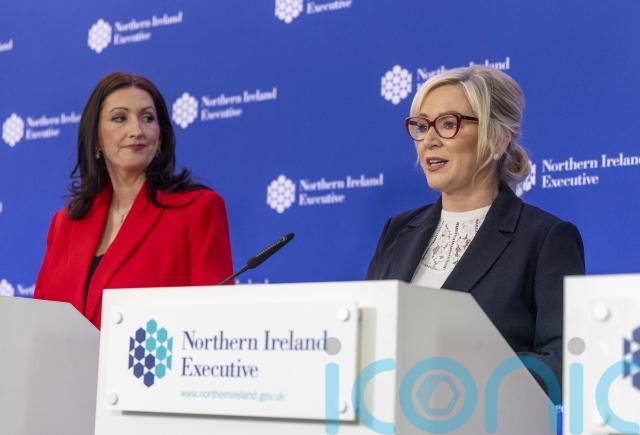
The deputy First Minister also described some of the findings of the review as “absolutely preposterous”.
It says this is due to a number of factors including public service “inefficiencies”, policy decisions to maintain a “large public sector workforce” and pay parity with the rest of the UK, and policy decisions to put in place “super-parity measures compared to the UK Government”.
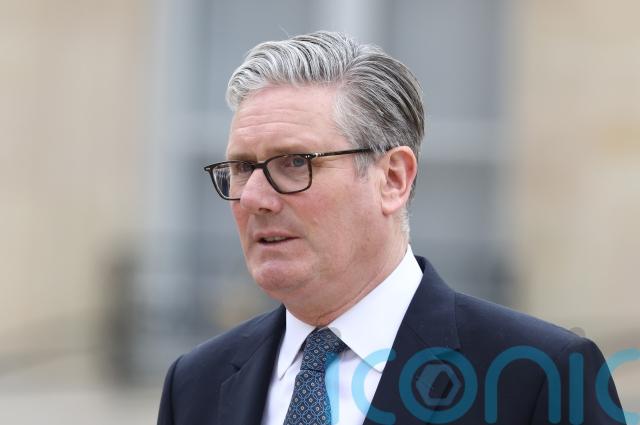
Northern Ireland’s political leaders recently called for a meeting with Prime Minister Sir Keir Starmer amid concerns about the financial situation facing Stormont departments and with a budget still not agreed.
However, the report focused on spending in the current Northern Ireland budget allocation.
In February, the UK Government announced it would make £400 million available from reserves for the Executive to deal with overspend pressures in health and education.
The money has to be repaid over the next three years and the Treasury said it would be conducting an “open-book exercise” looking at the Executive budget.
Stormont’s Finance Committee was told last week that that report had been shared with Executive ministers. An official said it would be used to “inform discussions” with the Treasury.
The Treasury report said it is to “inform the Executive’s decisions on funding allocations”.
It pointed out that for every £1 the UK Government spends on comparable public services in England, the Northern Ireland Executive has “at least £1.24 to spend” to reflect “Northern Ireland’s higher levels of relative need”.
But it said for a number of departments “funding per head is significantly in excess of 124% of comparable spend by the UK Government”.
The report said health spending per head in Northern Ireland is 152% of that in England, policing is at 166% and schools at 140%.
It added that across the whole of the justice system, spending is at 120% compared with the rest of the UK.
The report said: “As a sense of scale, health spending of 124% of comparable spending in England would be £1.3 billion lower than current spending on health.
“Similarly, 124% of comparable spending in England on education would be £424 million lower than current spending on education.”
The report said the “Executive’s policy decisions may also be creating pressures elsewhere in the budget”.
It added that the Executive spends a higher share of Resource Departmental Expenditure Limit (RDEL) on public sector pay than the UK Government.
The report said: “If the Executive’s pay bill was even halfway between the current proportion of RDEL spent on pay in NI and the UK Government’s this would realise a saving of up to £1.25 billion RDEL which could be spent on non-pay public service delivery.”
It also estimated that offering lower domestic rates and higher rates relief in Northern Ireland than the UK Government does in England “costs the Executive around £639 million a year in revenue foregone with a further £684 million a year from other measures where the Executive is not implementing the same fees and charges as the UK Government”.
It said: “In total, this report assesses that, were the Executive to pursue even a subset of the options set out, it could unlock up to £3.3 billion in addition spending power.
“The Executive would not need to adopt all of these options but taking forward even an eighth of these options (by value) may have avoided the need for a reserve claim in 2025-26.”
The report contains sections examining public sector reforms and efficiencies, public sector pay and potential revenue-raising measures.
It said that introducing domestic water charges “could raise significant additional revenue for the Northern Ireland Executive”.
The report said: “The Northern Ireland Executive could raise over £357 million per annum if households were charged the same as households in England and Wales.”
It estimated that introducing prescription charges at a similar rate to England could raise more than £24 million and removing free bus travel for people aged between 60 and 64 could raise £13 million.
The report added: “Increasing tuition fees could reduce the need to subsidise the university sector for teaching and research with Executive DEL funding, providing the Executive with up to an additional £237 million to support wider public services.”
The report pointed out that decisions on spending are for the powersharing Executive ministers who “will want to consider the delivery options and timescales”.
It adds: “Given the scale of overspends (£467.6 million in 2025-26), the Executive would not need to consider all of these options or to fully mirror policies in other parts of the UK to balance their budget.
“If these options are pursued by the Executive, they would improve the sustainability of the Northern Ireland budget.
“They could also release significant additional funding to speed up the transformation of public services and improve outcomes for people in Northern Ireland.”

Subscribe or register today to discover more from DonegalLive.ie
Buy the e-paper of the Donegal Democrat, Donegal People's Press, Donegal Post and Inish Times here for instant access to Donegal's premier news titles.
Keep up with the latest news from Donegal with our daily newsletter featuring the most important stories of the day delivered to your inbox every evening at 5pm.

This publication supports the work of the Press Council of Ireland and Office of the Press Ombudsman, and our staff operate within the Code of Practice of the Press Council. You can obtain a copy of the Code, or contact the Council, at www.presscouncil.ie, Lo-call 1800 208 080 or email: info@presscouncil.ie.