

Loughs Agency to lead €2.1m innovative marine tracking project
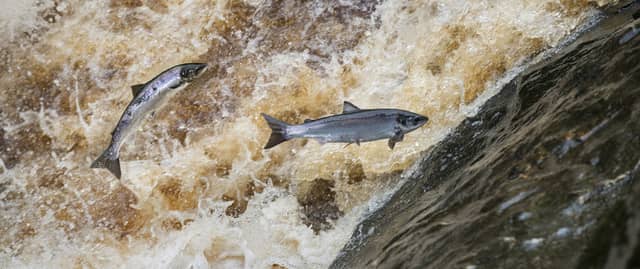

The project will build cutting-edge ‘Digital Twin’ for protecting marine ecosystems
A newly funded project will track fish to identify key locations for species and develop an interactive platform to explore where, when and why they move in and across our oceans.
An innovative marine tracking project is launching after €2.1m of EU funding was secured by Loughs Agency and the European Tracking Network (ETN).
The three-year project, titled Digital Twin of the Ocean: Animal Tracking (DTOTrack), was awarded funding from the EU’s Sustainable Blue Economy Partnership and at a national level with funding provided by Ireland’s Marine Institute.
The project aims to use animal tracking data to create a Digital Twin of the North Sea, and thereby address what if questions related to offshore infrastructure development. An example of this would be examining the potential impact of wind farm expansion on aquatic life.
Digital Twins of Oceans are highly detailed virtual models of oceans that scientists create on computers. They use real-world data—like temperature, currents and sea life—collected from the ocean to mimic what’s happening underwater. These virtual oceans help researchers study and predict things like weather patterns, marine life behaviour and the impacts of climate change, allowing them to make better decisions for protecting our oceans.
Animal tracking, which is known in research circles as ‘telemetry’, is a method used to follow animals remotely, enabling researchers to study migration routes and timing, habitat use and so much more.
DTOTrack will use animal tracking to assess animal movements in the ocean, as well as how they are affected by offshore infrastructure developments. In collaboration with ETN, this project aims to boost biodiversity conservation initiatives across European seas.
DTOTrack will also work closely with the Horizon Europe-funded STRAITS project (Strategic Infrastructure for Improved Animal Tracking in Europeans Seas) and the Biodiversa+ NorTrack project (Northeast Atlantic Marine Tracking Network), which have distributed acoustic telemetry infrastructure throughout Northern Europe so that the movements of various aquatic species can be studied.
Sharon McMahon, Loughs Agency CEO, said: “We are thrilled to continue our significant marine tracking research with this valuable EU funding, alongside support from our colleagues at the Marine Institute.
“Leading on this project in collaboration with our pan-European partners will allow us to use the innovative technology at our disposal to obtain data which, in turn, can inform policy and decision-making for matters within our remit.
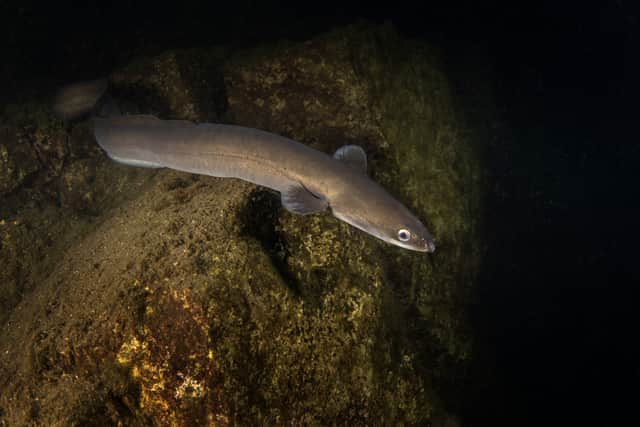
Salmon and eel (pictured above) are two of the species that will be at the centre of the project.
Rick Officer, Marine Institute CEO, said: “We are delighted to support Loughs Agency as coordinator of the DTOTrack project, which brings together scientists across Europe to create virtual models of aquatic species, their ecosystems and habitats.
“These virtual models that can be used for modelling likely future scenarios due to the increase in offshore wind installations and other developments including the establishment of new Marine Protected Areas (MPAs).”
The Ministry of University and Research (Italy) and JPI Oceans (Belgium), the European organisations responsible for the coordination and communication of the Sustainable Blue Economy Partnership, added: "The Partnership’s goal is to foster collaborative projects that not only advance scientific understanding, but also contribute to tangible solutions for marine conservation.
“DTOTrack exemplifies this approach by using cutting-edge tracking technology to help us make informed decisions about marine management and the impact of offshore infrastructure."
The DTOTrack team is made up of ten leading organisations in the study of animal movement, including with Loughs Agency as Lead Partner. Together, the teams will advance our understanding of aquatic animals in the North Sea, as well as their needs and the threats they face.
More information on this project can be found on the European Tracking Network website.
More information about the European Digital Twin of the Ocean project can be found on the Research and Innovation section of the European Commission website.