Search

03 Apr 2026

Early morning Derry vigil to mark start of 1916 Easter Rising executions

1916execution
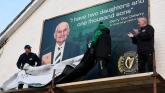
A vigil is to be held in Derry in the early hours of tomorrow morning to mark the first executions of the leaders of the 1916 Easter Rising. The event will take place at 3.45am at the newly-unveiled republican monument on Racecourse Road in the Shantallow area of the city. It is being held at the time and date the first of the executions took place. A similar event will be held at the same time on 12 May next to mark the last of the executions. The Easter Rising resulted in at least 485 deaths, according to the Glasnevin Trust. Of those killed, 260 (about 54%) were civilians, 126 (about 26%) were British forces (120 British soldiers, five Volunteer Training Corps members and one Canadian soldier), 82 (about 16%) were Irish rebel forces (64 Irish Volunteers, 15 Irish Citizen Army and 3 Fianna Éireann), 17 (about 4%) were police (14 Royal Irish Constabulary and three Dublin Metropolitan Police). More than 2,600 were wounded; including at least 2,200 civilians and rebels, at least 370 British soldiers and 29 policemen. All 16 police fatalities and 22 of the British soldiers killed were Irishmen. About 40 of those killed were children (i.e. under 17 years old, four of whom were members of the rebel forces. A total of 3,430 men and 79 women were arrested, although most were subsequently released. A series of courts-martial began on 2 May, in which 187 people were tried. Most of them at Richmond Barracks were held in secret and without a defence, which Crown law officers later ruled to have been illegal. Some of those who conducted the trials had commanded British troops involved in suppressing the Rising, a conflict of interest that the Military Manual prohibited. Only one of those tried by courts-martial was a woman, Constance Markievicz. Ninety were sentenced to death. Fifteen of those (including all seven signatories of the Proclamation) were executed by firing squad at Kilmainham Gaol between 3 and 12 May. Among them was the seriously wounded Connolly, who was shot while tied to a chair because of his shattered ankle. Most of the executions took place over a nine-day period. They included: : 3 May: Patrick Pearse, Thomas MacDonagh and Thomas Clarke 4 May: Joseph Plunkett, William Pearse, Edward Daly and Michael O'Hanrahan 5 May: John MacBride 8 May: Éamonn Ceannt, Michael Mallin, Seán Heuston and Con Colbert 12 May: James Connolly and Sean MacDiarmada Sir Roger Casement was tried in London for high treason and hanged at Pentonville Prison on 3 August, 1916. Organisers of tomorrow morning's vigil, Sinn Fein, have issued an invitation to members of the public to attend.

To continue reading this article,
please subscribe and support local journalism!


Subscribing will allow you access to all of our premium content and archived articles.

Subscribe

To continue reading this article for FREE,
please kindly register and/or log in.


Registration is absolutely 100% FREE and will help us personalise your experience on our sites. You can also sign up to our carefully curated newsletter(s) to keep up to date with your latest local news!

Register / Login

Buy the e-paper of the Donegal Democrat, Donegal People's Press, Donegal Post and Inish Times here for instant access to Donegal's premier news titles.

Keep up with the latest news from Donegal with our daily newsletter featuring the most important stories of the day delivered to your inbox every evening at 5pm.