Delays are expected in Coleraine tomorrow (Saturday).
Search


04 Apr 2026

Please allow ads as they help fund our trusted local news content.
Kindly add us to your ad blocker whitelist.
If you want further access to Ireland's best local journalism, consider contributing and/or subscribing to our free daily Newsletter .
Support our mission and join our community now.
To continue reading this article, you can subscribe for as little as €0.50 per week which will also give you access to all of our premium content and archived articles!
Alternatively, you can pay €0.50 per article, capped at €1 per day.
Thank you for supporting Ireland's best local journalism!


An ex-IRA prisoner suffering from cancer has blamed chemicals which he says were thrown into his H-Block for his illness.
Paul McGlinchey made the revelation ahead of this weekend’s launch of his book ‘Truth Will Out’.
The novel/autobiography, which was penned by the former Blanketman and writer Philomena Gallagher, is a true account of the personal experiences of the ex-republican prisoner.
The Bellaghy native, brother of former INLA leader Dominic McGlinchey, was released from the H-Blocks in 1985 after serving almost ten years for arms offences. In 1993 he was sentenced to five years in Portlaoise jail. He was freed in 1998 under the terms of the Good Friday Agreement.
It was while serving these sentences that McGlinchey, now aged 59, began writing a manuscript detailing his experience of prison life.
After being diagnosed with cancer last year, the dad-of-four said he wanted to publish his story - details which he says have never been revealed before.
“I had no agenda when I wrote this,” McGlinchey told the County Derry Post. “I wrote it as a manuscript in prison for my children. If I had died before they grew up then my story would have been preserved for them.
“The reason why I decided to print it now is because of the diagnosis I got last year and also because the weans were always on at me to get it printed.
“I feel the true story of the H-Blocks should be out there – it’s a piece of history and if it wasn’t told then it would be lost.”
The beginning of the book focuses on McGlinchey’s childhood, growing up in Bellaghy.
Coming from a large family of 12, Paul had a happy childhood living in the south Derry village.
Paul said he ‘became politically aware at a young age’ however the ‘turning point’ in his life came in the summer of 1971 when his family home was raided by the British Army.
From that point on, Paul says he ‘longed and longed to leave school and join the IRA and fight’.
A few short years later, on his 17th birthday, Paul made a life changing decision.
“So on my seventeenth birthday when other young boys were going to dances, chasing girls and enjoying a pint of beer, I was sworn into the IRA in an old hay shed and gave my oath to the IRA and Ireland in front of a new Irish Tricolour which was draped over a few bales of straw which was being used as a table. At last, I was where I wanted to be. That night was one of the proudest in my life and hence began my career as a soldier in the IRA fighting for equality and freedom from the British for the Nationalist people in the occupied six counties of Ulster,” he recalled.
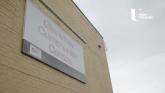
In March 1976, Paul was arrested in his home and taken to Coleraine Interrogation Centre where he was detained and interrogated for three days about IRA operations in the south Derry area. On the third day he was charged with IRA membership and possession of two rifles with intent to endanger life and property.
After being held on remand in Crumlin Road prison for several months, Paul was moved to Long Kesh.
At just seventeen and a half years of age, Paul was sentenced to 14 years in prison.
After being transferred back to Long Kesh, Paul said he insisted he was ‘a political prisoner, not a criminal’ and refused to wear the prison uniform.
When Paul joined the blanket protest little did he know that he would be the longest serving Blanketman in the H-Blocks.
In his book, Paul claims he was ‘brutally beaten every day’ by prison officers and subjected to random, intrusive searches.
He also refers to one incident where chemicals were thrown into his cell.
In the book, he writes: “The fumes were so strong that some of the Blanketmen were physically sick, and choking for breath, so we had no alternative but to smash the windows in each cell. Every prisoner did this as we needed to breathe. We were choking, vomiting and the eyes were stinging out of our heads.”
Paul claims chemicals were thrown into his cell on two separate occasions and now believes that those chemicals are linked to his recent cancer diagnosis.
He has appointed a human rights lawyer and intends to pursue legal action.
“To this day I have no idea what was in those chemicals however I do know that over a third of Blanketmen have either died in their fifties or been diagnosed with cancer,” he said.
Paul’s H-block cell was next to hunger-strikers Francis Hughes and Raymond McCreesh and the book also reveals the fear that prisoners experienced during this period.
Recalling one of the last times he saw Francis Hughes alive, Paul writes: “Francis stood at the door of his cell and sang rebel songs for almost an hour. His favourite song was ‘Kevin Barry’, I don’t think I’ve ever heard it sang so well and so emotionally. Little did I know the following day was to be the last day I would see him alive.”
Despite everything he has gone through, Paul says his wife Cindy, who he married on his release from prison, has always been his ‘rock’ and is ‘one of the good things to come out of his horror and suffering’.
“I am proud of the fact that I am now able to talk about this and hopefully it will encourage other Blanketmen to talk about their experience too,” he said, continuing: “If I can expose the truth about the chemicals I will go to the grave a happy man. I am happy I have left an account for future generations of what went on at this time.”
Writer Philomena Gallagher, who met Paul in Long Kesh, where she ran writers’ classes, said they soon struck up a friendship.
Paul began writing to Philomena over a three year period and she used his letters to compile the book.
After losing contact for almost 20 years after his release, Philomena decided to write to Paul.
“It’s just a story that had to be told,” she said.
“Being a survivor of cancer myself, it was on my bucket list to write my own book. Then I thought I’m going to do all I can to help this man get his story out there.
“I decided to write to him after almost 20 years and I just wrote on the front of the envelope ‘Paul McGlinchey, Bellaghy’. I didn’t know if it would get to him or not. It took about three months, but he did ring me. I explained to him over the phone that I had put together this book. I read a bit of it out to him over the phone and he was very much taken by it. It’s a piece of history that will live on. It’s straight from the horse’s mouth and it’s the first time it’s ever been done in Northern Ireland.
“The book has been getting a great response so far. We’ve had requests for copies from the likes of Australia, America, Liverpool and the Republic of Ireland.”
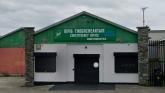
Paul, who says he has no affiliation to any political group, has decided to hold the book launch in Ex-Pop Centre at William Street in Derry this Saturday, May 20 at 1pm.
The Ex-Pop (Ex-Prisoners Outreach Programme) was founded by John Cassidy, an ex-Blanketman who has since passed away. It provides a referral service for members of the community, ex-prisoners and their families struggling with post traumatic stress disorder.
A book launch will also be held on Saturday, May 27 in the theatre centre at Conway Mill, Belfast, with another one scheduled to take place in Bellaghy in July.
The book will be available to purchase from the Ex-Pop Centre in Derry, Siopa Doire, Teach na Failte in Bellaghy or by emailing philomena-1.gallagher@googlemail.com

Delays are expected in Coleraine tomorrow (Saturday).
Team at Adriennes retirement

Heather Nicholl has been announced as a finalist in the Health and Fitness Personal Trainer of the Year category.

Subscribe or register today to discover more from DonegalLive.ie
Buy the e-paper of the Donegal Democrat, Donegal People's Press, Donegal Post and Inish Times here for instant access to Donegal's premier news titles.
Keep up with the latest news from Donegal with our daily newsletter featuring the most important stories of the day delivered to your inbox every evening at 5pm.

This publication supports the work of the Press Council of Ireland and Office of the Press Ombudsman, and our staff operate within the Code of Practice of the Press Council. You can obtain a copy of the Code, or contact the Council, at www.presscouncil.ie, Lo-call 1800 208 080 or email: info@presscouncil.ie.