Father and daughter Andrew and Molly. Credit: BBC
Search


03 Apr 2026

Please allow ads as they help fund our trusted local news content.
Kindly add us to your ad blocker whitelist.
If you want further access to Ireland's best local journalism, consider contributing and/or subscribing to our free daily Newsletter .
Support our mission and join our community now.
To continue reading this article, you can subscribe for as little as €0.50 per week which will also give you access to all of our premium content and archived articles!
Alternatively, you can pay €0.50 per article, capped at €1 per day.
Thank you for supporting Ireland's best local journalism!


In a world where cities compete globally, being different and standing out is the key to getting noticed. Thanks to our status as Ireland’s most historic city and the regional capital of a scenic area, Derry starts from a strong position in that battle for attention. Yet the good work done over centuries to create a unique and attractive city can easily be unravelled through poor, hasty or short-sighted planning decisions – like lining our riverfront with supermarkets and car parks, or letting our shirt factories be demolished.
Derry stands on the cusp of another important planning decision that will speak volumes about what sort of ambition we have for our city. This is Ireland’s most historic city, yet almost every original building along our riverfront has been erased in recent decades. Ours was also once a major transport hub - with four rail stations and a network of lines stretching far into our hinterland. Nowadays, just one line and one working station remain, serving the Belfast route from the Waterside. Our city’s current unloved ‘lego-style’ rail station opened in 1980 and has a size and appearance that would barely be appropriate for a town, let alone a regional capital. Next door to that modern station there stands a much better example of what a train station could and should be. Derry’s old/historic Waterside railway station was built in 1875 to a design by John Lanyon – son of the famous architect Charles Lanyon, and an accomplished designer in his own right.
The station lost the central section of its frontage in a bomb in 1975, but remained open until it was replaced with the modern terminus five years later. It then played host to a variety of uses but has sat empty for the last few years – structurally sound but unused.
The replacement of Derry’s beautiful historic station with an ugly modern equivalent both symbolised and foretold the general running down of our city’s last rail link. This came to a height in 2001 when it was revealed that Translink wanted to close the line entirely between Derry and Ballymena/Coleraine. A campaign group called ‘Into the West’ was established to successfully oppose this plan, and in the years since they have also successfully lobbied for modernisation of the city’s rail corridor and the creation of a train station fit to be “a regional gateway for a regional city”.
Heritage building
In 2012, Translink and Stormont’s Department for Infrastructure agreed to replace Derry’s current train station with a more appropriate facility. The obvious option for this was to reinstate the historic structure on Duke Street - but Translink don’t do heritage buildings. They prefer modern identikit facilities that suit their own corporate design and operations - as a glance at the bland similarity of stations like Great Victoria Street and Coleraine will confirm. So they proposed to ignore our historic station and create yet another new one instead. A campaign forced Translink to gather local opinion through a public consultation in 2013, which they expected to win. Despite offering the public four different station locations to choose from, two-thirds of the 1,400 people who responded defied Translink’s preferred option to instead back the reopening of Derry’s old historic train station.
Translink then refused to release the consultation results for six months until they realised that public and political opinion was firmly against them in the city, and last year they gave in and bought back Derry’s historic old train station. The people had spoken and we would finally be getting a rail station fit for an historic, regional capital. A unique station that would be the only Victorian rail terminus remaining in use in Northern Ireland.
Or so it seemed - until Translink released their plans for the refurbished historic station. Instead of restoring the old station to its former glory - making it a building fit for a regional capital, and a place that the whole city could be proud of - we were being served up an unacceptably mediocre sham station designed purely to meet the needs of Translink.
The people of Derry were being sold short yet again. A host of rail, civic and heritage organisations immediately lined up to object - including Into the West, Foyle Civic Trust and the Ulster Architectural Heritage Trust. In their opinion these plans completely disregard the heritage of the old building, lack any acknowledgement of or ambition for our city’s historic and regional status, and reek of the ‘good enough for Derry’ attitude that has undermined our city’s potential for years.
Key failings
There are four key areas in which Translink’s plans fall short :
1. Trains Must Enter the Historic Station.
From the start Translink have shown no interest in using Derry’s historic rail station, and their latest plan is just a continuation of that outlook. Instead of trains entering the historic station’s train shed - as they did for over a century before - they will instead pull up outside and alongside on two new platforms. The old building will be left as a waiting room, toilets, offices for their staff etc – anything except a proper station. And absurdly, over half of the old train shed will sit idle as ‘flexible space’ for which Translink have no confirmed plans, except as a home for pot plants. They are in effect building a new station alongside the old one, and handing responsibility for the old building they never wanted largely over to the Council (and you as a ratepayer). But Translink is a publicly-funded company answerable to Stormont and the people. They shouldn’t be allowed to offer Derry mediocre plans, just because it suits how they like to do things. And they shouldn’t be allowed to ignore the 900 people who voted for that historic building to become a station again.
Translink have provided three reasons to justify trains not entering the building :
a) Fumes : They claim that diesel emissions from the trains would present a health hazard. A quick look at the dozens of covered stations around Britain and Ireland that also use diesel engines shows that this just isn’t a credible reason.
b) Buffer Zone : They assert that the station requires a 20 metre ‘buffer zone’ at the end of the track, and assert that that would leave little room for trains to enter. Into the West has sought advice on this from railway professionals and was told that the 20m zone is a recommendation, not a requirement, and is primarily intended for new-build stations. Existing or refurbished stations, of which Derry’s Waterside is one, are not required to implement it. There are examples of other stations across the UK that do not use 20-metre buffer zones - including Liverpool Lime Street and Edinburgh Waverley stations, where significantly shorter buffer zones were installed recently as part of new platforms there. Even if the 20m rule was valid, Translink’s current plans for the building do not propose reopening the full original train-shed. When the building was converted for other uses in 1980, a section of offices was added in the middle – which Translink propose retaining. If those offices were relocated to the side of the building, where space is available, that would return the train-shed back to its original length and provide more room for the trains to enter. And even if none of this worked, the obvious is to create a new/extended canopy at the back of the existing train-shed – enabling the front of the trains to enter, and the rear carriages to still be covered outside. With will and imagination, there are multiple ways in which trains could be enabled to enter the old station.
c) Curvature of the Track : The rail line approaches Derry’s station is on a curve, due to the river. Translink argue that this would result in trains entering the historic building at an angle. However – the original station had two platforms originally, one of which had both a straight section inside and a curved section outside the train-shed. There are also other similar historic terminus stations in the UK which have curved platforms – e.g. Windsor & Eaton Riverside. Not to mention the fact that Derry’s old station used to accommodate THREE railway lines inside when it was open – so even if the refurbished platforms needed to be installed on a slight curve or angle, the room exists to do so.
2. Design – Interior.
Translink’s design for the interior of the station makes the historic building look like an anonymous 1980s hospital corridor. No attempt is made to acknowledge or enhance the beauty of the building, or to use it add to Derry’s historical status. The train route into Derry is rightly celebrated as one of the most picturesque in the world, and is a major asset for our city. To end that journey in such a bland, characterless space would be an opportunity lost. Nowhere else in the UK or Ireland would an historic train station be treated with such disregard. Instead - historic stations elsewhere have been reopened and restored to make the most of their original beauty and heritage. Translink’s internal designs are simply not good enough for Derry, and must be rejected.
3. Design – Exterior.
Translink do not propose restoring the exterior of the station to how it looked prior to being bombed in the 1970s. Instead they propose having an unattractive infill glass front, as added in the 1980s, which is of no historical or design significance. Other key historic buildings in the City that were badly bombed in the Troubles have been fully restored (e.g. The Guildhall). Our historic rail station deserves the same sympathetic restoration job, due to its architectural and historical importance and its strategic riverfront location.
4. Car Park Between the River and the Station
A complaint heard regularly in Derry is that the Foyle has been ruined by car parks. Translink propose to repeat this mistake by placing 94 car parking spaces in the key area between the historic railway building and the river. There is no dispute that the station needs car parking – but it should be placed in a less prime location (e.g. on the site of the current modern station, which is being demolished). That would allow the area between the historic station and the river to become a new destination waterfront public square or plaza, connecting people and the new train station to Derry’s greatest natural asset. It would also open up the possibility of having restaurants etc along the side of the building facing the river, spilling out onto the new square. All of which would enable the new station to become a destination in its own right, and to make a genuine contribution to the broader regeneration of the Waterside and our riverfront.
Councillors must act
There are strong grounds on which to reject Translink’s current proposals for Derry’s new train station. In their defence – it is not Translink’s job to worry about Derry’s heritage and status, or to show ambition for the city. Instead that task falls to our local council, who are junior partners in Translink’s proposal.
In times past - when Derry suffered from unpopular planning decisions we could blame the unknown, uncaring bureaucrats in Belfast who took decisions on our city’s future from afar. But control over planning decisions have now been devolved to local councils here. The officers and elected councillors who now make planning decisions know our city well. They hopefully share our sense of history, pride and ambition for the town. And it is they who will decide if Translink’s plans are good enough for our city.
Derry’s new railway station will therefore present one of the first major tests of how our council intends to use its new planning powers. Will they used them to challenge developers to show more ambition and imagination for our city? Or will we instead see a continuation of the old way – of settling for second best and being grateful for what we get, perpetuating the ‘good enough for Derry’ philosophy that others used to hold us back for year?
It is not enough for Derry to just say that it is a regional capital. It must also show that it is - in its buildings, its infrastructure, its culture and in all the other identifiers of regional significance. And most importantly, in its confidence and ambition for its own future. Derry needs a new train station that serves as a badge of our city’s history, status and uniqueness, and helps to differentiate us within a competitive world. If we settle for a mediocre solution that is less than our city deserves, generations to come will blame us for selling them short yet again.
Steve Bradley is a regeneration consultant, and a member of the ‘Into the West’ rail campaign. For more information follow @RailDerry on Twitter, and ‘Into the West Rail Lobby’ on Facebook.
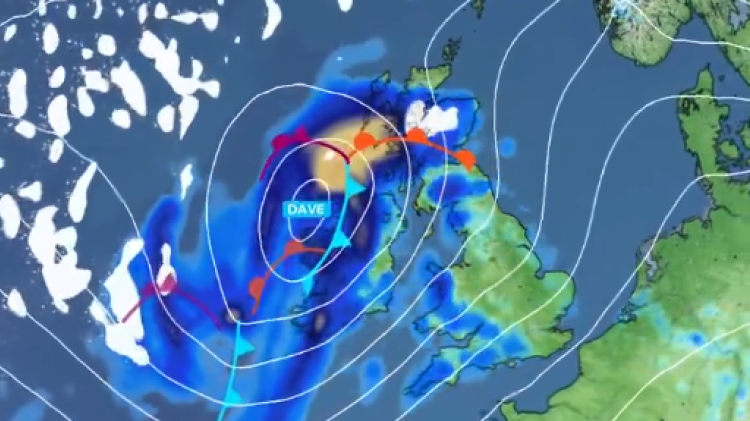
Storm Dave is expected to hit the North this weekend.

Group of speakers at the Western Trust relaunch of the ‘Best Start in Life’ Strategic Group.

Altnagelvin Theatre Teams, Consultant Surgeons and Trust Corporate Management gather to mark this milestone for the Trust with the delivery of the first ever state-of-the-art surgical robot

ERNACT’s newly appointed chairperson – Cllr Martin Reilly

Subscribe or register today to discover more from DonegalLive.ie
Buy the e-paper of the Donegal Democrat, Donegal People's Press, Donegal Post and Inish Times here for instant access to Donegal's premier news titles.
Keep up with the latest news from Donegal with our daily newsletter featuring the most important stories of the day delivered to your inbox every evening at 5pm.

This publication supports the work of the Press Council of Ireland and Office of the Press Ombudsman, and our staff operate within the Code of Practice of the Press Council. You can obtain a copy of the Code, or contact the Council, at www.presscouncil.ie, Lo-call 1800 208 080 or email: info@presscouncil.ie.