Please allow ads as they help fund our trusted local news content.
Kindly add us to your ad blocker whitelist.
If you want further access to Ireland's best local journalism, consider contributing and/or subscribing to our free daily Newsletter .
Support our mission and join our community now.
Subscribe Today!
To continue reading this article, you can subscribe for as little as €0.50 per week which will also give you access to all of our premium content and archived articles!
Alternatively, you can pay €0.50 per article, capped at €1 per day.
Thank you for supporting Ireland's best local journalism!
Derry mother claims patients being forced to leave local mental health facility under police escort
Reporter:
Conor McHugh
03 Apr 2018 7:45 PM
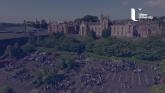
A Derry mother whose son has mental health difficulties has said that patients not ready to come out of a local facility are being ‘forced’ to leave under police escort. The woman, who wished to remain anonymous to respect her son’s privacy, also claimed that, within recent weeks, a suicidal man had not been searched to see if he had anything with him that would present a danger to him and took an overdose in Grangewood, pictured above. The woman said her son suffers from Bipolar disorder, which involves periods of severe mood swings that hit high periods of mania to dip to deep depression. “When my son was 16 they said that he couldn’t go over the adolescent unit because they didn’t have the resources, so at the age of 16 he was referred to the adult mental health team,” she said. “When he was seen in the hospital by the doctor, I was never told that he had been diagnosed with bi-polar I. He went to hospital in for six weeks for assessment but it was my GP that then gave me the diagnosis. “Young people are put in Grangewood and there’s no adolescent unit. For eight years, my son was under Slievemore House Adult Mental Health Team and he didn’t get offered any counselling until I spoke to Trevor Millar, who’s the Head of the Adult Mental Health Service, then my son got a psychologist but it took eight years. “They never offered me carer’s assessment the whole time; he (Mr Millar) told me there was a carer’s assessment.” The woman said that her son did not have the capacity to take the tablets that kept his moods stable so he was offered an injection. The mother said that she was never told that one of the side-effects was that it could induce coma but found out when she did her own research. When the woman’s son got the injection every month, he was able to go to Grangewood and take part in day-care but this came to an end after they were told by the Western Trust that the Occupational Therapists there were no longer qualified to give them the injection. “He wasn’t getting that support any more. They were doing baking, arts and crafts, counselling and helping him with his diet but they just threw them out of there and said their own Community Psychiatric Nurses (CPN) could give them the injection. “All of the men that went there lost that support and some of them even started missing their injections.” The woman also claimed that when patients at Grangewood tell staff they do not feel mentally stable enough to go back into the community, they are escorted off the premises by police. “My son’s friend has been in and out of the hospital about four times in the past month,” she said. “When I was there visiting, the police were escorting one of the patients out because she wouldn’t go, because she knew she wasn’t ready to go. “Then, that same night, the police brought the same woman back in.” “They have escorted my son’s friend out of hospital because she is trying to tell them that she’s not ready to go. “I had the key to her house because this is about the fourth time in the past month she was in. I couldn’t leave her in casualty at the hospital because she does drink and take drugs because of her mental health and she has no real support. "The out of hours community psychiatric nurse CPN spoke to her for about an hour and said she was going to Gransha so I took her down to Grangewood and she gave me her key. “They threw her out the next day.” “She is with Slievemore House too but she’s not getting the support, just like my son. Four policemen met me at her house because they had to take her out. The policeman actually gave her a number because he was that worried about her.” She also claimed a suicidal man who has been ‘in and out’ of Grangewood for two years recently took an overdose on the premises. “I panicked because my son was suicidal when he was in there,” she said. “Then he told me two days after that fella took an overdose, there were drugs on the ward brought in by relatives of patients but I realise they can’t search relatives.” She said: “I just wanted to say how bad it is for other people out there to understand – it’s terrible. “Once your child is over 18, even when they have a good parent there they don’t consult with them.” Trauma The worried mother said that her son is getting help through community projects such as Heal the Hurt but that she feels that local NHS mental health services are not up to standard. “I’m not just speaking out because of my son; I’m speaking out because of all the other young people and every parent that’s going to go through this process. “They built that multi-million pound unit at Grangewood, they could have put two beds in there for adolescents that have got to the stage the trauma is so bad, but they can’t go to adolescent nurses because once they reach 16 they don’t have the nurses to cover them. “If your child is an adolescent of 16, they will go up to Belfast (Beechcroft; the regional child and adolescent mental health inpatient) and some families just can’t afford to travel up and down. “Even the adolescent unit in Belfast doesn’t have the right programmes, there’s a lack of resources and people not being listened to. “They don’t have the staff but if they don’t have the staff and people are jumping the bridges then they will have to get more staff.” She added: “We have just resigned ourselves to the fact that they are not going to do anything.” WESTERN TRUST RESPONSE A Western Trust spokesperson has responded to claims about local mental health services, particularly at Grangewood, made by the concerned Derry mother. The woman expressed concerns that mental health provision for young people, based on her son’s experiences in Grangewood, was not adequate. She said there are no adolescent services for those aged 16 and 17 and that they have to be treated as adults. The Western Trust spokesperson replied: “On some occasions, when there are no beds available in Beechcroft (the regional child and adolescent mental health inpatient) unit in Belfast, young people between the ages of 16 and 18 years are admitted to local adult mental health inpatient wards. “This is based on assessed needs and managed within established safeguarding procedures. “Any incidence of a young person between the ages of 16 and 18 years being admitted to an adult unit is routinely reported to the Regulation and Quality Improvement Authority who provide independent scrutiny and oversight.” The woman also claimed that patients who are telling staff they do not feel ready to go back into the community are ‘forced’ to leave under police escort and that this is a regular occurrence. The Trust spokesperson responded: “Mental health services deliver treatment and care in hospital, based on individual assessed needs. “Our services engage with people through a model of recovery oriented interventions working collaboratively promoting hope, opportunity, and personal control. “When necessary the Trust works in collaboration and partnership with other statutory agencies.” Substances The woman also claimed that a suicidal man recently took an overdose while in Grangewood’s care and had not been searched to see if he had anything in his possession that would present a danger to him. The spokesperson responded: “The Trust does not comment on individual cases. “Our adult mental health acute inpatient wards at Grangewood Hospital are not secure environments. “Patients and the public are not routinely searched when admitted to hospital, or visiting relatives and friends. Care and treatment approaches are based on the principles of recovery set in the context of human rights Legislation and deprivation of liberty safeguards. “When any concern about safety arises, and a search of patients, their belongings, and/or the care environment is required this occurs in the context of regional guidelines issued to Health and Social Care Trusts by the Public Health Agency in 2014.” In response to claims that drugs are available on the wards in Grangewood, the Trust said: “Misuse of a wide range of substances are known risk factors for good mental health. “Staff are vigilant in relation to the presence of any substance that may cause harm. “The Trust has established protocols for the management and disposal of medicines and illicit substances, and established links with the PSNI for reporting, investigation, and management of criminal activity.”
ADVERTISEMENT - CONTINUE READING BELOW
4
To continue reading this article, please subscribe and support local journalism!
Subscribing will allow you access to all of our premium content and archived articles.
Subscribe
To continue reading this article for FREE, please kindly register and/or log in.
Registration is absolutely 100% FREE and will help us personalise your experience on our sites. You can also sign up to our carefully curated newsletter(s) to keep up to date with your latest local news!
Subscribe or register today to discover more from DonegalLive.ie
Buy a paper
Buy the e-paper of the Donegal Democrat, Donegal People's Press, Donegal Post and Inish Times here for instant access to Donegal's premier news titles.
Keep up with the latest news from Donegal with our daily newsletter featuring the most important stories of the day delivered to your inbox every evening at 5pm.