Search


19 Apr 2026
Search
19 Apr 2026

Please allow ads as they help fund our trusted local news content.
Kindly add us to your ad blocker whitelist.
If you want further access to Ireland's best local journalism, consider contributing and/or subscribing to our free daily Newsletter .
Support our mission and join our community now.
To continue reading this article, you can subscribe for as little as €0.50 per week which will also give you access to all of our premium content and archived articles!
Alternatively, you can pay €0.50 per article, capped at €1 per day.
Thank you for supporting Ireland's best local journalism!

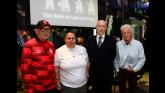
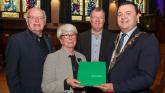
Micky English (Gary English's father), Jackie Brown (Jim Brown's sister), Dr Brian Dooley (Human Rights First) & Paul O'Connor (Pat Finucane Centre) - 'Anatomy of a Cover-up: The Rule of Law on Trial'

Micky English, father of Derry teenager Gary English killed by the British Army on Easter Sunday 1981, described his son’s death as “a deliberate, cold-blooded act of killing”.
“My son did not die as the result of a road traffic accident,” added Mr Nash, speaking to The Derry News following ‘Anatomy of a Cover-up: The Rule of Law on Trial’ in the Museum of Free Derry on Saturday afternoon.
“All I ever wanted is what took place here today - to change the narrative of Gary’s death from a road traffic accident to a deliberate murder.”
Marking the 45th anniversary of the deaths of Gary English (19) and Jim Brown (18) on April 19, 1981, the event was organised by the Pat Finucane Centre.
‘The Rule of Law on Trial' was narrated by Dr Brian Dooley, a Senior Advisor at Human Rights First, a Washington DC-based NGO, an Honorary Professor of Practice at Queen’s University, Belfast, and a Visiting Scholar at University College London.
For more than a decade, Dr Dooley has worked to support Human Rights Defenders in a range of contexts, including those in Ukraine, Bahrain, Poland, Hong Kong, the North and Egypt. For 16 years prior to joining Human Rights First, he worked at Amnesty International. He has written and spoken extensively on human rights issues and the conflict in the North.
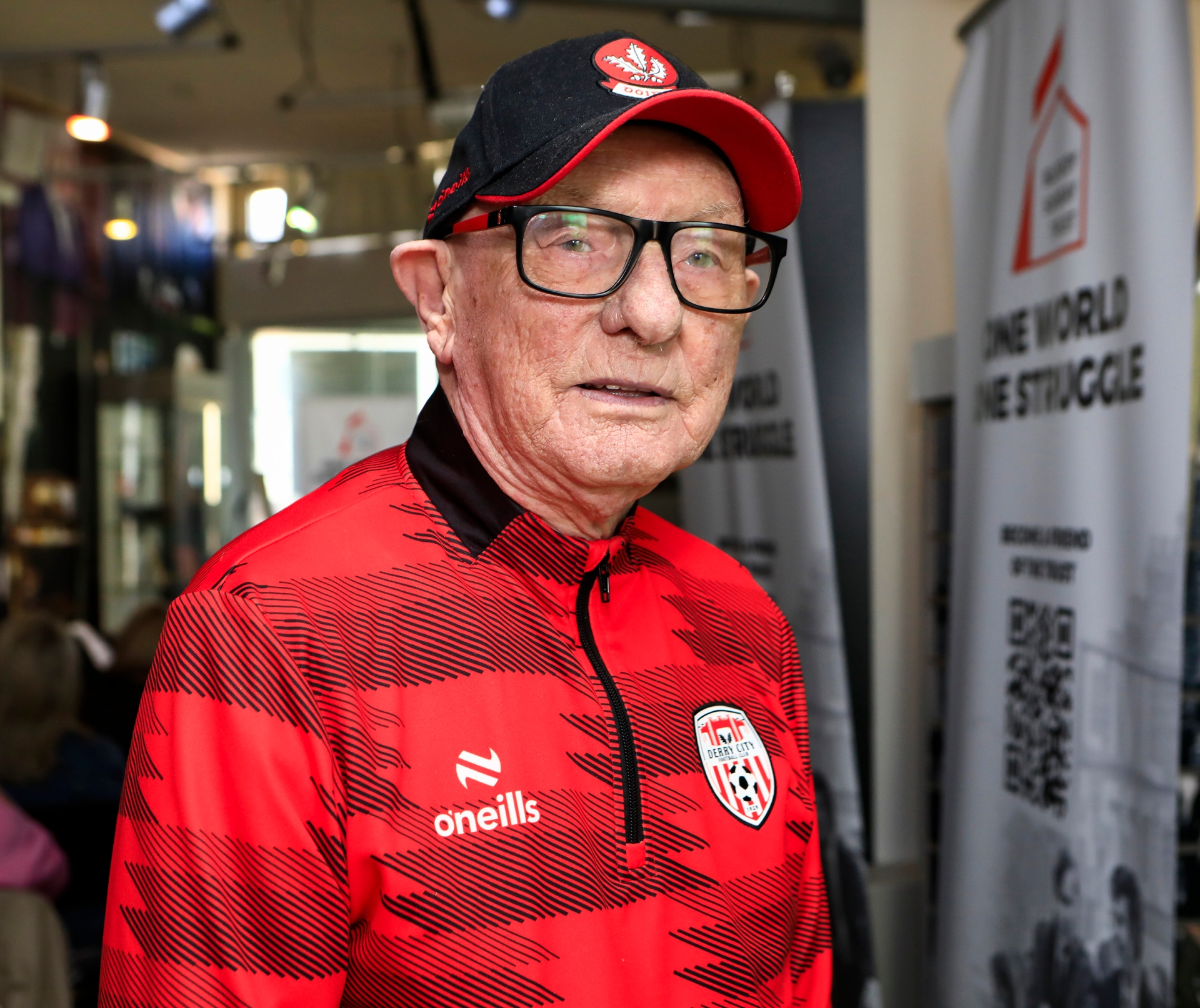
Mr Micky English, father of Gary English.
Asked how he felt having watched ‘The Rule of Law on Trial', Mr English said: “Well, to be quite honest, I have been living with it for 45 years. I don’t go to bed at night without re-running the whole trial and press and HET (Historical Enquiries Team) experience.
“So, while it might come as a surprise to some people that didn’t actually understand all the nuances surrounding Gary’s death and Jim Brown’s death, I have lived through it and I know each one of them intimately,” he added.
“I had an understanding having gone through it all, this experience, that the question of seeking justice was never, ever going to happen.
“There were too many Bechers Brooks, fences to jump, for me to get justice. Too many lies were told and it was embedded.
“All I ever wanted is what took place here today - to change the narrative of Gary’s death from a road traffic accident to a deliberate murder. That’s all I wanted to achieve.
“I don’t want anybody spending time in jail over it. I don’t care care what happens to Buzzard or Smith [the British soldiers responsible]. All I want to do is, if I can set the record straight that my son did not die as the result of a road traffic accident but a deliberate cold-blooded act of killing,” said Mr English.
Dr Brian Dooley began his moving presentation by drawing comparisons between Gary English and Jim Brown, and himself.
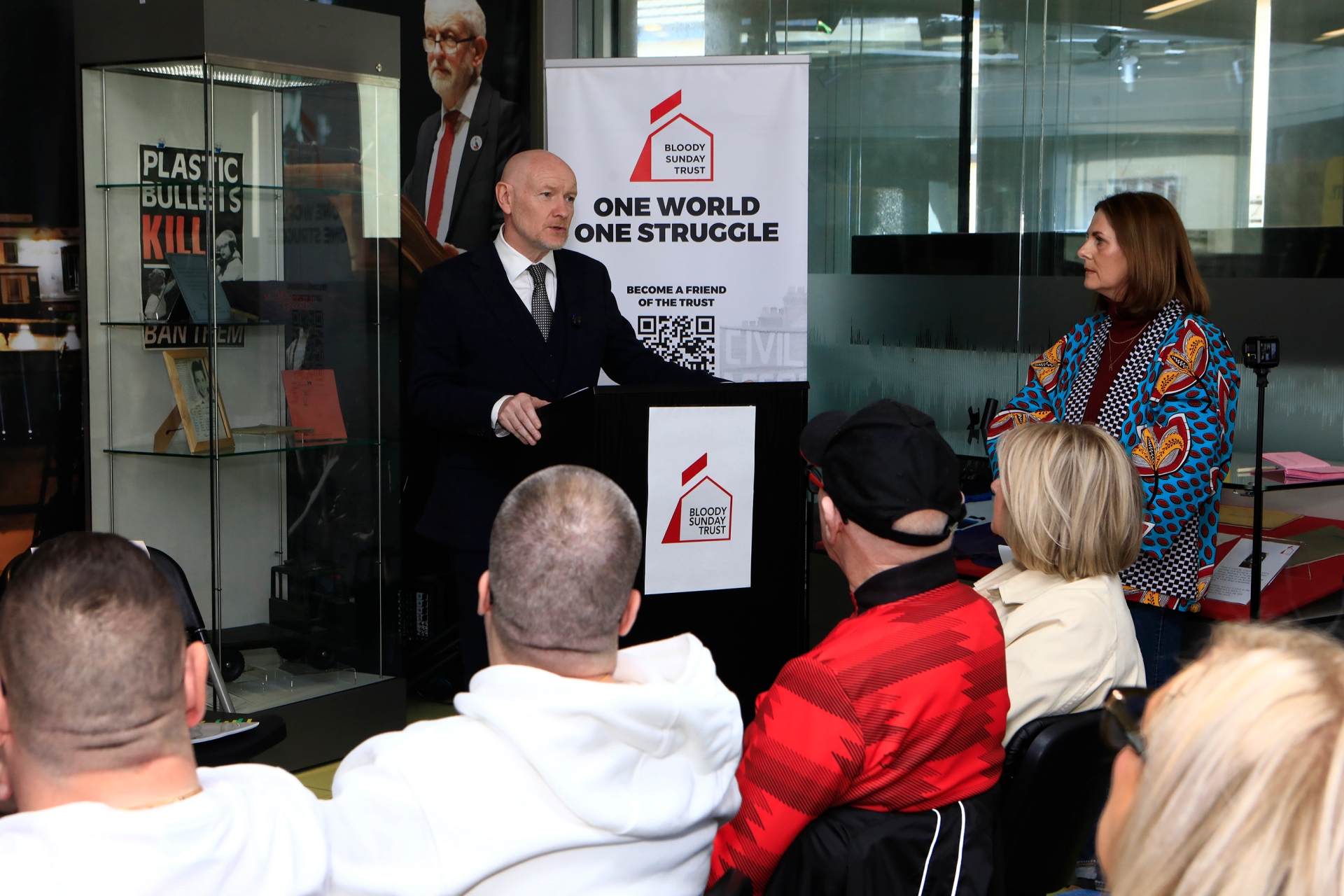
Dr Brian Dooley presenting 'Anatomy of a Cover-up' in the Museum of Free Derry.
"In 1981, I was 18, the same as Jim Brown. I remember what it was like to be a late teenager in the early 80s. Jim Brown and Gary English and myself would have been watching the same things on telly, we would have been watching the same sort of music, wearing the same sorts of clothes, and in those days we would be having probably similar hairstyles," he said. "But our lives were very different. I was growing up in South London, they were growing up here.
"About a week before they died, there was an outbreak of rioting in Brixton in South London. We were not being killed for being on the street. In fact, the British Home Secretary, when those riots broke out, said that, plastic bullets should not be used against us, should not be used in Britain, because they were too dangerous.
“In that year, 1981, 30,000 plastic bullets were used in this week [in the North].
“What hits me about these cases is how much time has gone, what they missed, the lives they missed out on. I have a very strong sense of that because of the life I have been lucky enough to lead, and which they never got to do,” said Dr Dooley.
Turning to the circumstances which led to the deaths of Gary English and Jim Brown, Dr Dooley said: “That Easter Sunday evening, a little before 7 o’clock, two British Army landrovers, each weighing three quarters of a tonne, left Rosemount Barracks and drove at high speed down Creggan Hill.
“In that first landrover, the driver was Lance Corporal Stephen Buzzard and his sergeant was with him, Sergeant Hugh Smith. They reached the crossroads of Creggan Hill, Infirmary Road, Marlborough Terrace where a group of civilians where, he added.
“They went into the civilians and they killed Jim Brown and they killed Gary English.
“Those facts aren’t disputed,” said Dr Dooley who went on to assess how the State institutions performed in the aftermath.
“The institutions,” he said “whose duty it was to find the truth, to present the truth to the public, and to hold to account those responsible” - the Army, the police, the court process, the coroners inquest and the Historical Enquiries Team.
"Corporal Stephen Buzzard drove the first lead vehicle. Sergeant Smith told him to 'carry on through the junction'. They then reversed back up Creggan Hill, after they had hit Jim Brown and Gary English, and reversed over the body of Gary English in that three quarters of a tonne vehicle," said Dr Dooley.
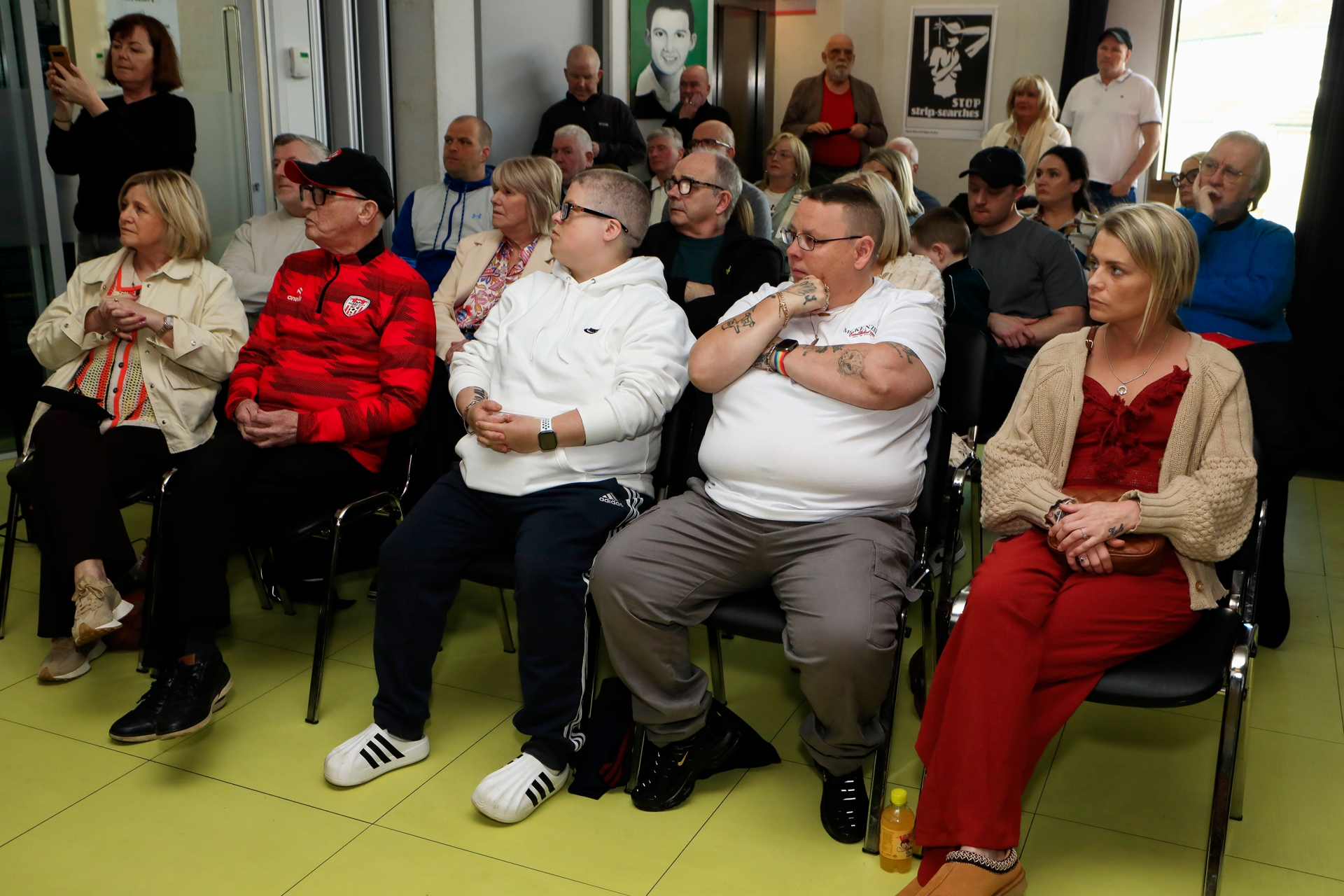
The Brown and English families attanding 'Anatomy of a Cover-up' in the Museum of Free Derry on Saturday.
“The Army account of what happened falsely claimed that the landrover had not been travelling at speed. But the eyewitnesses told a different story. Paul Clements was a BBC reporter and an eyewitness at the scene. He testified that the landrover had been travelling at what he estimated to be 50 miles an hour.
“Other eye witnesses also corroborated Clements’ testimony.
“The Army also falsely claimed that the vehicle was moving to a safer cover point, which doesn’t bear any scrutiny,” said Dr Dooley.
Turning to the police investigation of the killings, he added: “The RUC classed the incident as a road traffic accident and they put traffic cop Sergeant Bradley in to head the investigation.
“The night that those teenagers died, Sergeant Bradley interviewed both the Corporal and the Sergeant but he admitted he didn’t take any interview notes, and the statements that he said they made were really a summary of the conversations he had had with each of them, which in total, each had amounted to about an hour.
“This was a traffic cop, investigating what he’d been told and the approach he took was a traffic accident.
“He later admitted that before he interviewed the soldiers, he had not consulted with the eyewitnesses or the eyewitness testimony, which was available.
“Somebody who had bothered to go talk to and listen to the eyewitnesses was Bishop Edward Daly. And after he had heard what the eyewitnesses said, Bishop Daly said: ‘It appears the Army vehicle was driven at reckless speed. It seems to have been a stupid and cruel deed.’”

Subscribe or register today to discover more from DonegalLive.ie
Buy the e-paper of the Donegal Democrat, Donegal People's Press, Donegal Post and Inish Times here for instant access to Donegal's premier news titles.
Keep up with the latest news from Donegal with our daily newsletter featuring the most important stories of the day delivered to your inbox every evening at 5pm.

This publication supports the work of the Press Council of Ireland and Office of the Press Ombudsman, and our staff operate within the Code of Practice of the Press Council. You can obtain a copy of the Code, or contact the Council, at www.presscouncil.ie, Lo-call 1800 208 080 or email: info@presscouncil.ie.