Search


26 Mar 2026
Search
26 Mar 2026

Please allow ads as they help fund our trusted local news content.
Kindly add us to your ad blocker whitelist.
If you want further access to Ireland's best local journalism, consider contributing and/or subscribing to our free daily Newsletter .
Support our mission and join our community now.
To continue reading this article, you can subscribe for as little as €0.50 per week which will also give you access to all of our premium content and archived articles!
Alternatively, you can pay €0.50 per article, capped at €1 per day.
Thank you for supporting Ireland's best local journalism!

Peter Gallagher was shot and killed by a loyalist gunman.

The Police Ombudsman has found that the police investigation of the murder of Peter Gallagher in 1993 was “wholly inadequate” and failed his family.
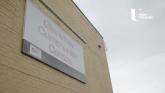
On March 24, 1993, 44-year-old Peter Gallagher, a father of seven from Toomebridge, was shot and killed by a loyalist gunman while arriving at work at the Westlink Enterprise Centre in west Belfast. The Ulster Freedom Fighters (UFF), a cover name for the Ulster Defence Association (UDA), claimed responsibility for the killing. Despite significant intelligence linking suspects to the crime, no arrests or convictions followed.
The Police Ombudsman for Northern Ireland, Mrs. Marie Anderson, conducted a comprehensive investigation into the original police response and the quality of the murder investigation, prompted by complaints from Mr. Gallagher’s family.
Mrs. Anderson concluded that the police investigation was “wholly inadequate” and failed Mr. Gallagher’s family. While there were 12 individuals identified as persons of interest, some were linked by corroborated intelligence but none were arrested. This was seen as a major failing, particularly given the mounting intelligence that should have prompted investigative action.
The UDA/UFF unit responsible, ‘C Company,’ was under police surveillance for months. However, this surveillance was halted on March 22, 1993, two days before the murder, due to a redeployment of resources in response to IRA threats. In the days following this pause, Mr. Gallagher and 17-year-old Damien Walsh were murdered, and other attacks were attempted. Surveillance was not resumed until March 30, after significant harm had already been inflicted.
Despite increasing intelligence about impending attacks, police did not reassess or redirect resources, a failure that, while not directly causing the murder, created an environment where 'C Company' operated with reduced constraint.
The initial crime scene response was largely thorough. A bicycle believed to be used by the gunman, and a 9mm Browning pistol wrapped in a balaclava were recovered near the scene. Over 50 statements were collected, and house-to-house inquiries and vehicle checkpoints were promptly carried out.
READ NEXT: Family of Peter Gallagher welcome 'long-awaited report'
Two suspects' homes were searched, and items including balaclavas and clothing were seized. However, forensic tests failed to link the items to the murder. Despite intelligence later focusing on three main suspects, no arrests were made.
The main suspects included Person J, a well-known UDA figure and a key member of ‘C Company.’ Intelligence consistently indicated he was orchestrating attacks against nationalists, and he had previously been arrested under terrorism legislation.
In the weeks prior to Mr. Gallagher’s murder, multiple intelligence reports detailed Person J's acquisition of weapons and involvement in planning meetings. Post-murder intelligence indicated he had participated in reconnaissance and had been left hidden near the murder site, potentially leaving forensic evidence. Despite this, Person J was not arrested.
Person N was named in intelligence as the gunman in both Mr. Gallagher’s and Damien Walsh’s murders. He was linked to Person J’s team and reportedly fled toward Roden Street after the shooting. Despite being identified as a suspect early on, he too was not arrested.
Person M owned a car seen in suspicious circumstances near the murder location the night before. He was reportedly seen with Persons J and N. Police seized the car and found no forensic evidence, but Person M was never arrested, despite substantial circumstantial information.
Mrs. Anderson concluded that all three individuals should have been arrested based on the intelligence gathered.
Members of ‘C Company’ had been under surveillance, which hindered their operations. However, on March 22, 1993, surveillance ceased due to concerns over imminent IRA threats. In the next three days, Mr. Gallagher and Damien Walsh were murdered.
A police inspector acknowledged the challenges of resource allocation, likening it to “juggling water.” Still, Mrs. Anderson criticized the failure to re-assess priorities or resume surveillance during this high-risk period. This lapse allowed 'C Company' to act with greater freedom and contributed to the deadly outcome.
The Browning pistol used to kill Mr. Gallagher had been used in previous incidents and was linked to a large arms importation in 1987 involving the UDA, UVF, and Ulster Resistance. While some weapons were intercepted in 1988, many, including the one used in Mr. Gallagher’s murder, reached loyalist groups and were used in subsequent killings.
Former Ombudsman Dr. Michael Maguire previously concluded that there was a failure to investigate those responsible for importing these arms, which impacted efforts to bring perpetrators to justice. Mrs. Anderson referenced this in her findings, noting the broader systemic failures surrounding loyalist violence.
The military, not police forensic staff, initially removed the murder weapon from the scene. The Army Ammunition Technical Officer (ATO) transported the gun to Girdwood Barracks, allegedly for “clearing.” A forensic scientist later confirmed no evidence that the weapon had been altered or fitted with a tracking device.
This unusual chain of custody raised concerns, though no tampering was found. Still, Mrs. Anderson was unable to confirm why the military, rather than the police, handled the weapon.
Another critical failing was the lack of investigative linkage between the murders of Peter Gallagher and Damien Walsh. Despite similarities in weaponry, suspect groups, and timing, the police did not join the investigations or explore overlapping intelligence. This fragmented approach weakened both investigations.
Additionally, Mrs. Anderson found no evidence of meaningful case reviews or re-examinations by the Historical Enquiries Team or Serious Crime Review Team.
Mr. Gallagher’s family raised several concerns:
These included photographic leaks: The family feared that police photos of Mr. Gallagher had ended up in terrorist hands. No evidence supported this claim.
Lack of communication: The family was not kept updated during the investigation, a common issue in that era before the establishment of formal family liaison protocols
Alleged collusion: The family expressed concern that the murder may have involved state collusion. Mrs. Anderson found no evidence that police or intelligence services facilitated the killing. However, due to legal rulings, she could not offer a formal conclusion on whether collusion occurred.
Mrs. Anderson acknowledged the challenges of investigating historical cases, citing time lapses and unavailable witnesses. However, she emphasised that her team had compiled significant evidence and received cooperation from some former officers.
She concluded that Peter Gallagher was an innocent victim of loyalist paramilitary violence. While the UDA/UFF alone bore responsibility for the murder, the police investigation was inadequate. Crucially, the failure to arrest suspects, connect the murder to other cases, and act on intelligence denied the Gallagher family justice.
Mrs. Anderson stated that the Gallagher family was let down by a fragmented and deficient investigation, which also failed to pursue clear lines of enquiry related to other sectarian attacks during the same period.

Subscribe or register today to discover more from DonegalLive.ie
Buy the e-paper of the Donegal Democrat, Donegal People's Press, Donegal Post and Inish Times here for instant access to Donegal's premier news titles.
Keep up with the latest news from Donegal with our daily newsletter featuring the most important stories of the day delivered to your inbox every evening at 5pm.

This publication supports the work of the Press Council of Ireland and Office of the Press Ombudsman, and our staff operate within the Code of Practice of the Press Council. You can obtain a copy of the Code, or contact the Council, at www.presscouncil.ie, Lo-call 1800 208 080 or email: info@presscouncil.ie.