Search


26 Mar 2026
Search
26 Mar 2026

Please allow ads as they help fund our trusted local news content.
Kindly add us to your ad blocker whitelist.
If you want further access to Ireland's best local journalism, consider contributing and/or subscribing to our free daily Newsletter .
Support our mission and join our community now.
To continue reading this article, you can subscribe for as little as €0.50 per week which will also give you access to all of our premium content and archived articles!
Alternatively, you can pay €0.50 per article, capped at €1 per day.
Thank you for supporting Ireland's best local journalism!

Quarter of children in Derry and Strabane living in poverty.

More than one in five children are living in poverty in 10 out of the 11 local council areas in the North, new research has revealed.
Derry City and Strabane District Council ranks third behind Belfast (27.8%) and Newry, Mourne and Down (25.8%), with 25.3% of children here living in poverty. Lisburn and Castlereagh ranked lowest at 19.4%.
In terms of Westminster constituencies, 20% of children across the North are living in poverty in 16 out of the 18 constituencies.
25.4% of children in the Foyle constituency were living in poverty - the fourth highest number in the North behind Belfast West (32.9%), Belfast North (31.1%), and Newry and Armagh (30.1%). North Down was the constituency with the lowest level of child poverty - 19.6%. The average figure across the North was 24.3%
The research was carried out by Loughborough University for the End Child Poverty Coalition (ECPC) which comprises 135 organisations including child welfare groups, social justice groups, faith groups, trade unions and others.
According to the Coalition, the 2023/24 statistics mean “families may be using food banks to feed their children, children foregoing extra-curricular activities and school trips, children going without warm clothes in winter, or living in cold or unsafe housing."

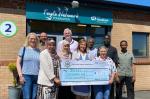
Speaking to The Derry News, Becca Bor, the development co-ordinator of the NI Anti-Poverty Network said no child in the North should have to experience poverty.
“We know targeted policies work,” added Ms Bor, “so government must urgently address child poverty, so that another generation of children will not be growing up in poverty.
“The government’s strategy to tackle child poverty must invest in struggling households, to support families so that their children can thrive. As a first step, the UK government must scrap the two-child limit to benefit payments, a policy which continues to pull children into poverty every day.”
The ECPC research used a Relative After Housing Costs measure of child poverty.
'After Housing Costs’ shows the income available to a household once rent, water rates, mortgage interest payments, building insurance payments, ground rent and service charges are paid.
It enables a more accurate comparison of what households have available to spend on food, utilities, clothing and leisure, than looking at income alone, given the disparity of rents in different parts of Britain.

Subscribe or register today to discover more from DonegalLive.ie
Buy the e-paper of the Donegal Democrat, Donegal People's Press, Donegal Post and Inish Times here for instant access to Donegal's premier news titles.
Keep up with the latest news from Donegal with our daily newsletter featuring the most important stories of the day delivered to your inbox every evening at 5pm.

This publication supports the work of the Press Council of Ireland and Office of the Press Ombudsman, and our staff operate within the Code of Practice of the Press Council. You can obtain a copy of the Code, or contact the Council, at www.presscouncil.ie, Lo-call 1800 208 080 or email: info@presscouncil.ie.