

ICRIR accused of handpicking specific groups to respond to its trauma and resilience consultation
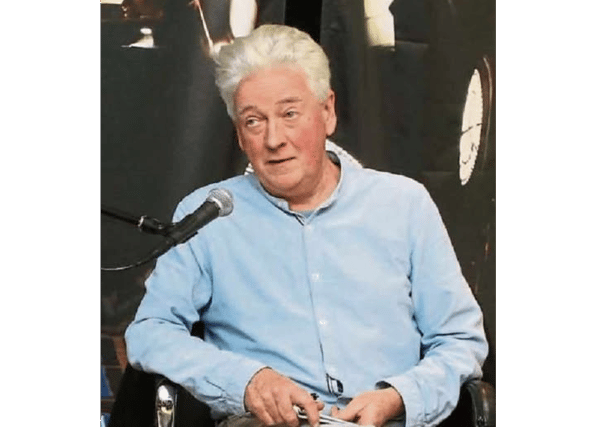

‘Ability of Secretary of State to interfere in reports and veto what information families receive should be done away with’ - Paul O’Connor
The British Government’s Independent Commission for Reconciliation and Information Recovery (ICRIR) has been accused of handpicking four specific groups to respond to its recent consultation on trauma and resilience.
Set up under the controversial Legacy Act, the ICRIR has been operational since May 2024.
Speaking to The Derry News, Paul O’Connor, director of the Pat Finucane Centre (PFC), revealed his organisation had garnered the information as a result of an FOI request to the ICRIR.
He explained: “The ICRIR said it had carried out a consultation on trauma and resilience earlier this year. Now, very few people we know in this sector knew about this consultation. However, the ICRIR thanked four groups which had responded.
“We submitted an FOI to it and discovered two of those groups and a statutory responsibility to respond. The two other groups which responded were the Presbyterian Church and the South East Fermanagh Foundation.
“This jurisdiction has a wealth of people and groups who have had decades long experience in the issue of trauma and resilience, yet most of them were unaware of the ICRIR consultation. That tells its own story,” said Paul O’Connor.
Mr O’Connor’s observations on the methodology of the ICRIR came from a discussion on the Community on the Administration of Justice (CAJ) report: “What could substantive ‘root and branch’ reform of the ICRIR look like? And what would it be enough?”
Published in November, the report was “informed and shaped” following discussions with representatives of CAJ, PFC, Amnesty NI, Relatives for Justice and Rights and Security International. It analysed the extent to which reform of the ICRIR was viable.
According to Paul O’Connor, the report lays out a “blueprint for what is needed to fix what is clearly broken”.
“If our recommendations were implemented, what would emerge would be unrecognisable from the ICRIR,” he added.
“As was envisaged in the Stormont House Agreement (SHA), there should be a separation of investigations and truth recovery, that is vital. Under the SHA there were to be two bodies, one to carry out investigations and one to engage in truth recovery, however, the British Government combined them into one body - the ICRIR.
“Secondly, the independence requirements in place for Operation Kenova and the Police Ombudsman - none of their investigators can be former members of the RUC or PSNI - should be reinstated for any new investigative body.
“At the moment, there are former members of the PSNI and RUC in the ICRIR. It is recruiting from the police and that is unacceptable.
“In addition, all inquests should be reinstated, not just those that had started, those that were announced and any that might be ordered in the future. The powers of the Attorney General to order inquests should be reinstated and civil proceedings should be reinstated,” said Paul O’Connor.
British Secretary of State Hilary Benn has said he is going to reinstate civil proceedings through Remedial Orders, which are faster. However, he wants to bring in new legislation for inquests.
Paul O’Connor believed this would “cause a delay well into next year”.
He added: “That is not acceptable. Inquests should be reinstated as soon as possible.
“The National Security Veto should also be done away with. The PSNI chief constable has already expressed doubts about the Veto.
“And, the ability of the Secretary of State to interfere in reports and veto what information families receive should absolutely be done away with.
“There needs to be a recruitment process for all ICRIR senior management positions as well. The existing staff bought into a deeply flawed process and were willing to work with it, and, as a result, the families have no confidence in them. Recruitment should be carried out as was stipulated in the SHA. The process should be internationalised and the two governments and the political parties should be involved,” said Paul O’Connor, who described the process for appointing current ICRIR staff as “very opaque”.
Paul O’Connor is confident, if the recommendations in the CAJ report were implemented, what would emerge would be “acceptable to families and unrecognisable from what has gone before”.
“We are meeting the Secretary of State before Christmas and will be reiterating that the ICRIR is broken and he needs to fix it,” added Paul O’Connor.
“He will inevitably say, ‘What about the families that have already engaged?’ We will say, ‘What about the hundreds upon hundreds of families who were left with no mechanism on May 1, this year?’ Their inquests, Police Ombudsman’s Investigations, Legacy Investigation Branch investigationsand civil cases were all abandoned. They were already on the road and that rug was pulled from under them.
“It has become obvious since May 1, families do not have confidence in the ICRIR. We see that reflected in the extremely low number of cases.
“Originally the ICRIR said there were 14 applications. However, four of those cases were the same incident - the Guildford bombing.
“No other investigative mechanism counts multiple deaths in the same incident as a separate investigation. That is really deceptive. It has already admitted one of the other cases involves multiple deaths, so it has a caseload. It has ten times more staff than it has cases. Everything that has happened since May 1 shows it is broken,” said Paul O’Connor.
Citing the multiple court judgements against the ICRIR, including its inability to carry out Article 2 investigations, Paul O’Connor said: “We now have the Secretary of State saying he needs to bring in measures to address this.
“If there was anything else which began its life and was immediately criticised by the courts and the Government had to bring in new laws to change it, you’d say there was something radically wrong.”
Responding to an inquiry from The Derry News, a spokesperson for the ICRIR SAID: The Commission engages widely around all its consultations. We urge all to share their views with the Commission on our proposals. In our recent consultation on implementing a trauma informed approach, we received detailed responses from four organisations.
The full consultation response is published on our website here: ICRIR Consultation Response: Implementing a Trauma Informed Approach - Independent Commission for Reconciliation & Information Recovery
The Commission is a request led organisation. It is in place to serve individuals with investigations into the questions that they have. Victims, survivors and families have told us they wish to be treated as individuals and not as case numbers. At the time of writing, the Commission has received requests from over 100 individuals. Of those that have been accepted for investigation, two incidents have multiple requests - one has five requesting individuals and the other has two requests that relate to the same death.”