

Major new biography of Wolfe Tone launched in Derry
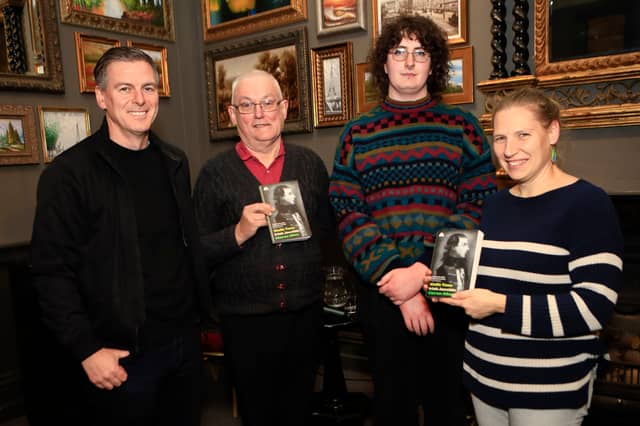

Wolfe Tone: Irish Jacobin charts the 1798 leader's journey from elite background to champion of the 'men of no property'.
Wolfe Tone: Irish Jacobin, the first major biography of the founder of Irish republicanism in over twenty years, was launched in Derry in St Columb's Hall on Tuesday, November 17.
It takes a distinctly novel interpretation, describing Wolfe Tone as a ‘Jacobin’, a term used to describe radicals during the French Revolution.
The author Kieran Allen, an Emeritus Associate Professor of Sociology at University College Dublin, gave a lecture on Wolfe Tone and took questions on the book .
Wolfe Tone is a unique figure within Irish nationalism; as an English-speaking Protestant of settler colonial origin, Tone underwent a dramatic political transformation in his relatively short life: from an elite playboy with colonial fantasies, into a radical Jacobin who advocated the unity of Catholics, Protestants, and Dissenters.
Allen rejected the revisionist account of his life, which assumed that the peasantry who joined the revolution did so for sectarian motives. He claimed they were highly politicised and were following the revolution in France.
Wolfe Tone helped to build the United Irishmen into one of the largest revolutionary movements in Europe. Their rebellion of 1798 was crushed only through systematic terror, with more people murdered in Ireland than all of France during the ‘Reign of Terror’.
Tone saw the Orange Order as a counter-revolutionary force and would have had little time for the notion that respect should be shown for this culture.
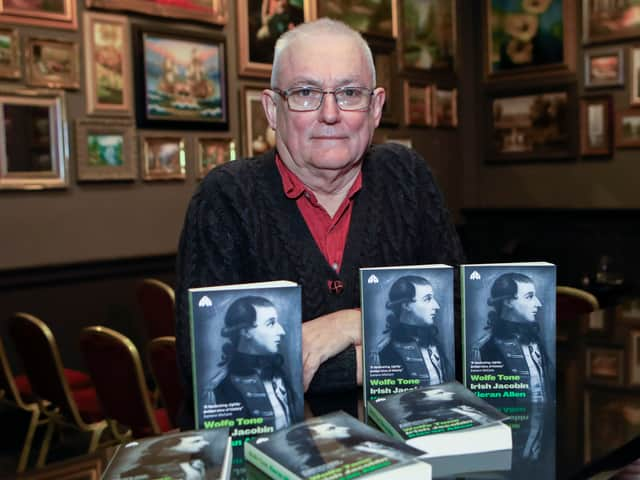
This political biography dispels the myths surrounding Tone’s life and politics.
It challenges both nationalist accounts which often depict him as ‘coming over’ to the Catholic side and revisionist accounts which suggest that the ‘cult of Tone’ led to republican violence.
Instead the book charts his political development as a revolutionary who, despite religious differences, placed trust in the ‘men of no property’ to break connections with England. His pioneering anti-sectarian vision remains as relevant as ever today.