

Differences emerging regarding RQIA report on Emergency General Surgery in Western Trust
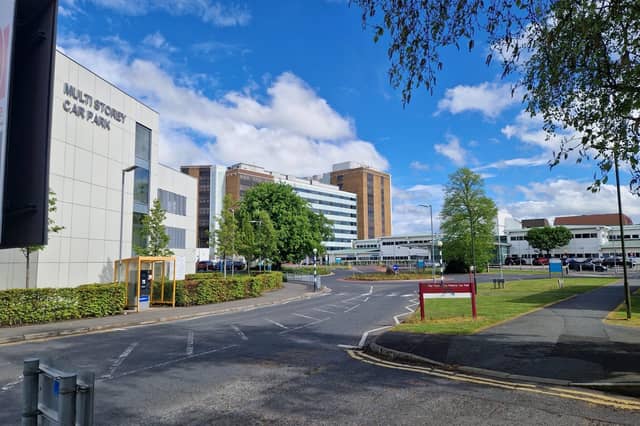

RIQA reports arose from the Western Health and Social Care Trust’s (WHSCT) decision to “temporarily” suspend Emergency General Surgery (EGS) provision at Enniskillen's South West Acute Hospital
Significantly differing public interpretations have emerged regarding the Regulation and Quality Improvement Authority (RQIA) report: ‘Report of Inspection of the Emergency General Surgery (EGS) Pathways in the Western Trust, following the temporary suspension of services at SWAH’.
In a statement to The Derry News, an RQIA spokesperson said its June 10, 2026 report followed its January 2025 report: ‘Review of the Pathways Associated with the Temporary Suspension of Emergency General Surgery at South West Acute Hospital’.
Both RIQA reports arose from the Western Health and Social Care Trust’s (WHSCT) decision to “temporarily” suspend Emergency General Surgery (EGS) provision at Enniskillen's South West Acute Hospital in December 2022.
Derry’s Altnagelvin Hospital is currently providing ESG for local patients, in addition to patients who have to travel from Fermanagh and Tyrone to the city, as the South West Acute Hospital EGS suspension is still in place.
The RQIA spokesperson added: “RQIA carried out an unannounced inspection of the service, over the period November 12, 2025 to February 19, 2026.
The aim of the inspection was to assess the effectiveness of the temporary emergency general surgery (EGS) pathways, and ensure quality and safety processes embedded.
“The inspection was conducted at the two Emergency Departments; at South West Acute Hospital and at Altnagelvin Hospital; and the surgical wards at Altnagelvin Hospital.
“The inspection concluded on February 19, 2026, when feedback was provided to senior [Western Health and Social Care] Trust representatives,” said the RQIA spokesperson.
The report identified four areas for improvement, according to the RQIA spokesperson.
They added: “These related to the need for consistent application of EGS pathways with clear shared documentation and understanding across all the staff groups involved;
“The need for effective staff engagement, communication and collaborative team working;
“The need for audits to be undertaken consistently, and sustained to provide information on outcomes for patients, specific to the pathways and the population groups affected; and to enable insights to be developed to guide further improvement;
“And, the need for strengthening of risk and incident management and a sustained focus on applied improvements,” said the RQIA spokesperson.
Commenting on the findings of the Inspection, RQIA Chief Executive Briege Donaghy said “We are often asked in our role as regulator if a service is ‘safe’.
“Sometimes it is thought this can be answered simply by one measure or factor. The reality is that it takes a number of systems, processes and applied learning to be in place to create the culture for a service to be safe and effective on an ongoing basis,” added Ms Donaghy.
“Achieving a safe and high quality service needs a continuing focus on the clinical outcomes for patients; as well as close attention to patient and staff experience. It requires constant review of the inherent risks in the service and that, when incidents occur, processes are in place that will ensure actions are taken to reduce the potential for them to recur.”
“In the case of the Emergency Surgical Pathways in the Western Trust, RQIA found several of these systems and processes are in place. The Trust have evidence of good clinical outcomes for patients who spend time in the in-patient surgical wards at Altnagelvin Hospital, and have made significant improvement in the direct to bed admissions for transferred patients from South West Acute Hospital.
Achieving a safe and high quality service needs a continuing focus on the clinical outcomes for patients; as well as close attention to patient and staff experience.
“The inspection report sets out the issues that need continued focus, to ensure existing quality and safety systems and processes are extended and embedded, and that there is on-going evidence of outcomes for patients across the whole pathways and a positive working environment for all staff involved.
“The Inspection Team were impressed with the expressed commitment and leadership shown by the Chief Executive and members of the Senior Management Team, in responding to the Inspection recommendations. The senior Team had commenced work on several issues immediately on receiving early feedback from the Inspection Team, and in advance of receipt of the RQIA Inspection final report,” said Ms Donaghy.
She added: “We trust that the improvement actions set out in the Inspection Report will support the Trust in their focus on reinforcing the safety, effectiveness and sustainability of the service.
“Timelines have been set against all the required actions over the coming months, and RQIA looks forward to clear evidence of achievement,” concluded Ms Donaghy.
On July 6, 2026, WHSCT issued a statement on what it described as “inaccurate public claims” about the centralisation of EGS at Altnagelvin.
A Trust spokesperson said: “Independent evidence has confirmed continued improvements in Emergency General Surgery patient pathways across the Western Trust, with both the RQIA Inspection Report and the independent CHKS review highlighting better patient outcomes, improved patient flow and enhanced patient safety.
“The Trust is therefore setting out the findings of both independent reports following inaccurate public commentary which does not fully reflect their conclusions,” they added.
“While RQIA identifies areas for further improvement, its report does not reach that conclusion and records significant progress across the pathways, together with no evidence of patient harm in the incidents reviewed.
“The Western Trust recognises staff concerns regarding patient transfers and delays and continues to take decisive action to address these issues.
“The RQIA findings are consistent with the independent CHKS review, published in January 2026, which analysed patient outcomes over a two-year and five-month period from December 2022 to April 2025. That independent analysis confirmed substantial improvements in patient outcomes following the service changes, including: a 24% reduction in mortality; a 28.5% reduction in complications; and a 22.5% reduction in readmissions.
“CHKS concluded: ‘Overall, the data shows a clear and statistically significant reduction in mortality rate for emergency surgery patients following the revision to surgical services,’” said the Trust spokesperson.
They added: “These independent findings demonstrate continued improvement in patient outcomes, while also identifying further opportunities to strengthen the pathways, which the Trust fully accepts and is actively implementing.
“The Western Trust remains committed to maintaining safe, effective and sustainable services for our population and will continue to work closely with RQIA, our staff, the Northern Ireland Ambulance Service and partner organisations to implement the report's recommendations and further strengthen the quality and safety of care for patients across the Western Trust area.”
Also commenting on the RQIA report, Fermanagh-based Save Our Acute Services (SOAS) campaign said it was important to acknowledge it highlighted concerns voiced by staff in Altnagelvin Hospital, South West Acute Hospital and the Northern Ireland Ambulance Service (NIAS) about a range of issues.
“In it, Altnagelvin, South West Acute Hospital and NIAS staff spoke about delayed transfers; ambulance pressures; fractured working relationships; and a culture of fear that stops people speaking openly,” said the SOAS spokesperson.
The Derry News has also reported last week that a former WHSCT Consultant, an independent clinical professional, and London-based statistician, Paul Bassett, all disputed the CHKS data on which the Trust was making its claims.