

Concern about local healthcare expressed

‘Delayed transfers; ambulance pressures; fractured working relationships; and a culture of fear that stops people speaking openly’.
Concern about a range of issues impacting on local healthcare have been expressed by staff in two Western Health and Social Care Trust (WHSCT) hospitals and the Northern Ireland Ambulance Service (NIAS).
Altnagelvin Area Hospital (Derry), South West Acute Hospital (Enniskillen) and NIAS staff spoke about delayed transfers; ambulance pressures; fractured working relationships; and a culture of fear that stops people speaking openly.
The issues were highlighted in the Regulation and Quality Improvement (RQIA) report: “Emergency General Surgery in the Western Trust Following the Temporary Suspension of Services at South West Acute Hospital: Pathways Inspection Report 12 November 2025 - 19 February 2026” - published on Wednesday, June 10, 2026.
WHSCT took the decision to “temporarily” suspend the Emergency General Surgery service at South West Acute Hospital (SWAH) in December 2022. It was switched to Altnagelvin, where it is still being carried out as the SWAH suspension remains in place.
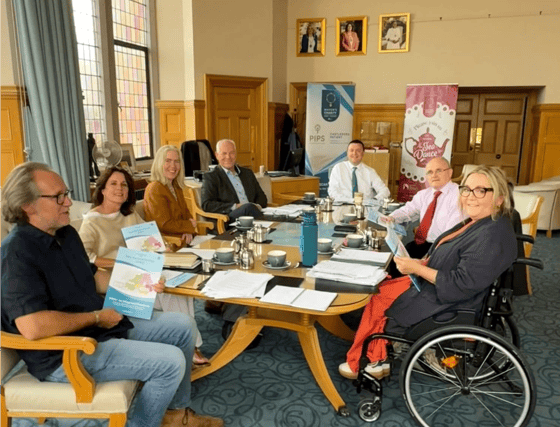
The Save Our Acute Services (SOAS) campaign group presented its analysis of the RQIA’s unannounced inspection at Altnagelvin and South West Acute Hospital (SWAH), which formed the basis of the report, at an event in Fermanagh House in Enniskillen on Wednesday (June 24, 2026).
SOAS spokesperson Donal O’Cofaigh told The Derry News it had completed its own “detailed analysis of the RQIA report on its unannounced inspection of the temporary Emergency General Surgery (EGS) pathways, complemented by supplementary information received from the regulator”.
He added: “The very fact the RQIA has had to return to conduct unannounced inspections evidences the seriousness of the concerns that exist over the safety of patient pathways.
‘Our community has been left with pathways that staff themselves say are not safe and not effective’
“The findings of this report are stark and raise serious concerns that the basic health rights of our community are being denied,” said Mr O’Cofaigh.
SOAS said frontline staff have delivered a clear verdict that current pathways are neither safe nor effective but that was not reflected in the statements from senior management in the Western Trust.
“The RQIA report showed staff said care is neither safe nor effective,” said Mr O’Cofaigh.
“To an online staff survey question asking ‘Is care safe?’100% of staff said they were very dissatisfied or dissatisfied,” he added.
“On being asked ‘Is care effective?’91% of staff said they were not satisfied that care is effective.
“‘Effectiveness’ is RQIA’s stated core focus for both the 2025 Review and the 2026 inspection.
“A total of 69 staff contributed feedback, including 29 in face-to-face interviews, a high level of engagement for an inspection of this kind.
“This level of concern expressed by staff should have driven a much more balanced conclusion by RQIA,” said Mr O’Cofaigh.
“Face-to-face meetings conducted by RQIA with 29 staff revealed serious risks and broken relationships. These are red-flag findings which should have carried far more weight in the regulator’s final summary than the claim that ‘RQIA acknowledges improvement in a number of areas across the pathways’, he added.
“The recommendations from the earlier January 2025 RQIA Review are still not delivered,” asserted Mr O’Cofaigh.
“The two ‘Urgent’ recommendations - ending Double Emergency Department (ED) and increasing NIAS capacity - remain unmet, with ED-to-ED transfers still happening and the lack of ambulance capacity now acknowledged by the regulator,” he said.
“The 2025 Review remains materially not implemented, even if this is not how the regulator presents it. Frontline staff and ambulance crews have kept patients as safe as they can despite the clear pathway weaknesses.
“They have told the regulator exactly where the risks lie yet 18 months after RQIA’s own Review, the urgent recommendations are still not delivered.
“Our community has been left with pathways that staff themselves say are not safe and not effective.
“We pay tribute to the courage of ED staff and NIAS crews who spoke frankly to inspectors, highlighting the growing gap between their all-too-often harrowing frontline experience and the more reassuring story coming from senior management,” said Mr O’Cofaigh.
He added: “Enough is enough. The Minister cannot ignore this any longer. It is time to move past temporary sticking plaster fixes and commit to funding and commissioning a sustainable emergency surgical service for SWAH that matches what this community needs and deserves.”
The slideshow presented by SOAS on Wednesday can be viewed at: https://heyzine.com/flip-book/cfa2a4913b.html.
According to Mr O’Cofaigh, the RQIA inspection report documented a service under severe strain.
“Staff and NIAS reported prolonged transfer times, averaging 6.8 hours, with almost half of patients also waiting more than six hours from acceptance to transfer – a total of 12.8 extra hours for this rural community,” he said.
“There is continuing ambiguity over clinical ‘ownership’ of patients waiting in SWAH for transfer, and reports of delayed handovers at Altnagelvin, with staff describing a breakdown in professional relationships between EDs and NIAS crews.
“NIAS staff warn of a ‘greatest risk’ around ED-to-ED transfers, and say it is ‘not uncommon’ for the Enniskillen area to have no ambulances available, leaving the rural community exposed.
“Emergency Medicine consultants have refuted claims patients have not come to harm and have cited cases where requests for external review were not supported.
“The report’s final pages record staff saying that no significant changes have been made despite concerns being raised at every level of the Trust over a number of years, and that conditions are getting worse.”
Karen Hargan, chief executive of the Trust said: “We welcome the publication of the RQIA inspection report, and its recognition of the significant progress made across our Emergency General Surgery pathways, including improvements in patient flow, clinical outcomes and patient safety.
The findings complement the independent Caspe Healthcare Knowledge Systems (CHKS) review, which confirmed improved outcomes and a significant reduction in mortality following the service changes,” she added.
“The report also recognises the Trust’s achievement where 97% of patients requiring transfer from South West Acute Hospital are admitted directly to an inpatient surgical bed in Altnagelvin Hospital.
“In addition, an average of 5.6 patients per day with emergency general surgery-related conditions continue to receive same-day or next-day treatment through the Emergency Surgical Ambulatory Assessment Unit at South West Acute Hospital, while an average of 2.5 patients per day require transfer for inpatient admission to Altnagelvin Hospital.
“We remain committed to maintaining safe, effective and sustainable services for our population and welcome the recommendations identified by RQIA. We will continue to work closely with RQIA, our staff and partner organisations to implement these improvements and ensure the highest standards of care for patients across the Western Trust area.”