

No political interference in Troubles-linked prosecutions, Attorney General says
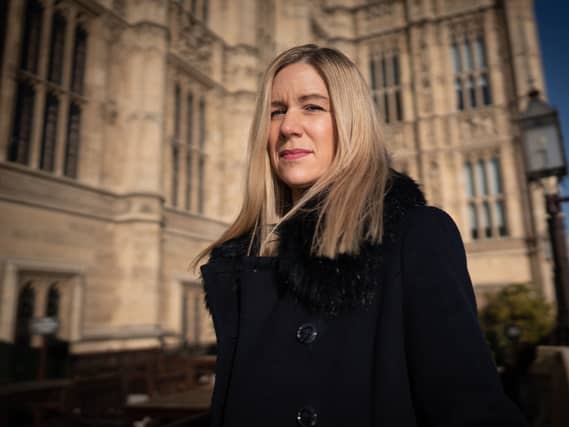

Ellie Reeves said any future decision on whether to prosecute Troubles-related crimes would be made ‘independent of Government’.
Politics will not be a factor in any future decision to prosecute serious crimes linked to the Troubles, the Attorney General has pledged.
Ellie Reeves said such decisions would be made “independent of Government” using a “quasi-judicial process”, as she spoke in the Commons.
She was responding to Labour MP Andy McDonald, who warned the Northern Ireland Troubles Bill risked “rolling back” safeguards designed to protect “the independence of prosecution decisions free from political interference”.
The Bill features a clause to prevent indictable-only Troubles-related crimes being prosecuted, unless the Advocate General for Northern Ireland or the Attorney General for England and Wales – both offices held by Ms Reeves – has given their consent.
Indictable-only offences, such as murder, rape and robbery, can only be tried in the Crown Court.
Mr McDonald pointed to part of the Justice (Northern Ireland) Act 2002, which sets out that the Director of Public Prosecutions in Northern Ireland’s functions “shall be exercised by him independently of any other person”.
The Middlesbrough and Thornaby East MP described this as one of the “key safeguards ensuring the independence of prosecution decisions free from political interference”.
He asked: “Does the Attorney General recognise that requiring her consent for serious Troubles-related prosecutions risks rolling back that safeguard?
“Will she reconsider this provision to protect the independence of Northern Ireland’s justice system and public confidence in it?”
Ms Reeves replied: “I want to give (Mr McDonald) the assurance that there will be no political interference with decision making.
“All decisions would be made quasi-judicially and independent of Government.
“There are precedents for this approach.
“There are a number of offences for which Attorney General consent is already required.”
The Attorney General’s consent is already required to prosecute some crimes in England and Wales such as causing an explosion likely to endanger life or property and most spying offences in the Official Secrets Act 1989.
Gráinne Teggart, Amnesty International UK’s Northern Ireland deputy director, called for the Westminster Government to “remove the Attorney General consent clause” before it becomes law.
She said: “An ‘assurance’ that decisions will be made ‘quasi-judicially’ does not resolve concerns about prosecutorial independence or public confidence.”
Ms Teggart added that “the independence of prosecution decisions is a vital safeguard, rooted in reforms that followed the Good Friday Agreement”, signed in 1998.
The Northern Ireland Troubles Bill has cleared the Commons and has been passed to the Lords for further scrutiny.
It is listed for a second reading debate in the Lords on December 2.