Search


03 Apr 2026
Search
03 Apr 2026

Please allow ads as they help fund our trusted local news content.
Kindly add us to your ad blocker whitelist.
If you want further access to Ireland's best local journalism, consider contributing and/or subscribing to our free daily Newsletter .
Support our mission and join our community now.
To continue reading this article, you can subscribe for as little as €0.50 per week which will also give you access to all of our premium content and archived articles!
Alternatively, you can pay €0.50 per article, capped at €1 per day.
Thank you for supporting Ireland's best local journalism!

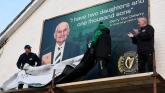
Billboard erected at the Tillie's site highlighting the massive economic disparity between Derry and Belfast

Preeminent academic, Professor Gerry McKenna visited Ráth Mór Centre last week to meet with members of the Derry University Group (DUG) where he delivered a seminar disseminating the findings of the Royal Irish Academy (RIA) ‘Finding common ground, building community: strengthening and stimulating tertiary regional collaboration in the north-west of the island of Ireland’ report.
The RIA is an independent all-Ireland society which was established in 1785, which has approximately 650 members ‘based on distinction of scholarship and research across the full breadth of academic enterprise; sciences, engineering, humanities, social sciences and public services.’
Membership to the academy is by election and it is considered to be the highest academic honour in Ireland. It has very close links with other academies across the UK, Europe and the world. The academy draws on members’ expertise to contribute to public debate and policy formation on issues of science, technology and culture.
In attendance at the event were a number of interested parties including former SDLP MP, Mark Durkan as well as members of DUG.
Professor McKenna told those in attendance why the report was commissioned.
He stated: “The academy felt there was a need to look at higher education across the island of Ireland and develop a vision for higher education over the next 15 years or so.
“That was influenced by many issues, Covid being one, Brexit being another, new delivery modalities that were emerging, technological university development in Ireland, regional pressures, access and inclusion issues, the need for a strong research base in Ireland and Ireland/Northern Ireland collaborative issues and challenges.
“We engaged in a consultation exercise that had inputs from over 100 organisations and individuals, various stakeholders.
“We had close to 40 members representing all aspects of academia and all higher education institutions on the island and we split into five subgroups looking at different aspects of higher education, one being a vision of higher education, one being a vision for higher education on the island of Ireland in 2035, recognising that higher education has a role to play in the support of democracy and tolerance.
“We produced five reports, which came out at the end of 2021/beginning of 2022, which are available on the academy website. One of the areas that perhaps attracted most attention was the whole issue of regions and place.”
The ‘Finding common ground, strengthening and stimulating tertiary and regional collaboration in the north-west of the island of Ireland’ research paper highlights the ‘persistent challenges’ faced in the North-West region of Ireland that, if resolved, would benefit the north-west communities and the economy of the entire island, and goes on to provide the blueprint for such action to be taken.
The paper also suggests that a ‘federal cross-border tertiary education institution’ to boost university provision in Derry and the North-West as a whole should be seriously considered, and that infrastructure should also be developed to support such a project.
Professor McKenna added: “We recognised that there were substantial deficiencies in terms of development across the island as a whole, for example the south-east, which has to some extent been corrected through the development of a technological university there, but we were particularly taken by the lack of support and lack of activity in the north-west of the island.
“We defined the region as representing the counties of Derry and Donegal, but also in terms of the greater north-west; Mayo, Sligo, Leitrim and Tyrone. All of which can be shown by various indices to have been underprovided in terms of higher education, tertiary education in future.”
The challenges highlighted, revolve around infrastructural, educational and communication deficits in comparison to other regions of the island, and the ‘limited ambition by governments and relevant institutions to grow student numbers to levels comparable to those of other major population centres elsewhere on the island.’
“That is compounded by the major infrastructure deficit in terms of road, rail and communications in this area which has also been highlighted in various scorecards produced by the European Commission which shows that the north and west regions of Ireland are much more deficient than other parts of the island.”
Figures were displayed of the disparity between student numbers in Belfast and Derry. While Belfast has a student population of 44,334 which equates to 82.6% of the North’s total, Derry lags well behind at 5,227 students, 9.7% of the total.
A taskforce, established by Economy Minister Conor Murphy in March, has begun to take steps to increase student numbers to 10,000 at Ulster University’s Magee campus.
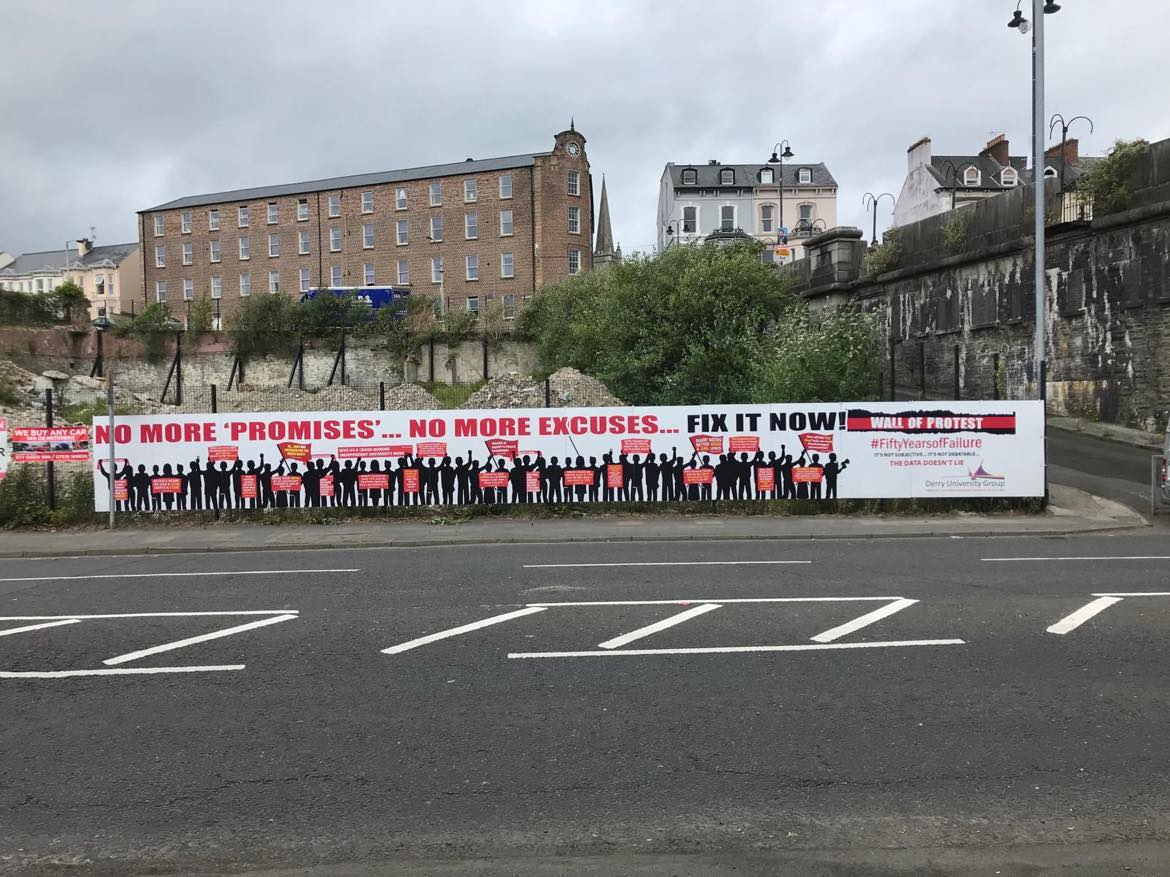
Meanwhile, a 55-foot billboard spelling out the massive economic disparity between the North’s two biggest cities has been erected at the site of what was Derry’s biggest-ever shirt factory.
Campaigners unveiled their sign on Foyle Road, where the landmark factory Tillie & Henderson once stood.
DUG has previously put up pre-election hoardings at Free Derry Corner, opposite Magee College, and at other sites across the city.
DUG member Conal McFeely said: “There is no better - or indeed no other - way to regenerate this region than to establish an independent university here. No other state would continue to support such regional imbalance - with 83 percent of students and 95 percent of capital funding being restricted to Belfast.
“Instead of yet more task forces, we need to take our politicians to task and force them to deliver on the findings of the Royal Irish Academy reports. A cross-border university with Derry as its hub will revitalise our region and restart our economy.
“We want local people to read this billboard and, when the politicians arrive on their doorstep, ask them to account for what’s on it. Why is a job in Derry paid half of that in Belfast? Why is this the only city on these islands with net migration?.
“The university must be the number one issue for our new MPs and until that happens, we urge voters to make as much noise as they can.”

Subscribe or register today to discover more from DonegalLive.ie
Buy the e-paper of the Donegal Democrat, Donegal People's Press, Donegal Post and Inish Times here for instant access to Donegal's premier news titles.
Keep up with the latest news from Donegal with our daily newsletter featuring the most important stories of the day delivered to your inbox every evening at 5pm.

This publication supports the work of the Press Council of Ireland and Office of the Press Ombudsman, and our staff operate within the Code of Practice of the Press Council. You can obtain a copy of the Code, or contact the Council, at www.presscouncil.ie, Lo-call 1800 208 080 or email: info@presscouncil.ie.