

Troubles civil claims having ‘huge detrimental impact’ on PSNI – Jon Boutcher
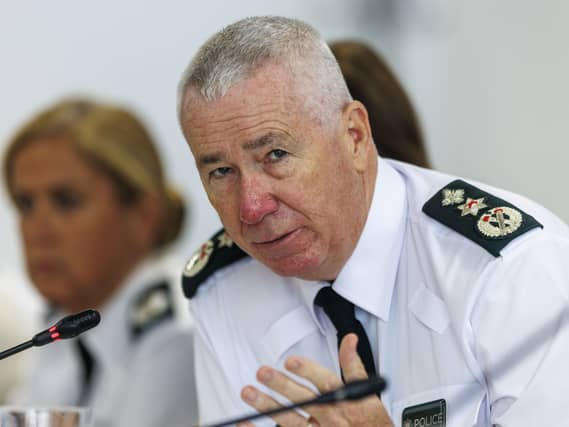

Mr Boutcher was speaking at an event to mark 25 years since the Police Service of Northern Ireland was formed from the Royal Ulster Constabulary.
Legacy civil claims relating to Troubles incidents have had a “huge detrimental impact” on the Police Service of Northern Ireland (PSNI), according to its Chief Constable, Jon Boutcher.
Mr Boutcher previously said that from July 2021 to July 2026, the PSNI paid out £7.7 million in legacy compensation settlements to families, and £14.6 million on related legal costs.
Speaking at Queen’s University Belfast on Monday, as part of a series of events to mark the 25-year anniversary of the new policing arrangements in Northern Ireland, he said that the service’s budget has not increased since 2010, as he called for help in funding legacy cases.
He said: “The legacy of the past here continues to impact on the Police Service of Northern Ireland, financially and around trust and confidence and reputation.
“We’ve got to have more of a discussion, and we have to come up with a plan that protects the PSNI from the real sensitivities that still exist around legacy.
“We cannot fund the legacy of the past through civil cases unless we’re helped financially. It has a huge detrimental impact on our ability to police our society today.”
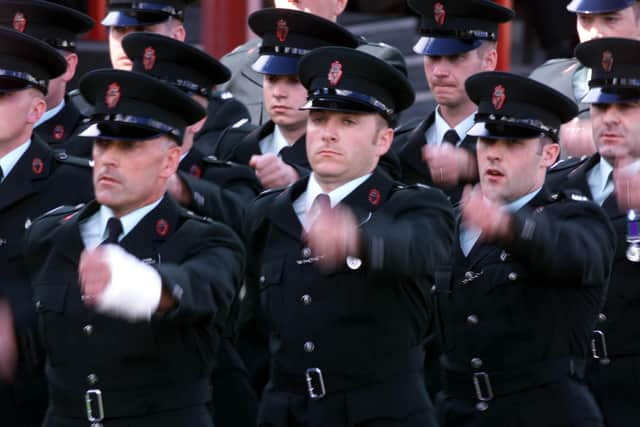
The PSNI was created from the Royal Ulster Constabulary (RUC) in November 2001, after the recommendations of the 1999 Independent Commission on Policing, known as the Patten Commission.
The Commission was tasked with providing a new beginning to policing in Northern Ireland after the Good Friday Agreement, proposing a new service “capable of attracting and sustaining support from the community as a whole”.
Mr Boutcher said that “more tears have been shed in Northern Ireland by policing families” than anywhere else in the world, as a result of the “wickedness of policing during the troubles”.
While he said the police service has come a long way since then, he said its officers still face challenges to their safety, listing attacks that have occurred on the PSNI in the years since 2009.
He added that he was concerned about history repeating itself in Northern Ireland.
“Drumcree in the late 90s, some 28 years ago, put the peace process in jeopardy,” he said.
“We are going full circle quite often in Northern Ireland, and I’m hoping we can actually air some of these issues to make sure that we continue to move forward and make progress.
“Northern Ireland is unrecognisable from when the PSNI began its life, but we still have much, much to do.”
Mr Boutcher appealed for a budget that matches the challenges faced by the PSNI.
“Our budget remains more or less £1 billion, which is what it was in 2010 when policing was devolved,” he said.
“I heard on the radio this morning that there was a question, ‘have the financial challenges of the PSNI gone away?’
“They have not gone away. They are as stark as ever, if not more so, because of the wider challenges that the executive is now experiencing. The health budget was £3.3 billion in 2010, now it’s £8.4 billion.
“Our budget was £1 billion and it’s still £1 billion. Now I got a failure on my maths O-level, and the board probably wished to know that before I did my interview, to have a billion-pound budget, but that can’t continue. We’ve got to find a way to support policing.”
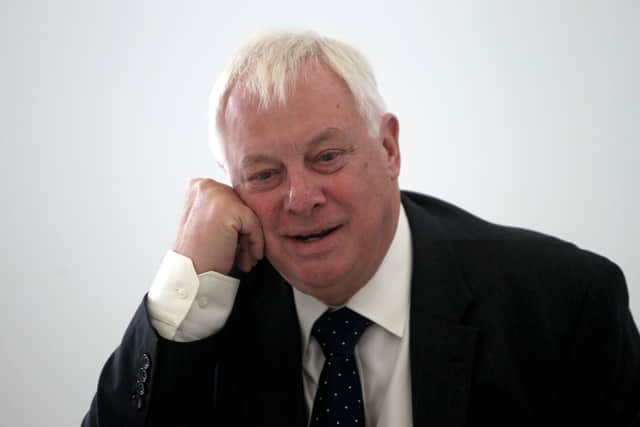
The commission that brought about the transformation of Northern Ireland’s policing structures was chaired by Lord Chris Patten. The 1999 report set out 175 recommendations, with new policing arrangements taking effect in 2001.
They included both practical and symbolic changes to the force, like a change in name and badge and a new wave of recruitment focusing on people from a Catholic background.
A new code of ethics and human rights training were also recommended.
Speaking in an interview aired at the 25-year anniversary event on Monday, Lord Patten said that implementing a human rights ethos in the PSNI was critical to its success.
“One of our great national newspapers said ‘it’s something crazy talking about human rights being at the core of good policing’, policing was all about getting a truncheon out and making people obey the law,” he said.
“Policing is the biggest test of getting people to accept the rights of others and the extent to which their own rights depend on others being able to stand by their rights as well. Human rights are at the heart of policing. It’s what policing is all about.
“Policing isn’t primarily about people with costumes being able to bash other people over the head if they do anything wrong.
“Policing is about encouraging everybody to realise that we all have a stake in supporting other people’s human rights if we want them to support ours.”