

Nature recovery plan launched amid Northern Ireland biodiversity decline

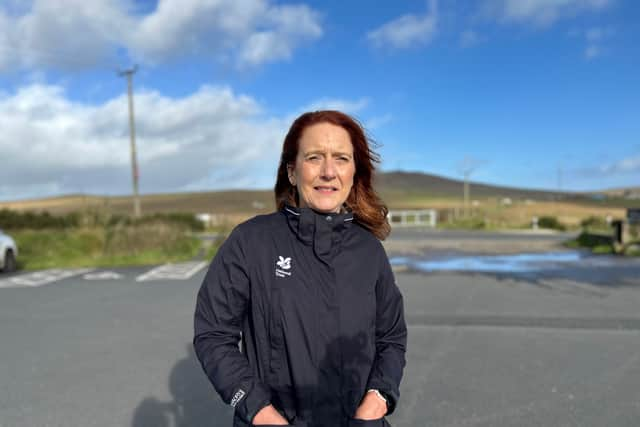
Heather McLachlan, National Trust director for Northern Ireland, described the region as ‘the most nature-depleted part of the UK’.
A new nature recovery strategy has been launched for Northern Ireland amidst warnings the region is the “most nature-depleted part of the UK”.
Agriculture minister Andrew Muir said he has heard calls from the public “time and time again” to “invest in nature and biodiversity”.
In Northern Ireland 36% of all features within protected areas are in unfavourable condition, and 12% of species assessed on the island of Ireland are threatened with extinction, according to the State of Nature Report for NI.
Stormont’s Department of Agriculture, Environment and Rural Affairs (Daera) says the new Nature Recovery Strategy for Northern Ireland to 2032 provides a framework for collective action, guided by science and evidence.
It identifies a number of pressures and threats for Northern Ireland’s environment including invasive species, climate change, inappropriate development, land and sea use change, increased intensive farming practices, and pollution.
The plan supports the wider international effort to reverse biodiversity loss, including the 30 By 30 ambition to effectively conserve and manage 30% of terrestrial and inland water areas, and 30% of marine and coastal areas, for nature and biodiversity by 2030.
The strategy also aims to restore degraded habitats including peatlands, wetlands, rivers, native woodlands and species-rich grasslands.
It further includes a “sustainable agricultural programme” outlining an aim to “implement policies and strategies that benefit our climate and environment while supporting our economically and socially significant agri-food sector”.
Heather McLachlan, National Trust director for Northern Ireland, said they have “been waiting for a number of years” for the statutory strategy.
Speaking at the Black Mountain in Belfast she said: “There’s a piece here about how do you then change that policy and that legislation into delivery on the ground.
“So here at Divis you’re seeing exactly that happening.
“So we have been working here for around 15 years, we are looking at not only where you look at species recovery, but also habitat.
“So Divis is well known for its peatland habitat, which is great for storing water and also for carbon, so in terms of climate change, it’s really really important.
“And in terms of these big weather events that we’re seeing at the moment, they are holding back water from the likes of Belfast City, so it has a big role to play not only for nature but also for the people of the city.”
She added: “I would have to say that in Northern Ireland, we’re the most nature-depleted part of the UK and possibly Europe as well, so we’ve got a real challenge here.
“We really haven’t been investing in nature for a number of years, and we probably need to change that because if you think about where we get our food from, where we get our water from, where we get our air from, all things that we all need individually, if we don’t look after that, it comes from nature.
“And therefore the big weather events that we’re seeing, some of the things that nature does is actually protects us from some of the big issues that come along and can help us manage them.
“So we, for the future, need to be very much investing in nature to make sure we’ve got soils which are allowing us to grow our food and also clean the water that we drink every day.”
Mr Muir said restoring nature “isn’t just a nice to have; it’s absolutely essential”.
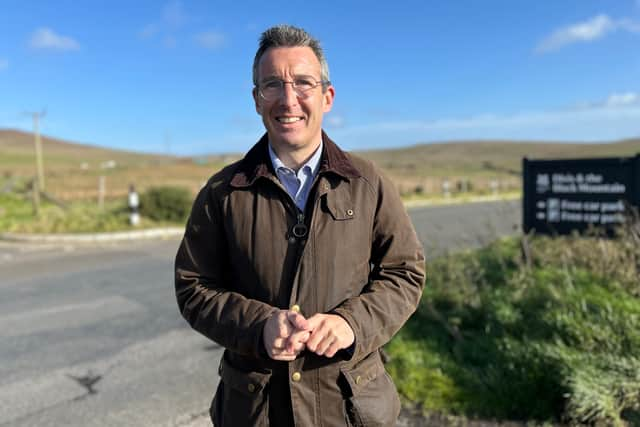
“This is an important day where we put in place the building blocks for nature recovery and absolutely central to that is environmental organisation,” he said.
“They’re doing good work, including here at Divis, and they’ll be critical for the delivery of the actions that arise from this strategy.”
Asked about financing the plan given the financial pressures facing all Stormont departments, the minister said “investing in nature delivers massive benefits”.
“It delivers better water quality, better air quality, reduces our greenhouse gas emissions, but also connects communities together and you’re seeing this happen here at Divis,” he said.
“There are three key issues for this strategy going forward.
“Yes, it’s funding, and we’re already delivering significant investment, whether it’s from my department, through Shared Ireland, and Peace Plus, but also it’s in relation to people on the ground to do the job and the political support.
“The public keep telling us time and time again: invest in nature and biodiversity, and it’s important we fulfil their desires for the future.”