

Canadian serviceman laid to rest 80 years after death in Londonderry plane crash
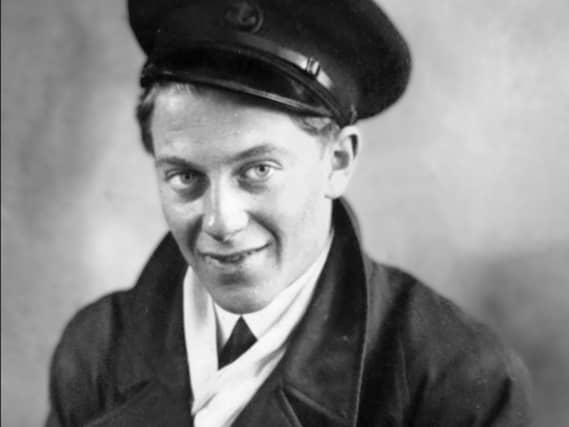

Human remains discovered in July have been confirmed to belong to James Willard MacDonald.
A Canadian serviceman is set to be laid to rest some 80 years after his death in a plane crash in Northern Ireland.
James Willard MacDonald served as a steward in the Royal Canadian Naval Volunteer Reserve during the Second World War, including service on the HMCS Algoma during the North African campaign.
After surviving the war, he died in a plane crash in rural Co Londonderry in 1947 at the age of 25.
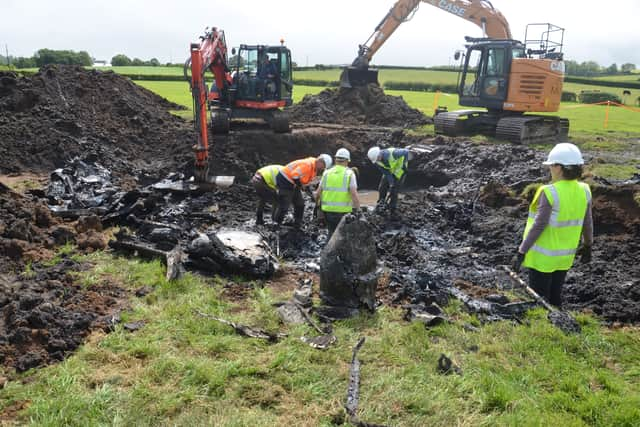
At that stage, his remains were unable to be recovered, but this year, his family had a major breakthrough when human remains were recovered from the site in Mayoghill, near Garvagh.
The Department of National Defence and the Canadian Armed Forces (CAF) this week revealed that those remains have been formally identified as those of Steward James Willard MacDonald.
Mr MacDonald, born in Newcastle in the Canadian province of New Brunswick, worked as a labourer before signing up to serve on April 11 1942, as the Second World War raged.
He joined the Royal Canadian Naval Volunteer Reserve at His Majesty’s Canadian Ship (HMCS) Brunswicker as a probationary steward.
His older brothers Fred, John and Arthur also volunteered for overseas service with the Canadian Active Service Force, and in 1944, Arthur was killed during the Italian campaign.
Mr MacDonald’s duties would have included serving meals and tending to officers’ quarters and their uniforms.
He primarily served in shore establishments in Canada and in Britain, before joining the HMCS Algoma on December 11 1942.
It escorted convoys between Britain and the Mediterranean.
After the war, he extended his service on HMCS Warrior, a light aircraft carrier, and served as a steward with 803 Canadian Naval Air Squadron.
On November 4 1947, Mr MacDonald was a passenger in a two-seat naval fighter plane known as a Fairey Firefly (TW 736) when the crash happened.
While the pilot escaped, Mr MacDonald died, and recovery efforts in the challenging boggy landscape were unsuccessful.
In July 2026, a recovery operation was carried out by the Canadian Armed Forces’ casualty identification programme.
They were supported by the Commonwealth War Graves Commission Recovery Unit; the Police Service of Northern Ireland; the Northern Ireland State Pathologist’s Department Mortuary; the Ministry of Defence; Queen’s University Belfast; the Department for Communities; and two Northern Ireland aviation archaeologists.
This week, the casualty identification review board was able to confirm that the human remains recovered were those of Mr MacDonald.
They have said his family have been informed and he is set to be buried in Northern Ireland.
A Police Service of Northern Ireland spokesperson said it had been a privilege to assist.
They said: “Whilst around 79 years have passed since Steward MacDonald lost his life, the passage of time does not diminish the importance of recovering his remains and affording him the dignity and respect he deserves.
“Our disaster victim identification officers undertake highly specialised and often challenging work, much of which takes place away from the public view. This operation demonstrates the expertise, professionalism and dedication of those officers and the important contribution they make to policing, both here and in support of our international partners.”
“Behind every recovery and every identification is a person, a family and a story. This remains true whether someone lost their life yesterday or many years ago. At the heart of everything we do in disaster victim identification is a commitment to treating those who have lost their lives with dignity and respect, and recognising the importance of our work to their families.
“It has been a privilege for the team to contribute to this operation and to work alongside our Canadian colleagues and the other agencies involved.
“I am extremely proud of the professionalism, care and commitment demonstrated by our team, and I hope that the recovery and identification of Steward MacDonald will bring some comfort to his family after so many years.”