

History of Limavady Workhouse to be explored at weekend events
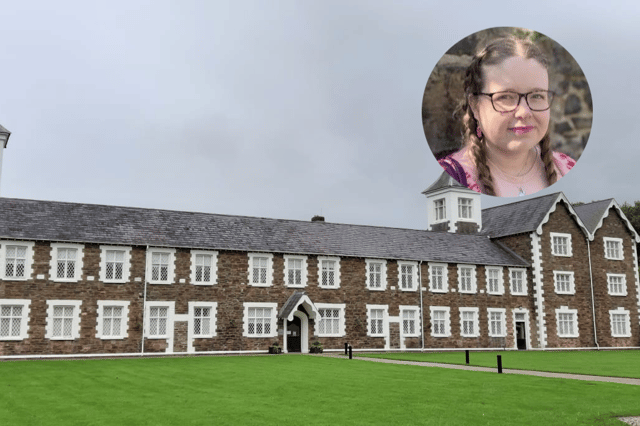

Two special events on the history of Limavady Workhouse will be held this weekend.
Dr. Robyn Atcheson, an historian who specialises in workhouses, will host a tour of Limavady Workhouse, regarded as Ireland’s best preserved, followed by an original talk on the workhouse system.
The events are being held in partnership with Limavady Workhouse Museum on Saturday, October 3.
The tour will take participants into the past, to experience the dread of presenting at the entrance block to gain admission and progress into the main workhouse building. They will also be able to learn about life in the workhouse, what it was like to sleep in the dormitories and eat the daily rations. This tour offers the unique chance to witness the conditions within the workhouse.
The talk on The History of the Workhouse System takes place in the very room where the Board of Guardians once met every week to decide the fate of the desperate people of the surrounding area. This talk explains why workhouses were introduced and tracks the changes throughout the 19th and into the 20th century.
Participants can choose to come along for either the tour or the talk, or both.
Dr Atcheson, who is based at Queens University, said she is delighted to be part of the event.
“Earlier this year, I gained recognition of the Belfast workhouse graveyard with a memorial installed by Belfast City Council which was covered by BBC News,” she said.
“I frequently give talks on workhouses, including for EHOD which has sold out two years in a row. This is the first time I will be doing an event for the public actually in a real workhouse.
“The Limavady workhouse was one of 130 workhouses introduced into Ireland to deal with the problems of poverty, hunger and homelessness. Each workhouse was built to the exact same design, the only difference being in size. Limavady was a medium sized workhouse, designed to hold 600 paupers.
“The workhouse opened in March 1842. Upon entry, families were divided according to sex and age. Men and women were separated as were parents and children. The main purpose of the workhouse was to force those who could not support themselves to work so any able-bodied adult was expected to work six days a week. Children were taught a basic primary-school level education.”
Dr Atcheson continued: “For the 3pm tour, we will be following in the footsteps of paupers, visiting the entrance block where they would have been medically examined and where the Guardians determined who entered and who was turned away. From there, we will enter the main building to visit the dormitory and hear what daily life was really like for those desperate enough to apply for help. Based on over a decade of research, we will experience what the workhouse uniform was like, what food was provided and what medical help was available for the paupers of the workhouse.
“At 6pm, I will be giving a talk in the restored boardroom of the workhouse Guardians who sat in judgement on the poor and sick who travelled to their gates. This talk will put the Limavady workhouse in the context of the whole system of workhouses that covered all of Ireland and Britain in the Victorian period. We will follow the story of Limavady workhouse from opening through the hardship of the Great Famine and its evolution into a district hospital in the 20th century. We will also see how it compares to other workhouses in Ulster and how it is used today to help people in far more practical ways.”
Tickets are available for the tour, the talk or a discounted rate for both and will help support the local community.
“This event will also support the work of the Limavady Community Development Initiative which uses the buildings today to help the local community through a range of amazing schemes, including a baby bank, men's shed and adult daycare,” added Dr Atcheson.
To book this event, visit robynatcheson.com