

Women and comradeship core themes in Martina Anderson's autobiography ‘Choosing the Struggle’
Being imprisoned in Armagh Gaol the moment Martina Anderson became fully aware of the inequality in society with regards to women
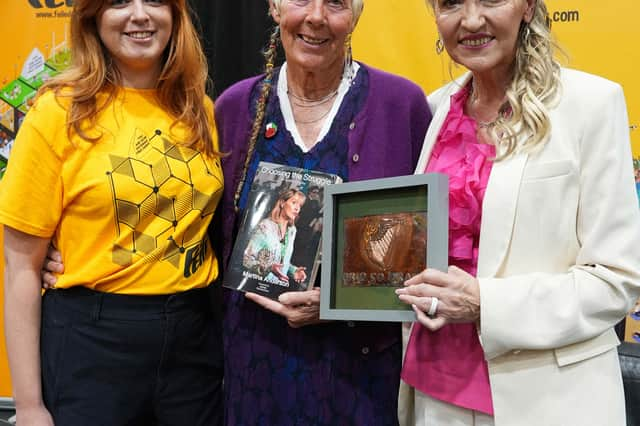
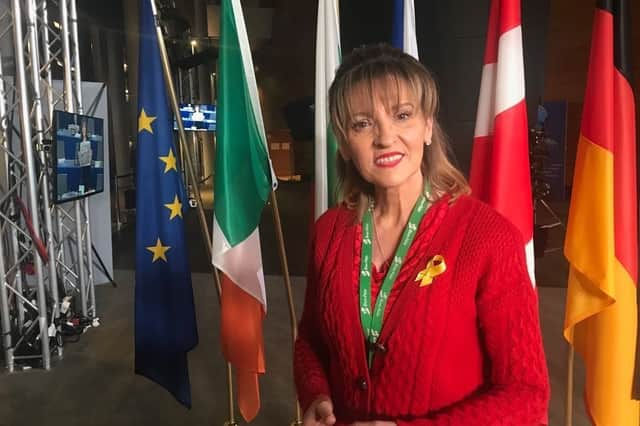
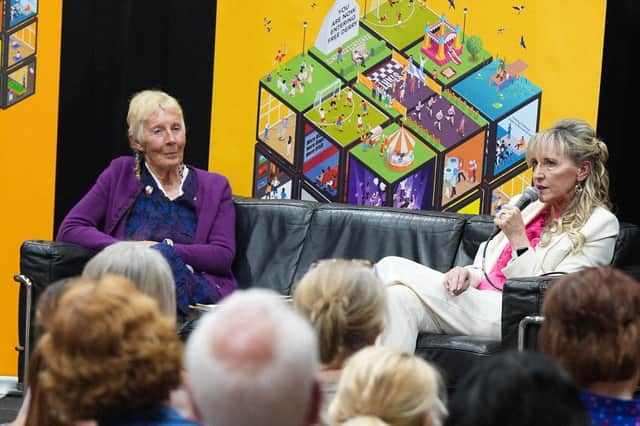
The shaping influence of the women in her life and the absolute premium Derry’s Martina Anderson places on comradeship emerge as core themes in her recently published autobiography: ‘Choosing the Struggle’.
Well written, Ms Anderson told The Derry News she had developed the “grá” for writing in prison through the encouragement of her friend and comrade Dr Ella O’Dwyer.
“Ella, unfortunately has died, gone too soon. She had a real love of Samuel Beckett. Her intellectual ability was way beyond anything I had ever met before,” she said.
Martina Anderson pinpointed being imprisoned in Armagh Gaol as the moment she became fully aware of the inequality in society with regards to women.
“I was very much involved, as were so many others, in the H Block / Armagh Campaign. We were on the streets every single day, particularly during the first Hunger Strike with Raymond McCartney, who was a friend of our family, being from Derry,” she recalled.
“Like everyone else we were apoplectic with concern and walked out of Rocola shirt factory every single day in protest,” she added.
“When I was arrested in January 1981 the first Hunger Strike had ended and the second Hunger Strike had not yet begun.
“When I went to Armagh Gaol and I met the protesting women at Mass on Sunday, I was appalled when I saw the state of them and I felt we had let them down as women. I had been to as many meetings as anybody else in Derry at that time. I had been as concerned as everybody was about the prisoners and what they were enduring. Yet, never at a meeting did anybody ever mention, nor did it come into my head, the women prisoners specifically.

“There was the perception that because the women had their own clothes, they weren’t as badly off as the men.
“When I went in and saw the state of them with menstrual cycles and them getting one, two and at most three sanitary towels for their periods, sometimes one a day if they were lucky, I was horrified. Their clothes were stained. They were on the No Wash Protest and there was that added dimension and it was never mentioned,” said Ms Anderson.
She added: “That was my awakening about the rights of women and women’s contribution to the struggle needing to be given equal weighting and needing to be told but it was never mentioned.
“And I must say, had we asked ‘What about the Women in Armagh?’ or ‘What about periods?’ at a meeting at that time, in the 1980s, we probably would have been run out of the room, by women.”
I would have preferred not to have endured all we endured in Brixton Prison, in Durham Gaol, but I did and I have done my best with the tools I garnered from those experiences
Ms Anderson’s evocative description in ‘Choosing the Struggle’ of her friend Marie Doherty ‘sluicing away not protest, but memory’ following her release from Armagh Gaol is powerful.
Martina Anderson described her Republican mother, Betty, as a “force of nature” who travelled to London, with her friend and neighbour, Ruby Moore, as part of a delegation to “try and stop what was going to kick off here as a consequence of civil rights being denied, and discrimination and gerrymandering and all that people had lived through. My mother was annoyed with her own generation for putting up with it all.
“The three boys didn’t really have much of a say with seven opinionated sisters,” she said. “We have all been very close, sadly we have one who has since died, Sheena,” she added.
Recalling the reaction to her forthright admonishment of then British Prime Minister Theresa May during the Brexit maelstrom, Ms Anderson said it illustrated perfectly the contradictory way women and men are labelled in political discourse.
During a debate in the European Parliament on March 15, 2015, then an MEP, Martina Anderson told Ms May: “Theresa, your notion of a border - hard or soft - stick it where the sun doesn’t shine. You’re not putting it in Ireland.”
Had we asked ‘What about the Women in Armagh?’ or ‘What about periods?’ at a meeting at that time, in the 1980s, we probably would have been run out of the room, by women
“Men are considered ‘robust’ during political debate,” Ms Anderson told The Derry News, “but women are defined differently as ‘fishwives’ or told they are ‘sore on the ears’.
“Interestingly, the part of that speech which is not quoted as much and gives it context was the preceding line: ‘Let me put the record straight to everybody that is here, no border hard or soft will be accepted by the people of Ireland. What British armoured cars and tanks and guns couldn’t do in Ireland, 27 member states will not be able to do,’”
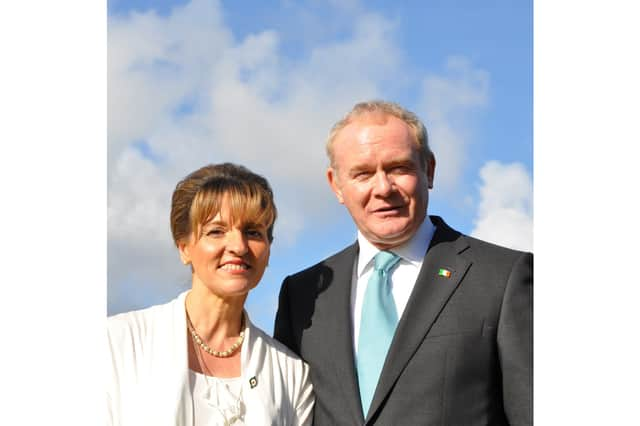
Ms Anderson revealed Martin McGuinness had been instrumental in putting Sinn Féin on a “diplomatic offensive” during the protracted Brexit negotiations.
“I remember the first European Council meeting after the [Brexit} Referendum. Then Taoiseach Enda Kenny came over to that meeting and spoke to the rest of the European State Members about Scotland,” said Ms Anderson.
“He was Braveheart about Scotland but faintheart about Ireland,” she added. “He never gave us so much as a fleeting glance. He had actually proposed a Swiss-style border to be put right in the heart of Ireland, by the European Union,” she added, “that’s why I said what I said, because we weren’t going to be partitioned any longer by one member state, we were going to be partitioned by 27.
“Afterwards, Commissioners, MEPs and officials were asking us if we thought there’d be a second Referendum in Scotland.
“We were repeatedly reiterating there was a Peace Process, there was the Good Friday Agreement, and there was the possibility these were now going to be undermined by Brexit and the madness that had taken place as a result, I believe, of an internal Tory Party fight.
Enda Kenny was Braveheart about Scotland but faintheart about Ireland [after Brexit]
“I was given the position of lead negotiator for the Left Group [in the European Parliament] and I was also the lead in the European Parliament for Sinn Féin.
“We were glad then to get a reference into the first resolution in the European Parliament to protect the Good Friday Agreement in all of its parts. There was to be no hardening of the border in Ireland. It is already too hard.
“This wouldn’t have happened if it hadn’t been for Sinn Fein, no matter the spin. There is an old saying, "There is no limit to what you can achieve if you let others claim the credit,” she smiled.
“If you misread the context then you are going to misjudge,” was Ms Anderson’s response to the question regarding whether the media reaction to her abortion was designed to deflect from an honest examination of why she chose the struggle.
Comradeship matters to me. I said it was a bodyblow but I also said at the time that the Struggle was bigger than me
“In the context in which I made the decisions I made, I am not asking everybody to agree with my decisions but the one constant there is in women’s lives who make the decisions we make is, they are ours to make, as women,” she asserted.
Regarding being asked by Sinn Féin to step down as a Foyle MLA in May 2021, Ms Anderson said she had “moved on from Derry”.
“I had to. One bad experience does not erase a lifetime of commitment. I wasn’t going to use a book to write about comrades I have spent my life with,” she added.
“Comradeship matters to me. I said it was a bodyblow but I also said at the time that the Struggle was bigger than me.
“I now am in a role within Sinn Fein of provisioning training in political development. I am turning members into activists and activists into leaders.”
Asked ‘Was it worth it?’ Martina Anderson answered without hesitation.
“Every single day,” she said resolutely, “every minute of every hour of every day.
“Because I look now at a generation of people, I look at all the kids in The Falls Park, and I know some people will ridicule children that are running around singing certain songs - there is always this outrage and offence but these are children who have an appreciation of life,” she reflected.
“They go to university or they are off learning a trade or they are travelling, things we never got a chance to do.
“And for children never to have to live through what we lived through, it was worth every day of it to get to where we are now.
If I can make a wee bit of a difference to the lives of the young people coming behind me, then, it was a life worth living and a life well lived
“We are going to get this country reunited, I am absolutely certain.
“If there is a change of leader [in Fianna Fáil] and I do think [there will be]. One person can’t stand and stop the tide of change,” said Ms Anderson.
“It is happening out there. I am meeting people from the Protestant, Unionist, Loyalist community, enough of them that are starting to talk and they want their rights and culture protected, and that is where we need a Bill of Rights for the whole island of Ireland. I have documented the whole Rights Process in ‘Choosing the Struggle’, she added.
“We have never been as close to getting this country reunited but we now can do it peacefully and democratically.
“I did not have the chance to do that and I made the choices that I made growing up.
“Bobby Sands did not have the chance to do that when he gave his life for his comrades.
“We have the chance to do this for the next generation. I would have loved a ‘normal’ life. I would have loved not to have grown up with conflict and gerrymandering and oppression and discrimination or living through the Battle of the Bogside. I would have preferred not to have endured all we endured in Brixton Prison, in Durham Gaol, but I did and I have done my best with the tools I garnered from those experiences, and, if I can make a wee bit of a difference to the lives of the young people coming behind me, then, it was a life worth living and a life well lived.”