

Derry-Iraq music collaboration to take center stage at Glasgow’s Celtic Connections
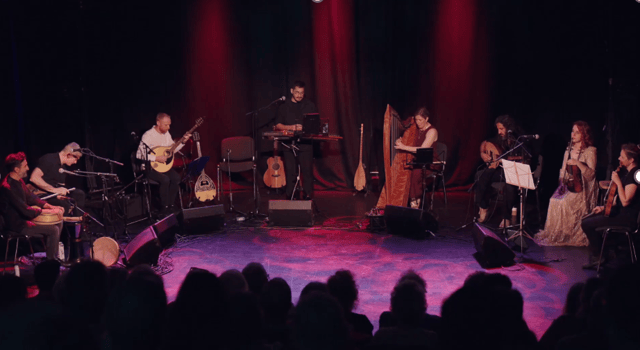

The Macalla ensemble brings its unique blend of Irish and Middle Eastern traditions to the UK’s premier folk festival this Thursday
A music collaboration rooted in Derry connecting the city with artists in Iraq is set to feature at one of the UK’s largest international folk and world music festivals this week.
Macalla, an eight-piece ensemble led by Derry's North West Folk Collective and created in partnership with musicians from Iraq’s Mshakht Collective, will perform at two concerts at Celtic Connections in Glasgow. These include the festival’s flagship Our Mother Tongue event at Glasgow Royal Concert Hall on Thursday, January 22.
The group will also perform at Kelvingrove Art Gallery and Museum on Saturday, January 24, sharing the bill with Scottish fiddle player Laura Jane Wilkie, performing with guitarist and producer Ian Carr, and Swedish-Irish group Woodlands Bäckafall.
Developed over three years and supported by the British Council, the collaboration was co-created with Earagail Arts Festival and explores musical connections between Irish and Middle Eastern traditions. At its core are the Irish harp and Iraqi qanun, alongside oud, uilleann pipes, bouzouki, Iraqi violin, Donegal fiddle and Middle Eastern percussion.
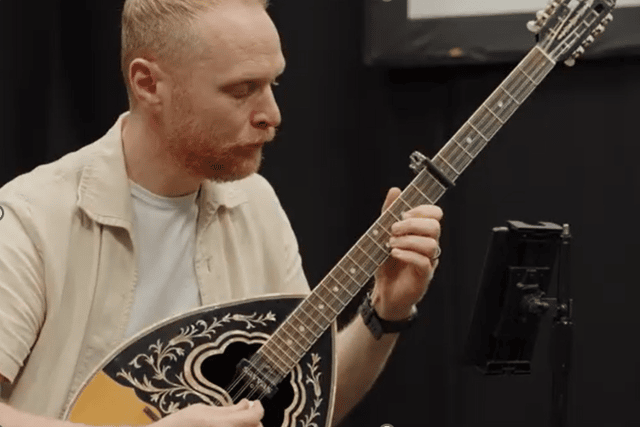
Musician Marty Coyle
The Glasgow performances follow a series of concerts across Ireland last summer, after the musicians came together for extended rehearsals in Derry and Donegal. During that time, the ensemble developed their shared repertoire and refined their sound.
Composer and bouzouki player Martin Coyle, founder of the North West Folk Collective and director of Macalla, believes the Celtic Connections performances represent a significant milestone for the Derry-based project.
He said: “Celtic Connections is a significant platform for traditional and global music, so it’s a real opportunity for us to present this work beyond Ireland. The music feels settled now, which means we can focus on communicating it properly to an audience.
“We did a huge amount of work last summer preparing an 80-minute performance, and we recorded everything — rehearsals and the concert itself. That gave us a really valuable resource to work from. For Celtic Connections, we’re performing a shorter set, around 40 to 45 minutes, which means we can select the strongest material. Being able to listen back and assess what really worked has been a big advantage, and we’ve been building on that work ever since.
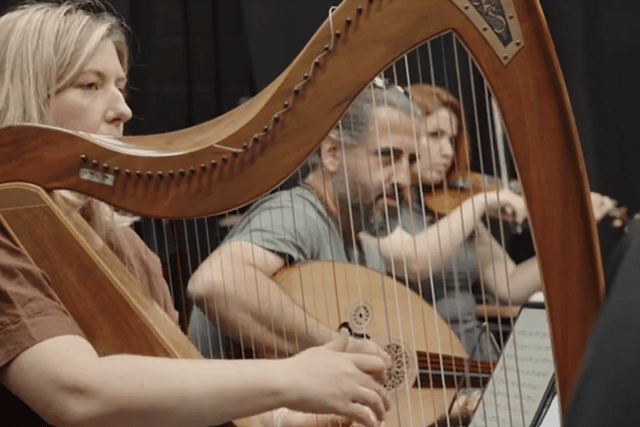
Macalla during rehearsals this summer
Coyle feels audiences will recognise familiar Irish melodies in the music, although they are presented in a new musical context.
He said: “A lot of the tunes are old Irish melodies that audiences will recognise, but presented in a new way. The Iraqi material also includes very old tunes that we’ve layered Irish elements over. What we’ve tried to do is respect those tunes and not overwrite them — the melodies stay central, but they’re presented differently. That sense of respect is something people really seem to respond to.”
The musician says a longer-term aim is to bring the project back to Iraq, allowing the collaboration to be experienced by audiences there as well as in Europe.
“Getting everyone in the same room has always been the most important part of this collaboration. We last went to Iraq in the very early stages of the project, and had hoped to perform at the Nineveh Peace Festival, but a major fire in the region disrupted everything. Even so, that visit was hugely important - it shaped the relationships and ideas that have guided the collaboration ever since.
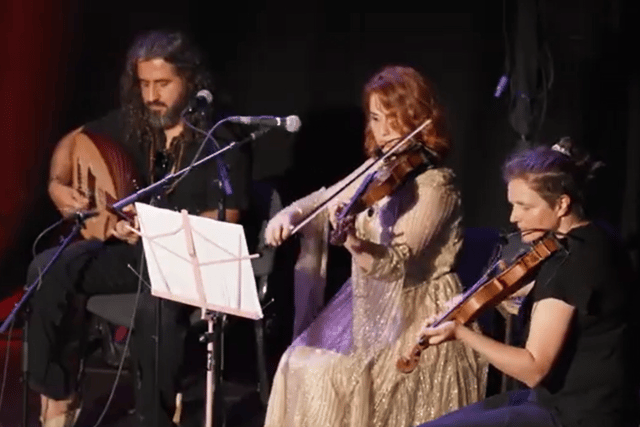
Macalla performing at the Earagail Arts Festival
Also speaking ahead of the performance, Colm McGivern, Director of British Council Northern Ireland, said: “Macalla is a brilliant example of music bridging cultures. It brings together artists from Northern Ireland and Iraq to create something entirely new, while celebrating shared traditions.
"Festivals like Celtic Connections give these collaborations a stage to shine, letting audiences experience the power of music to connect people across borders. We’re proud to support projects like this, which show how the arts can build understanding, foster relationships, and inspire creativity on a global scale.”
The Celtic Connections performance follows the ensemble’s appearances last summer at festivals in Sligo and Letterkenny and is part of the British Council’s wider programme supporting international arts collaborations and cultural exchange.
This initiative continues the British Council’s work fostering connections, understanding, and trust between the UK and the world through education, arts, and English language teaching. To find out more about British Council’s work in Northern Ireland, visit their website or follow on X, Facebook, or Instagram.