

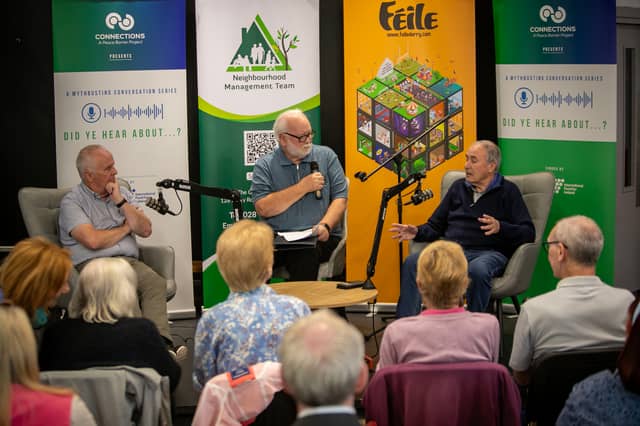

The first Feile offering of the Did Ye Hear About? series of talks at Derry’s Gasyard Centre on Thursday saw former Sinn Fein MLAs Mitchel McLaughlin and Raymond McCartney reflecting on the party’s engagement in democratic and constitutional politics with retired Derry Journal editor Pat McArt.
The duo also shared their feelings on the post hunger strikes culminating in the Good Friday Agreement and the party becoming the largest nationalist party in the North.
In a wide ranging discussion both men suggested that when the Troubles broke out the Catholic-Nationalist community had been getting a raw deal.
Mitchel McLaughlin explained that when the IRA called off its campaign in 1962, rather than seeing it as a peace process opportunity, the unionist regime at Stormont saw it as an opportunity to lean even more heavily on the nationalist people.
And, he suggested, loyalists had used the period between 1962 and 1968 to act as agent provocateurs to carry out attacks on targets such as electricity sub-stations on which the RUC then were able to portray the IRA as being responsible.
Raymond McCartney, who was one of the leaders during the hunger strikes in the 1980s, said that growing up in Derry in the 1970s he became increasingly aware of the discrimination and the sectarianism in the city where the nationalist community was, he said, being seriously discriminated against.
He was on the civil rights march on Bloody Sunday, but said the catalyst for his decision to join the IRA was internment in 1971, something he regarded as an outrageously partisan decision by the unionist regime.
In the subsequent discussion both speakers agreed that the election of Bobby Sands was a major game-changer for the Republican Movement in that it opened a door to a political road that they had regarded firmly shut prior to that.
Sinn Fein, they agreed, took the lead role.
Mitchel credited Belfast republican, Jim Gibney with the idea that one of the hunger strikers would be standing in the by-election in Fermanagh-South Tyrone when the sitting MP, Independent MP, Frank Maguire died.
When asked, Raymond McCartney said those on hunger strike and in Long Kesh fully supported the move. And when Bobby Sands was elected they had hoped that would save his life. It didn’t! But, he said, they were of the belief that they had found a powerful weapon on which to build a political strategy.
Again both were of the one opinion that a united Ireland is coming down the track.
Mitchel McLaughlin expressed the view that there was a certain kind of laziness in some sections of the nationalist community, that they now believed it was inevitable so didn’t see the need to work on it. That, he suggested, was not the way to bring unity about.
And, he added, unionism was saying a lot of things in public which were a denial of reality, namely that discussions about unification were taking place now front and centre stage in the political life of this island.
Raymond McCartney expressed the view that he would like to see Irish unity ‘in my lifetime.’
Next Thursday will see former Journal editor Pat McArt engaging in conversation and exploring the remarkable life and legacy of Bernadette Devlin-McAliskey and her rise to prominence as a leading figure in the Northern Ireland Civil Rights Movement. The event gets underway at 2pm at the Gasyard.
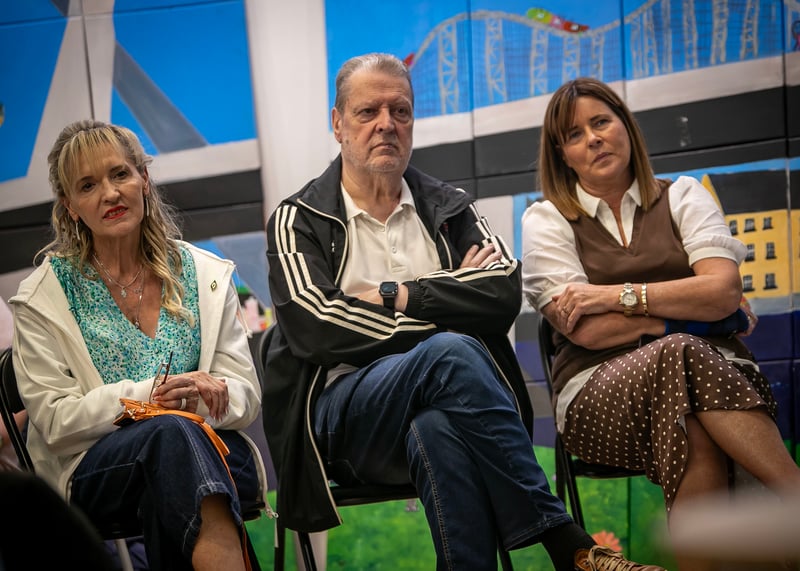
5. Martina Anderson, Peter Anderson and Linda McKinney pictured during Thursday's event.
Jim McCafferty Photography
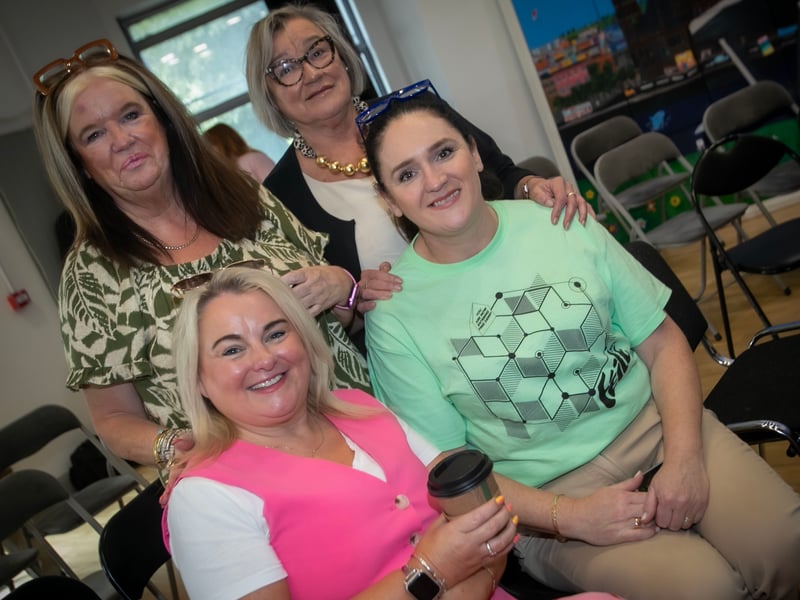
6. Sandra Duffy, Aisling Hutton, Maeve McLaughlin and Minty Thompson pictured at Thursday's Feile event in the Gasyard.
Jim McCafferty Photography
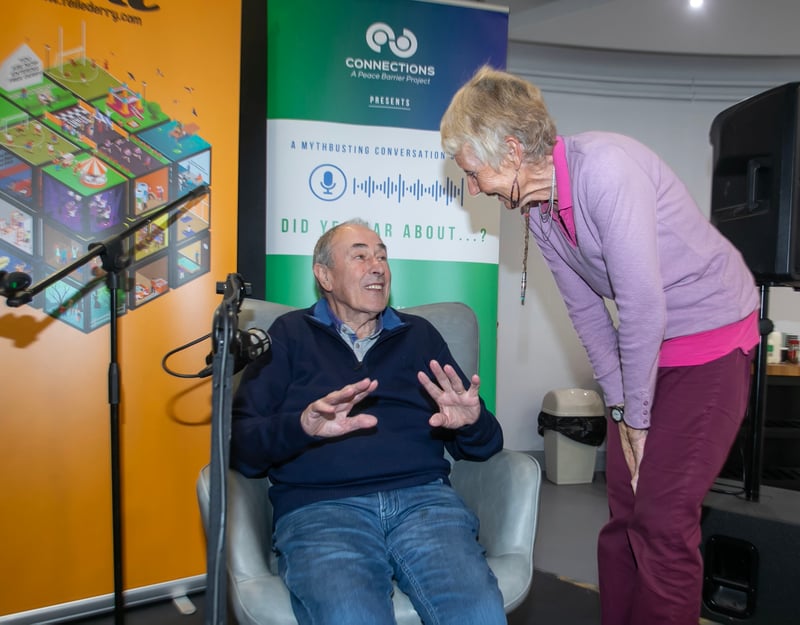
7. Daisy Mules in conversation with Mitchel McLaughlin after Thursday's 'Did Ye Hear About' event.
Jim McCafferty Photography
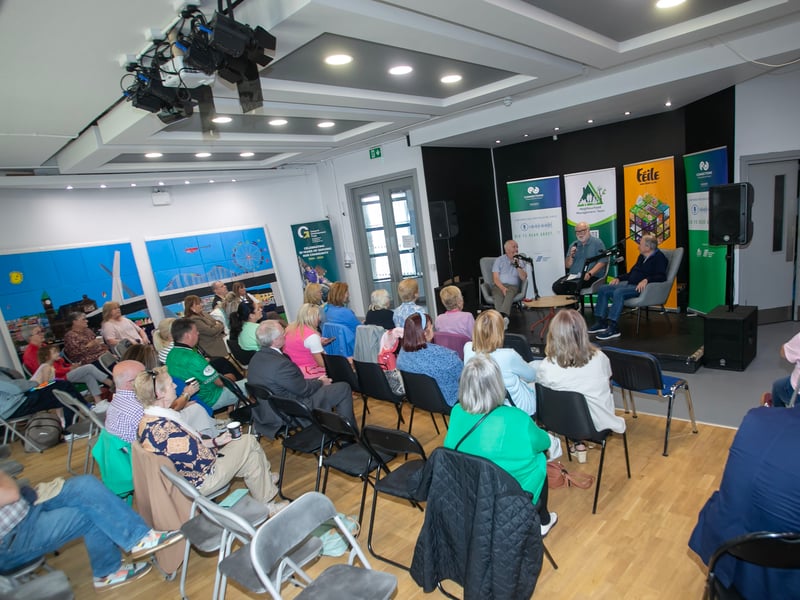
8. A sizeable attendance at Thursday's 'Did Ye Hear About' event in the Gasyard, held as part of this year's Feile.
Jim McCafferty Photography