

‘Use dog foul DNA' to fine owners: council told

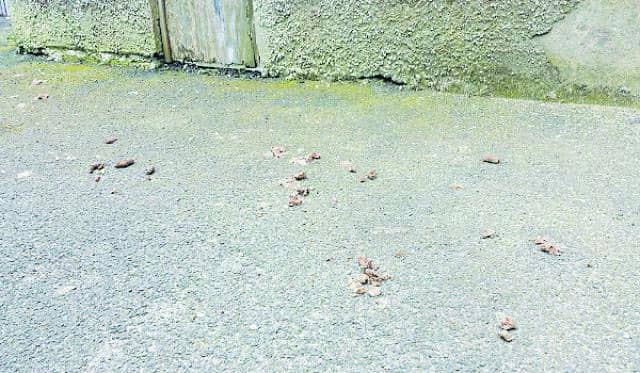

An independent councillor on Derry City and Strabane District Council has suggested that the local authority use DNA taken from dog foul to identify and fine the owners who fail to clean up after their pets.
It comes after the council approved tough new measures to crack down on dog fouling, including increased fines and allowing the public to provide information on people they witness allowing the their dogs to foul.
Under the new Dog Control Order, those who fail to clean up after their dogs will be issued with an £80 on the spot fine, known as a fixed penalty notice, which will be reduced to £50 if they pay within two weeks.
The new Order will also allow members of the public to contact council and give details of someone they witnessed failing to clean up after their pet.
That means fines can be handed out on the basis of information received by council, and wardens will not have to be witness the dog fouling.
It’s also emerged that fines will be still be handed out to people even if they have no means of lifting the dog dirt or unaware their dog has fouled.
The new measures were discussed at the council’s Health and Community committee held in the Guildhall during which number of councillors said more needed to be done to address the issue.
Independent councillor Paul Gallagher suggested one method of detection that could be used by council officers was to take samples of DNA from dog faeces and match that to records of dogs that have been microchipped.
In order to illustrate the damage that could be done by dog faeces to people, Cllr Gallagher said he had run last week’s Waterside Half Marathon alongside a young woman who was registered blind due to dog faeces getting into her eyes as a child.
His views were echoed by the SDLP’s Patsy Kelly, who said that more needs to be done to target dog fouling outside of ‘9-5’ hours, as he said that the dog fouling problem occurred late at night and early in the morning.
Independent councillor Darren O’Reilly said one of the worst hit areas was an alley way (picgtured) in the Rosemount area, which he said had ’50 or 60 different faeces’.
The SDLP’s Shauna Cusack asked whether a dog warden had to witness the dog fouling.
City Solicitor Philip Kingston responded that as long as ‘sufficient evidence’ was received which gave a ‘detailed description’ of the dog and its owner, council could take action without the dog warden witnessing the fouling.
Meanwhile, UUP councillor Derek Hussey asked if action could be taken by council in regards to ‘horse droppings’.
Mr Kingston replied the Dog Control Order only applied to dogs, and there was ‘existing legislation’ that dealt with ‘other animals’.