

Public urged to act FAST this Stroke Awareness Month
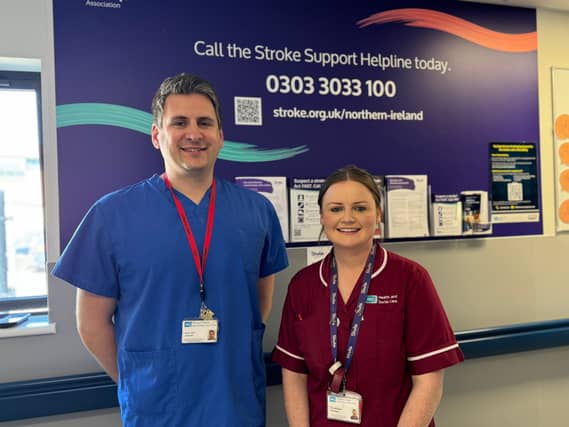

Health officials warn that ignoring warning signs can lead to lasting damage and emphasize that early hospital intervention is the key to recovery
The Northern Health and Social Care Trust is marking Stroke Awareness Month this May with a vital reminder to the public to act FAST at the first sign of trouble. Medical experts are stressing that a stroke is a time-critical emergency and that symptoms such as facial drooping or speech difficulties should never be ignored.
A stroke is a medical emergency that occurs when the blood supply to part of the brain is interrupted, either because a blood vessel becomes blocked (ischaemic stroke) or bursts (haemorrhagic stroke). This cuts off oxygen to the brain and can cause serious and lasting damage.
If someone has a drooping face, is struggling to lift one arm, or has difficulty speaking, they could be having a stroke and urgent help is needed. These warning signs form the FAST test; face, arms, speech and time, which is a simple way for members of the public to remember the most common symptoms and the importance of acting quickly.
For the Trust’s Stroke Liaison Nurse, Emma McAllister, knowing the signs and symptoms of a stroke is key.
“It is vital to become familiar with stroke symptoms, such as the loss of power down one side, whether that be their arm, leg or face going weak, or if someone’s speech begins to slur, Emma said.
“If anyone notices a family member or a friend, or indeed they themselves, present with those symptoms, they must attend the Emergency Department immediately, whether that be by ambulance or transported by a family member or friend.”
Acting quickly can save a life and significantly reduce long-term complications, as explained by Dr Nevan Joyce, Stroke Consultant at Antrim Area Hospital.
He said: “Anyone presenting at hospital with stroke-like symptoms will be assessed as a matter of urgency.
“This is because a lot of the treatments on offer are time critical, and the earlier that we can intervene, the more likely of a better outcome for the patient.”
Dr Joyce also highlights the importance of acting immediately when stroke symptoms become apparent, rather than waiting and hoping they will pass.
“It is key to emphasise that if you notice the onset of symptoms of a stroke, you shouldn’t wait about for those symptoms to disappear. The earlier you present to hospital, the better your outcome will be,” he said.
For more information about the signs and symptoms of a stroke, visit www.stroke.org.uk/stroke/symptoms.
Remember, acting FAST can make a life-saving difference for you, a family member, or a loved one.