

Record-breaking one million passengers for Derry’s rail station
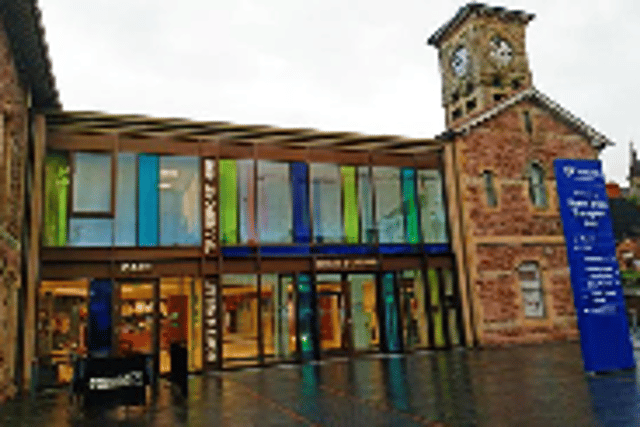

Derry's railway station has achieved a historic milestone by catering for over one million passengers for the first time ever, recording 1,039,898 journeys for the 2025–26 year ending in March 2026.
Rail campaigners ‘Into The West’ are celebrating yet another record-breaking year for Derry’s railway station, with the facility catering for over one million passengers for the first time ever.
Figures secured from Translink for 2025-26 (the 12 months to March 2026) saw a record 1,039,898 journeys taken to or from Derry by train across that period.
This represents an increase of almost 77,000 passengers or 8% on the previous year - which itself was also a record-breaker. It represents the highest number of trips that Derry’s railway station has ever catered for and the fourth year in a row that the station has broken its own record for passenger numbers. It also solidifies Derry’s position of having the seventh busiest railway station in Northern Ireland.
Analysis conducted by Into The West also shows that Derry’s increase was part of a wider boom in rail usage right across NI – with over 30 million rail journeys taken in the north in 2025-26 for the first time, which was an 18% increase on the previous year’s total of 25.5m. This echoes a similar pattern south of the border, where 2025 was a record year for passenger numbers on both Irish Rail and Dublin’s Luas tram system.
2025-26 also marked the first year that rail usage in Northern Ireland exceeded its previous record high of 26.8m passengers in 2018-19, which was the last full year before the Covid pandemic struck.
However – the 2025-26 figures contain some significant regional differences when compared with pre-Covid passenger levels, pointing to an ongoing change in travel patterns across NI since the pandemic.
Of the 54 rail stations in NI, three-quarters (40) are now catering for more passengers than they were prior to Covid.
Belfast City is disproportionately represented amongst the stations which are carrying fewer passengers than before Covid, however, with seven of the city’s 11 stations in negative figures compared to 2018-19.
Significant falls since Covid have been recorded at Lanyon Place and Titanic Quarter stations in Belfast, which are both down by 23%, whilst City Hospital has seen a 12% decline in its users since 2018-19. In fact - all but one of the 14 NI stations that are carrying fewer passengers now than they were before Covid are either located in Belfast City or in its immediate surrounds/commuter belt.
Into The West believes that this reflects the rise of the ‘Working From Home’ phenomena since Covid – with many workers who would previously have taken short-to-medium distance commutes in and out of Belfast five days a week now able to spend one or two of those days working from home instead, reducing station footfall in both central and Greater Belfast.
Another phenomena which Into The West have identified in the rail passenger figures are the impacts that major investments and significant generators of journeys can have upon passenger demand.
Jordanstown has experienced the largest fall in passenger numbers of any NI station in the years since Covid – down by almost a quarter of a million journeys, or 36%. This is due to the 2022 relocation of almost all of Ulster University’s 15,000 staff and students from its campus there to central Belfast, which has resulted in Jordanstown tumbling from NI’s 11th busiest station in 2018-19 to only it’s 19th busiest currently.
Meanwhile the station where that campus was relocated to in 2022 – York Street – has seen its passenger numbers double over the same period, becoming the second-fastest growing station in NI since Covid.
York Street station further benefited from a £20m rebuild in 2024, which has also helped boost its passenger numbers. And the positive impact that investing in rail facilities has upon passenger demand is also evident from the new £350m+ Grand Central Station project in Belfast, which has seen significantly increased passenger numbers compared to its Great Victoria Street predecessor.
Chair of Into The West, Steve Bradley, commented: “It’s fantastic that Derry’s railway station now has over 1 million passengers a year - something that would’ve been considered impossible 20 years ago when the line was at risk of closure.
"Since then we’ve had relatively modest investment in rail in Derry – with a new fit-for-purpose EU-funded station and an increase in service frequency to one train an hour six days a week. Yet look at the impact that has had, with passenger numbers more than trebling in the last 10 years.
"It shows the huge untapped demand for rail travel that exists in Derry and the north-west – and the fact that even relatively modest improvements and investment will unlock it”.
Mr Bradley continued: “What’s remarkable is that Derry’s station achieved over one million passengers last year despite having one hand tied behind its back. Derry and the two other stations west of the River Bann receive over 2,600 FEWER trains a year than every station East of the Bann gets on the same Derry-Belfast rail line.
"For example, we have only one train every two hours on Sundays – six in total – whilst every station in the East on the same line has an hourly service and 13 trains on a Sunday.
"Only one train from Derry will get you to Belfast before 9am in the morning for work or study, whilst Coleraine has four. And the last train back to Derry in the evenings from Belfast Monday to Saturday leaves at 9:10pm (7:10pm on Sundays), which doesn’t work if you’re having a night out, going to the theatre, watching Ulster Rugby etc.
"Yet every station East of the Bann on the same line has a train out of Belfast as late as 10:40pm. These East-West differences on the Derry-Belfast line are entirely the result of timetable decisions taken nine years ago, and there is nothing structural stopping them from being addressed.
"Yet despite Derry’s passenger numbers trebling in the years since then, we’re still stuck with this significantly lower frequency of service. It’s blatant timetable discrimination against the West of the Bann, and addressing it would add thousands more users to Derry’s railway station every year.”
Mr Bradley concluded: “This unresolved timetable discrimination points towards a much wider issue. Travel patterns in NI have clearly changed since Covid – with demand tumbling at most stations in Belfast whilst booming in places like Derry. Yet despite this, Stormont and Translink continue to focus their energy and investments in Belfast.
"We’ve seen that recently with over £350m spent on Grand Central Station and a further £548m on new trains for the Belfast-Dublin route. All whilst the Minister refuses to spend just £1m ending 9yrs of blatant timetable discrimination against Derry and the West.
"They’re continuing with outdated pre-Covid investment patterns that no longer meet the changed travel demands of a post-Covid Northern Ireland.
"It’s now time for Stormont and Translink to stop ignoring declining rail demand across much of Belfast, stop concentrating the vast majority of their expenditure there, and instead start recognising the booming demand in places like Derry by giving them a fairer share of the funding.
"Starting with the £1m needed to end the blatant East-West timetable discrimination on the Derry-Belfast line”.