

More than 20,000 searches carried out by police in County Derry in five years
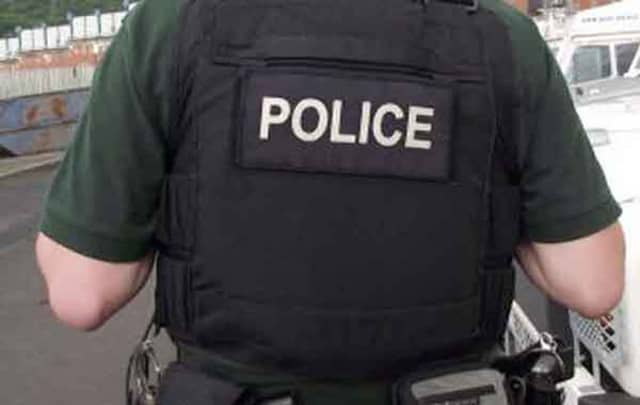

Pillows, stolen shoes and “underwear meat products” are just some of the items recovered by police after searching people in Co Derry.
More than 20,000 searches were carried out by police in Co Derry in a five-year period, according to figures uncovered by a Detail Data investigation.
The statistics show that 20,927 were searched by the PSNI in ‘G District,’ which covered Foyle, Limavady, Magherafelt and Strabane from April 1 2011 to March 31 2015.
Police recorded any items found during the searches, with illegal drugs, mobile phones, ‘legal highs’, drugs paraphernalia, fireworks and weapons being among the most commonly found items.
They also found steroids, laser pens, Viagra and large sums of cash, in one instance an officer recorded finding around £9,000 in cash during a search.
More unusual items found during searches include a PowerPoint presentation pen, a grey coloured jumper, apples, flowers and a CCTV monitor.
Three people were searched and recorded as having “approx 50 pillows” in their possession, while PSNI officers recorded finding “a sheet of paper” on three men following a search.
Another report read that a search of a woman aged between 56 to 65 yielded a “curtain, pants, sock and purse,” while police recorded “pair of gloves seized” following a search of a man.
However the most unusual items may be “underwear meat products” found in a search of a young woman and something described only as “nettingn blow up dingle” seized from a man.
The UK government says that the PSNI’s ‘stop and search’ powers give them “a legal right to stop and search members of the public in certain circumstances.”
“Stop and search powers are contained in the Justice and Security (Northern Ireland) Act 2007 (2007 Act) and the Terrorism Act 2000 (TACT 2000),” the NI Direct website reads.
“Police officers can search you or your vehicle if they have reasonable grounds to do so. They must use the search powers fairly, responsibly and with respect for people.”
Police officers may search people for a number of reasons including if they are “countering terrorism,” if they have reasonable grounds to suspect you’re carrying drugs, a weapon or stolen property, or if “there has been serious violence or disorder in the area.”
Of the 20,927 people searched in G District over the four years, 1,680 were female, 142 were over 65 and 2,414 were under 18. The figures show that 2,045 were aged between 15 and 17, 353 were between 11 and 14 and 16 were between six and ten years old.
The PSNI policing districts changed in April 2015. Statistics from the Causeway Coast and Glens policing district show that police carried out 2,675 searches between April 1 2015 and March 31 2016. Only 307 women were searched, while 40 people aged 65 and over were searched. 350 children were searched over the year, 74 of which were aged between 11 and 14, while 276 were between 15 and 17 years of age.
Items found during police searches in the area included cannabis, alcohol, weapons and prescription pills. Police also recorded finding a “small stainless steel bowl” and a “caravan camping battery.”
Figures from the Mid Ulster police district show that officers carried out 1,280 searches between April 1 2015 and March 31 2016. Only 131 women were searched, while just 4 people aged 65 and over were searched. 133 children were searched over the year, 20 of which were aged between 11 and 14, while 113 were between 15 and 17 years of age.
Items found during police searches in the area included cannabis, steroids, a knuckle duster and fireworks. Police also recorded finding “stolen shoes”, “cubes of illegal fuel,” and “further number plates.”
The overall statistics published by The Detail showed that PSNI officers searched over 160,000 people in the north from April 2011 – 2016. Over 23,000 searches were carried out on children under 18, with 59 children aged 10 or under being searched.
The PSNI have defended the use of their stop and search powers, describing searches as an “effective deterrent.”
“There is no restriction in law preventing the stop and search of under 18s therefore police officers will use their powers under stop and search when they have reasonable grounds to suspect an item is being carried to keep both that individual and the wider community safe,” a PSNI spokesperson told The Detail.
“If terrorists know there is a chance they will be stopped by police they have less opportunity to move weapons and bombs and we know this has prevented terrorist attacks and saved lives.”
The Police Ombudsman’s Office has received 370 complaints relating to the overall use of stop and search over the last five years. In response to the findings, they said that children need to be educated about their rights when dealing with the police.
“The issue of ‘stop and search’ is something which comes up time and time again in our regular visits to schools and youth clubs to explain how the police complaints system works,” a spokesperson said.
“In listening to these young people it is clear that many of them do not understand their rights nor indeed understand the rights of the police officers.
“I think if young people have more knowledge about their rights and their responsibilities in such situations it will benefit all concerned.”
The Detail also revealed that police efforts to gather collecting community background information following stop and searches in the Derry City and Strabane council area in 2015 proved unsuccessful.
“Those who were stopped were given a pre-addressed card and asked to indicate their community background on it and place it a post box,” a PSNI spokesperson said.
“However PSNI did not receive any completed cards and despite other attempts to collect data we have been unable to find a methodology to collect and report on community background of all persons stopped that would stand up to scrutiny.”