

More Japanese knotweed found at Fort George site
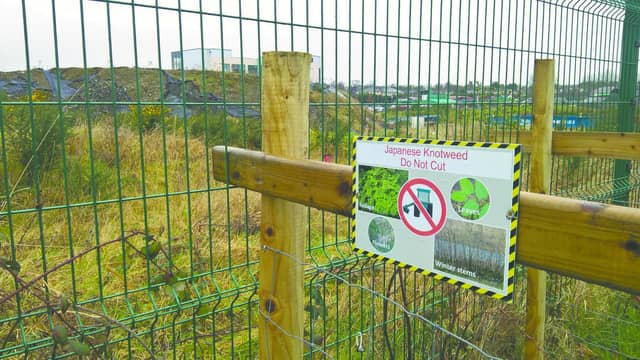

More Japanese knotweed has been found at one of Derry’s key development sites.
The plant, which has the potential to cause damage to building foundations and roadways, was previously discovered on the Fort George site in 2009.
In 2011, the former owners of the 14-acre site, the Ministry of Defence (MoD) announced that it would be spending £3m on de-contaminating the lands, part of which is currently occupied by the North West Regional Science Park.
Speaking at the time, Lawrence McCullough, the development manager at Fort George said that Japanese Knotweed, which is classed as Invasive Plant Species, had been discovered at the site.
He said that the knotweed would be dealt with by being burned, which he described as a ‘painstaking operation’.
Mr McCullough also warned that if left untreated, Japanese Knotweed can ‘return and undermine foundations of the buildings and cause considerable damage to buildings in the future’.
A tender notice for decontamination stated: "Ecological contamination in the form of Invasive Plant Species, including Japanese knotweed, is also present over large areas of the site.”
However, despite the de-contamination work, more Japanese Knotweed has been discovered at the Fort George site.
A number of areas contaminated with Japanese Knotweed has now been fenced off at site, accompanied with ‘Do Not Cut’ warnings.
The Derry News contacted the current owners of the site, the Department for Communities (DfC) formerly the Department for Social Development (DSD), about the discovery, and what measures it had taken to address the new contamination.
“Japanese Knotweed was previously identified on site in 2007 and a programme of management and treatment commenced including an updated survey carried out in 2012 and further treatment undertaken in 2013,” a spokesperson said.
“The Knotweed has been significantly reduced in volume due to the careful management and intensive treatment undertaken.
“This was supported by a further survey in 2016 that indicated only minor occurrences on the site.
“A management plan was produced to treat these and is currently underway.”
The spokesperson added that it hopes to complete the environmental work by 2018, and added that the discovery of the knotweed will have ‘no impact’ on the future development of the site.
“The Department intends to begin the remediation of the wider site later this year and complete the remediation works by late 2018,” the spokesperson added.
“This contract will address the residual knotweed present on site and there will therefore be no impact on future development.”