Search


26 Mar 2026
Search
26 Mar 2026

Please allow ads as they help fund our trusted local news content.
Kindly add us to your ad blocker whitelist.
If you want further access to Ireland's best local journalism, consider contributing and/or subscribing to our free daily Newsletter .
Support our mission and join our community now.
To continue reading this article, you can subscribe for as little as €0.50 per week which will also give you access to all of our premium content and archived articles!
Alternatively, you can pay €0.50 per article, capped at €1 per day.
Thank you for supporting Ireland's best local journalism!

‘An absolutely crucial episode in Irish History’ - Dr Cormac Moore.

“An absolutely crucial episode in Irish History.”
This is Dr Cormac Moore’s description of the ill-fated Boundary Commission (Coimisiún na Teorann), one with which the majority of Derry people would no doubt agree.
The Boundary Commission met from 1924 to 1925 to decide on the precise delineation of the border between the Irish Free State and the Six Counties.
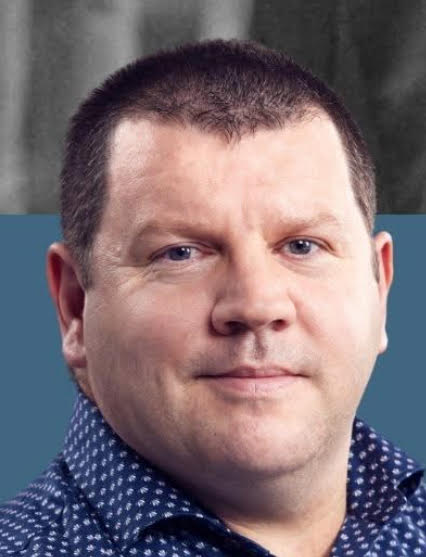
Dr Moore is the Historian in Residence for Dublin City Council and author of The Root of All Evil: The Irish Boundary Commission - published on May 29.
Speaking to The Derry News he said The Boundary Commission should mark the end of the Decade of Centenaries.
“I say this because the political settlement did not happen really until the Boundary Commission. It hung over the North and South until its collapse in late 1925.
“There still was a big uncertainty as to what the new border was going to be. So for me, it was an absolutely crucial episode in Irish History and it affected many things as well. It affected the relationship between the North and the South, between the South and Britain, and between the North and Britain as well, and it still does have ramifications for today.”
Reflecting on any new information which emerged about the Boundary Commission during his research, Dr Moore highlighted some of the “assumptions” made about the body.
“One of these held by many people was and is that the Free State didn’t care; it didn’t put any effort into the Boundary Commission,” he said.
“It appointed Dr Eoin Mac Néill as the Free State Commissioner who was a terrible choice; he was a very poor Commissioner but, on the other hand, the Free State did care and did put a lot of effort into preparing for the Boundary Commission and trying to get the best result. I think that assumption is not correct that the Free State didn’t care. It did care.
“It set up the North-Eastern Boundary Bureau which put a huge amount of effort into producing pamphlets and leaflets and even a book, as well as appointing legal agents in the North in areas that were up for transfer.
“It did a lot of advice for ministers and lobbying in Britain and elsewhere. And the Free State Government paid for that. The Free State ministers as well as the President WT Cosgrave, were fully behind trying to get the best result, until, at the very last moment, when they saw that there was only going to be very small changes.
“So, they wanted the report shelved and were willing to do so on the basis of getting some financial benefits plus the waiving of Article 5 [of the 1921 Anglo Irish Treaty, which outlined financial commitments that the Free State would need to pay to Britain].”
According to Dr Moore parts of East Donegal which were supposed to go into the North and parts of Fermanagh and Tyrone and a “fairly big chunk” of South Armagh, including Crossmaglen, were going to go into the Free State.
“But the Free State didn’t want that,” he said. “It didn’t want any territory of the Free State going into the North and obviously the territory going to the South from the North was minimum and it would have been very embarrassing.”
The Boundary Commission had informal meetings in December 1924 and then formal sittings from March until July 1925.
“One of the places they met was Derry and it included representations from Derry and Donegal for those favouring the inclusion of Derry into the Free State and for those hoping for an inclusion of parts of Donegal with lots of Unionists into Northern Ireland,” said Dr Moore.
“Derry was obviously a big feature. It had a majority Catholic population of around 55% to 45%. Nationalists claimed that the majority of people in the city wanted to be part of the Free State, whereas Unionists said economically Derry City was closely linked with the rest of Northern Ireland and it wouldn’t be viable for it to be taken away from Northern Ireland,” he added.
“The two other Commissioners, Joseph R Fisher (Northern Ireland) and Justice Richard Feetham (Chairperson, appointed by the British Government), never seriously contemplated transferring Derry to the Free State, whereas they did recommend transferring parts of East Donegal to Northern Ireland.
“Northern Ireland’s policy was ‘not an inch’, that was James Craig’s [Prime Minister of Northern Ireland 1921 to 1940] motto.
He didn’t recognise the Boundary Commission. The British Government wanted as little controversy as possible and it sided with the Ulster Unionists, with the Northern Ireland Government. It would have ideally liked no land to have been transferred at all.
“With a two to one majority against you, that was a very difficult situation for Nationalists and a Free State Government to get many concessions.
“The Northern Ireland Government was disgusted with the Boundary Commission. The title of the book - The Root of All Evil - was a quote from James Craig in may 1922; he described the Boundary Commission as the root of all evil because it reopened uncertainty for Ulster Unionists. They feared for Unionists in Tyrone, Fermanagh, Derry and Newry,” said Dr Moore.
The Root of All Evil: The Irish Boundary Commission also references what Dr Moore described as the “ambiguous clause” about a Border Poll in the Good Friday Agreement (GFA) (1998).
“This says the British Secretary of State gets to choose when he - and it actually says he in the text, even though at the time of the GFA it was Mo Mowlam - feels the numbers are there for a Border Poll to be held,” said Dr Moore.
“It is very vague. What numbers? What are the criteria? Why does the British Secretary of State get to decide when a Border Poll should be held? So there is that feeling of ‘are the British doing a job here again of having some vague and ambiguous wording that means they might be able to get out of holding a Border Poll. So there is a lesson there from the Boundary Commission.
“The pressure does need to be put on the British Government to publish the criteria - what is needed for a Border Poll to be triggered.
“When we are talking about Border Polls, it is all about preparation and making sure that everything is legally scrutinised, absolutely 100% carefully. That wasn’t done with the Boundary Commission and that led to the subsequent problems.

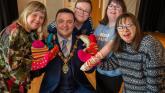
IN PICTURES: North West BAPS launch breastfeeding support kit
Tabitha with her baby Princess Abigail. (Photos - Deirdre Heaney, nwpresspics)
“Also what is important in terms of a Border Poll, instead of doing empty rhetoric, and that was the case back in the 1920s, there is a clear pathway to getting a United Ireland now through the GFA, but what are the practical steps. What is a New Ireland going to look like? A lot more work needs to be done on that.
“I don’t think calling for a Border Poll at every second opportunity is going to actually enhance getting a good result on a Border Poll. It is all about having the Border Poll happening when you think the numbers are there and making sure there is enough preparation done.
“There are going to be a lot of unknowns after a Border Poll but the more prepared you are the better.”
Dr Moore is a columnist with the Irish News and edits its daily “On This Day” column.
He has published widely on Irish history, including the books: Birth of the Border: The Impact of Partition in Ireland (2019); The Irish Soccer Split (2015); The GAA V Douglas Hyde: The Removal of Ireland’s First President as GAA Patron (2012); and Laois: The Irish Revolution, 1912-1923 (2025).
The Root of All Evil: The Irish Boundary Commission is published by Merrion Press and costs €22.99.

Subscribe or register today to discover more from DonegalLive.ie
Buy the e-paper of the Donegal Democrat, Donegal People's Press, Donegal Post and Inish Times here for instant access to Donegal's premier news titles.
Keep up with the latest news from Donegal with our daily newsletter featuring the most important stories of the day delivered to your inbox every evening at 5pm.

This publication supports the work of the Press Council of Ireland and Office of the Press Ombudsman, and our staff operate within the Code of Practice of the Press Council. You can obtain a copy of the Code, or contact the Council, at www.presscouncil.ie, Lo-call 1800 208 080 or email: info@presscouncil.ie.