Search


04 Apr 2026
Search
04 Apr 2026

Please allow ads as they help fund our trusted local news content.
Kindly add us to your ad blocker whitelist.
If you want further access to Ireland's best local journalism, consider contributing and/or subscribing to our free daily Newsletter .
Support our mission and join our community now.
To continue reading this article, you can subscribe for as little as €0.50 per week which will also give you access to all of our premium content and archived articles!
Alternatively, you can pay €0.50 per article, capped at €1 per day.
Thank you for supporting Ireland's best local journalism!

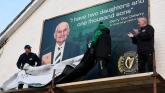
Derry Girls creator Lisa McGee (second from left)

Derry Girls creator Lisa McGee has described her background as a ‘superpower’ when it comes to being a successful screenwriter.
The Derry writer also said it was essential to give local people in underrepresented communities greater opportunities to work in the creative sector.
Her comments came at the launch of an industry report which revealed that almost 100 Northern Ireland people from ethnic minority, socio-economic and disabled communities have been supported into employment in the screen and creative industries,
“My background is my superpower,” Lisa said.
“I had expressions and sayings that I wrote in a particular way which would be both ear and eye-catching.”
The writing superstar, whose latest show How to Get to Heaven from Belfast has been picked up by Netflix, also offered encouragement to participants in Creative Industries New Entrants (CINE), a programme aimed at creating a more diverse workforce in the sector:
“Play to your individual strengths and make sure you are doing what you can do that nobody else can,” she said.
In addition to the creation of 93 new entrant jobs over the last two years, CINE’s second annual report also revealed that there have been nearly two thousand (1,948) applications for the programme.
CINE participants receive formal training to cover skills relevant to the role for which they are recruited, such as production techniques, idea generation, technical skills, communication skills and teamwork.
They are given the opportunity to put these skills into practice via paid 12-18 month industry placements, with training and a mentor provided to support them.
Following participation in the scheme, almost three-quarters (72%) of those who had secured employment were from lower socio-economic backgrounds, nearly half (46%) had a disability, while 16% were from underrepresented ethnic minority groups.
CINE is a Northern Ireland Screen flagship initiative, funded by the Department for Communities and supported by BBC Northern Ireland.
Richard Williams, Chief Executive of Northern Ireland Screen, described CINE as “a shining example of collaboration and innovation, bringing together government agencies, industry partners and aspiring creatives to drive positive change”.
“This programme represents a crucial step towards building a more inclusive and vibrant creative sector, one that reflects the rich diversity of our society,” he said.
“I am particularly heartened by the strides made in supporting underrepresented communities. This commitment to diversity is not only commendable but essential for fostering a creative ecosystem that thrives on varied perspectives and experiences.
“At the end of their time on CINE, participants should be well equipped for a freelance career within Northern Ireland’s creative industries.”
Adam Smyth, Director of BBC Northern Ireland, said CINE was a “ground-breaking initiative”.
“We expect that its benefits will continue long into the future. CINE has allowed us to provide placement opportunities for people from different backgrounds and helped to develop their skills, insights and expertise. The BBC makes a big contribution to the creative economy in Northern Ireland – something that CINE has enhanced in new and exciting ways,” he said.
Tolu Ogunware, the creative mind and director behind BBC Northern Ireland show ‘Black, Northern Irish and Proud', said CINE had been a “catalyst” for his career: “It has allowed me to meet a lot of incredibly talented people and to learn from them on the job putting me one step ahead when it comes to applying for the next opportunity,” he said.
Adam O’Connor said CINE had “cemented” his career aspirations: “My mentor, Triplevision Productions, sourced a piece of kit to allow me to film accommodating my physical disability and the experience has been incredible,” he said.
“They also supported me to host a podcast with another person who also has a disability sharing tips and information on how to get into the industry.”
Teresa McDonald a post-production trainee, said CINE had changed her life: “Before CINE, I was working in retail and struggling with my mental health as I didn’t enjoy my job,” she said.
“When I saw the position with Red Wolf Films it sounded like the perfect fit for me and the experience has been life‑changing.
“I’m so grateful for the CINE opportunity as I don’t think any other avenue would have provided this experience and access to an employer or job that I love.”
As a consequence of the paid placement and mentorship, trainees are moving to the next stage of their career with some being retained by their employers on a full time basis and other equipped with the skills and experience to forge a successful freelance career.

Subscribe or register today to discover more from DonegalLive.ie
Buy the e-paper of the Donegal Democrat, Donegal People's Press, Donegal Post and Inish Times here for instant access to Donegal's premier news titles.
Keep up with the latest news from Donegal with our daily newsletter featuring the most important stories of the day delivered to your inbox every evening at 5pm.

This publication supports the work of the Press Council of Ireland and Office of the Press Ombudsman, and our staff operate within the Code of Practice of the Press Council. You can obtain a copy of the Code, or contact the Council, at www.presscouncil.ie, Lo-call 1800 208 080 or email: info@presscouncil.ie.