

Director James Bluemel gives voice to people who lives were changed by The Troubles

'Once Upon A Time in Northern Ireland' is set to air on BBC Two, BBC Northern Ireland and BBC iPlayer on Monday 22 May
A powerful new five-part documentary series, Once Upon a Time in Northern Ireland, is set to air on BBC Two, BBC Northern Ireland and BBC iPlayer on Monday 22 May.
The series combines personal accounts about The Troubles with archive footage to tell the story of the people and communities who had to live with violence on an everyday basis and are still dealing with its legacies today.
The documentary features contributions from people across the political spectrum – from the son whose mother was kidnapped by the IRA, to a man from a loyalist estate whose family’s secret challenged some of his beliefs, and a woman who took a decision to plant firebombs.
The series runs chronologically from the beginning of The Troubles in the late 1960s to the Belfast/Good Friday Agreement in 1998.
Giving some background to the project, award-winning director James Bluemel said: “Northern Ireland was always on the news when I was young - bombs, violence, murder and pain seemed to be ever present there. As an adult, I might have understood the broad politics behind the events, but after my conversations with Iraqis, I realised I had no idea how anyone in Northern Ireland really felt about what it was like living through that turbulent history.
“I had been exposed to the politics of the conflict, but I had not heard the human stories from those that were there.
“Just after lockdown restrictions had lifted, I found myself in Belfast, meeting the first contributors that would feature in a new documentary, Once Upon A Time In Northern Ireland.
“I was concerned that I would be asking people to remember things that may have become cemented in their minds. For some, the events we would be talking about were over 50 years ago, and over time, memories can become staged in their retelling. I needn’t have worried.
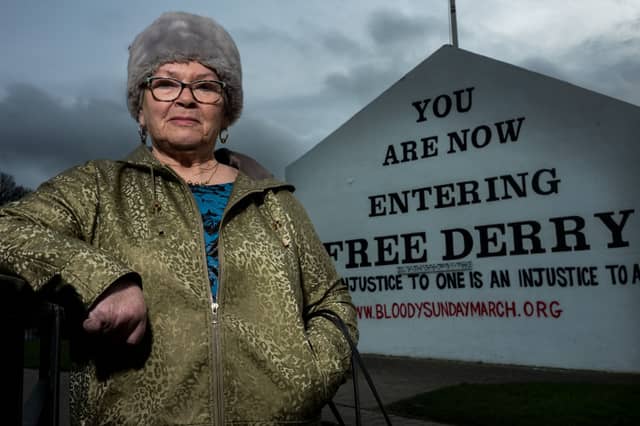
“One of the first interviews we did was with Kate Nash, whose brother, Willie Nash was one of people shot dead by the paratroopers on 30th January 1972 – on Bloody Sunday.
James continued: “Everyone we spoke to has first-hand accounts of the events they recall, and some expressed to us that now, with the passing of time, they are able to speak more openly and freely than before. While history is made up of big stories, it is understood best when we can hear the small, personal details.
“Michael McConville remembering the day his mother, Jean, was taken away and murdered by the IRA felt like an important historical story to include in the series. The IRA denied murdering her for over 30 years and they only revealed the whereabouts of her body in 2006. The trauma of this event on Michael is evident, not just in the way he talks but also the way he holds himself, his body displays the pain he feels. The trauma of those years can be consuming and was present in nearly everyone I interviewed.
“Later however, when Michael’s 26-year-old daughter Bronagh, sat in the chair to talk about how that event, that happened over 50 years ago, has impacted her life, I discovered something that I hadn’t understood before. Through Bronagh, Jean McConville stopped being a woman confined to the past, only seen staring out of the one grainy black and white photograph that exists of her.
“Through her granddaughter, Jean transcended out of the confines of an historical account into the here and now, as the past collided with the present. It was a profound and powerful moment for me to see her through Bronagh’s eyes.”
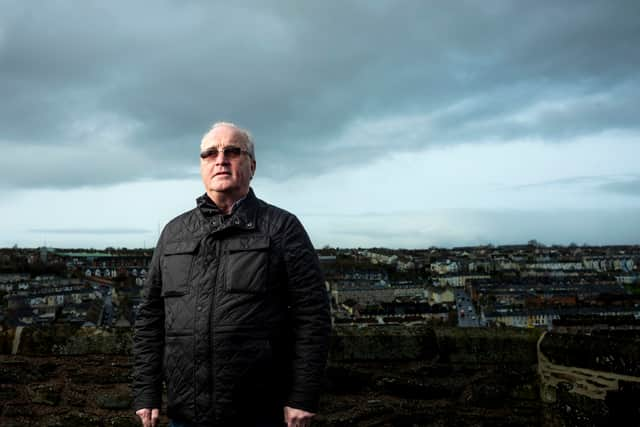
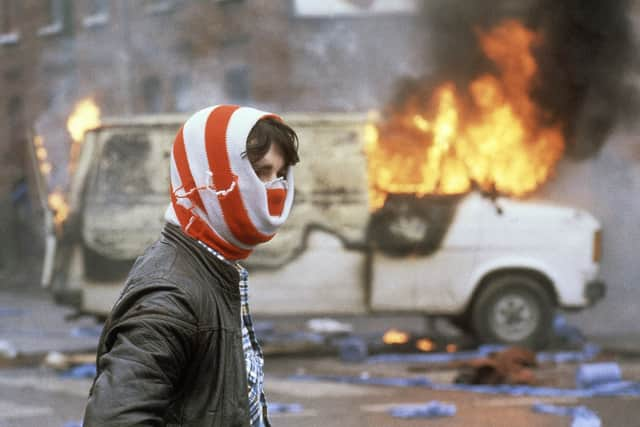
RICHARD remembers the rioting and street battles with the British Army from the perspective of a schoolboy in Catholic Derry.
“Time in this room runs differently to the world outside, and contributors have the space to journey back into the past at their own rate. These interviews evoke the confessional and revelatory.
“I found that most of the people I was meeting were cautious, and sometimes overtly suspicious, about the idea of another documentary about Northern Ireland. Once we passed this initial sussing out phase, I discovered many people I met wanted to talk and wanted to go on record.
“This doesn’t mean it was easy for them. For some, opening up those boxes in which painful, traumatic or shameful memories have been locked, is always done with thought, care and caution. Raking up the past, especial a past as difficult as this, is not done flippantly.”
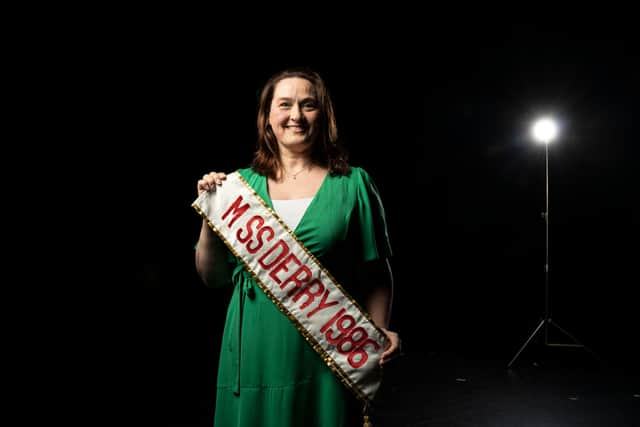
FIONA was a young child when the British Army arrives in Derry. She recalls how the soldiers are initially welcomed but are soon viewed as an oppressive force. She recalls that her republican family are regularly subjected to terrifying house searches by soldiers looking for hidden IRA weapons.
“I was hearing a spectrum of human emotions, contradictory and confusing but also real and searching. This was very different to how I think most of us outside of Northern Ireland have heard or understood this conflict before.
“The people that I interviewed for this series wanted to talk about their lives this way, they wanted this history to be told and they want to be heard. And I think it’s our job to listen.”