

Lack of Western Trust data cause for concern – Health Regulator
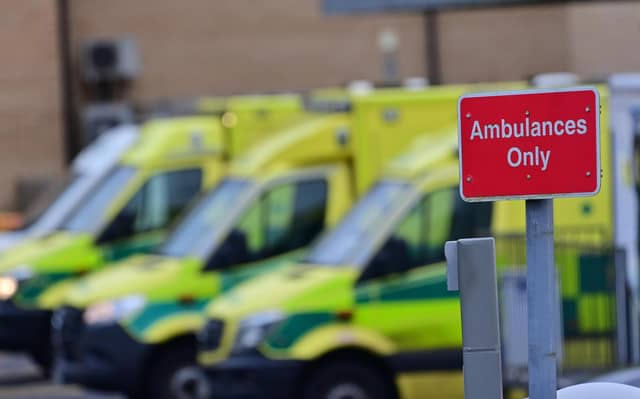

Stormont’s Health Department has been told the Western Trust’s Senior Team needs to “focus” on providing a “safe, reliable patient transfer service” to Altnagelvin Area Hospital from Enniskillen’s South West Acute Hospital (SWAH).
The Regulation and Quality Improvement Authority (RQIA) recommendation was contained in a letter from its chief executive, Briege Donaghy, to the deputy secretary of the Department’s Healthcare Policy Group, dated September 1, 2026.
The letter also noted: “It is difficult to escape the conclusion that there remains insufficient qualitative and quantitative information available to provide the Trust Board with the required insights for effective governance and assurance on the quality of the service.
“This in turn gives rise to concern about the overall standard of management information available; and therefore to concern about the way the service is run.”
The Derry News obtained the RQIA letter following Freedom of Information (FOI) requests to RQIA and the Department of Health.
The letter was referred to but not contained in the RQIA report Emergency General Surgery in the Western Trust Following the Temporary Suspension of Services at South West Acute Hospital: Follow up inspection to Emergency General Surgery Pathways Inspection November 2025 - February 2026. 29 July 2026 - 4 August 2026, published on September 15, 2026.
Addressing NI Ambulance Service (NIAS) capacity in the Western Trust area, the RQIA letter said it was “important to note NIAS provides the by-pass pathway for Emergency General Surgery (EGS) [to Altnagelvin from SWAH], and is also involved in the EGS transfer pathway, transferring patients from SWAH Emergency Department (ED) to Altnagelvin Hospital for admission”.
RQIA also highlighted the fact “data from the Trust in relation to the EGS transfer pathway does not distinguish between NIAS transfers and those facilitated by private ‘ambulance’ services or by patients and their families making their own arrangements”.
It added: “This is a concern as it is vital that the impact on emergency ambulance services is articulated, given the need for investment. The safety and reliability of the EGS patient transfer service is paramount to a sustainable service.
It is difficult to escape the conclusion that there remains insufficient qualitative and quantitative information available to provide the Trust Board with the required insights for effective governance and assurance on the quality of the service.
“Additional NIAS emergency ambulance capacity will ensure the Trust can be expected to meet this requirement, through NIAS provision alongside Trust contracted ‘patient transport’ transfer services.
“Additional emergency ambulance capacity will also mitigate the impact of the temporary suspension of EGS in SWAH, affecting NIAS capacity to deal with other emergencies occurring in the wider Trust area.”
RQIA formally recommended the Department take appropriate steps to address this matter, which, it said, had remained outstanding since the RQIA Review recommendations of October 2024, by “commissioning of additional NIAS emergency ambulance and crew capacity”.
It also recommended the Trust expand its patient transfer time data “to add the 95 percentile so that it is clear not only what the average time is (reported as 4-5 hours for the median transfer time of decision to leaving the SWAH site) but the time taken for 95% of all patients to commence transfer.
“In addition, any patients falling outside this 95% range (referred to as extreme outliers) should be subject to reporting and investigation, as time to transfer is an important factor in outcomes and in patient experience.”
This information is to be made available to RQIA by September 4, 2026, and information on the outcome measures for patients across the pathways, and in particular for those patients managed at SWAH, is due by mid-November 2026.
RQIA has informed the Trust that for the EGS transfer service to be considered safe and reliable, no patient identified as requiring admission to Altnagelvin for EGS should feel the need to arrange their own transport.
“Any cases where this occurs should be subject to reporting and investigation so that action can be taken to address the underlying issues,” said Ms Donaghy’s letter.
In a statement to The Derry News from the Western Trust confirmed: 97% of Emergency General Surgery patients requiring transfer from South West Acute Hospital to Altnagelvin Hospital are admitted directly to an inpatient bed.
“Less than two patients per week go Emergency Department to Emergency Department but this would be a clinical decision.”
RQIA also recommended the Trust to “expand its Emergency General Surgery (EGS) patient transfer time data” because “as it is currently assessed and presented by the Trust, is not sufficient to enable the spread of times it takes from the ‘decision to transfer’ until transfer actually commences to be identified.
Patients deserve confidence that emergency and transfer services are operating safely, reliably and transparently.
Derry City and Strabane District councillor Gary Donnelly described the concerns raised by the Regulation and Quality Improvement Authority (RQIA) as “deeply troubling”.
"They will be of significant concern to patients, families and healthcare staff across the region,” he added.
“The findings appear to point not only to ongoing issues with ambulance and patient transfer provision between South West Acute Hospital and Altnagelvin Area Hospital, but also to shortcomings in the management information available to those responsible for overseeing the service.
"Patients deserve confidence that emergency and transfer services are operating safely, reliably and transparently. Where a regulator identifies concerns about governance, performance data and service oversight, those concerns must be addressed urgently and in full.
"It is essential that the Western Health and Social Care Trust and the Department of Health provide a clear response to the issues highlighted by the RQIA, set out what actions have been taken since these concerns were raised, and reassure the public that patient safety is not being compromised,” said Cllr Donnelly.
"Communities in both the Northwest and County Fermanagh have experienced considerable anxiety regarding healthcare provision in recent years. They are entitled to transparency, accountability, and tangible improvements where deficiencies have been identified,” he added.
The solution is funding NIAS properly, addressing patient flow in hospital wards, and investing in fit-for-purpose Emergency Departments.
People Before Profit councillor Shaun Harkin said the RQIA report raised “very serious concerns about ambulance provision and patient transfers”.
“Improvements clearly have not gone far enough,” he added.
“The reduction of available hospital services in some areas is about austerity and reduces accessibility for patients.
“Derry and Strabane Council previously backed a People Before Profit motion calling on the Health Minister to end the reliance on private companies for ambulance services and to use all available public money to properly fund NIAS.
“We need to increase NIAS capacity. More than £50m was spent on private ambulance companies in a five year period up to 2025, including £10m in 2024. This money should be invested directly in NIAS.
“Frontline services must be funded adequately. Stealth privatisation is at the centre of destroying the health service. All the main Stormont parties have played a role in facilitating damaging profiteering in the health service, leading directly to increased health inequalities,” said Cllr Harkin.
“The solution is funding NIAS properly, addressing patient flow in hospital wards, and investing in fit-for-purpose Emergency Departments,” he added.
It is concerning that RQIA has identified shortcomings in the information available to the Trust Board to properly oversee and assure itself of the safety and quality of these arrangements.
Sinn Féin Foyle MLA Ciara Ferguson said the recommendations made by RQIA “must be taken seriously by the Western Trust and the Department of Health”.
“Patients and their families must have confidence that safe, reliable and timely transfer arrangements are in place between South West Acute Hospital and Altnagelvin, particularly when patients require urgent or emergency surgical care,” she added.
“It is concerning that RQIA has identified shortcomings in the information available to the Trust Board to properly oversee and assure itself of the safety and quality of these arrangements.
“Patient safety must always come first. There can be no room for uncertainty when it comes to the safe transfer of seriously ill patients.
“The Department and Western Trust must urgently address these recommendations, ensure robust monitoring and oversight arrangements are in place, and provide clear assurances that patients are not being put at unnecessary risk.
“People in Fermanagh and the wider Western Trust area deserve safe, accessible and high quality healthcare, regardless of where they live.”
The Western Trust has still not produced concrete data regarding the patients from our postcodes, or how we made the journey up the Altnagelvin Area Hospital - NI Ambulance Service, non-paramedics or private cars - and there is no certainty of patient outcomes; we find this shocking.
Speaking to The Derry News, Helen Hamill from the Fermanagh-based Save Our Acute Services (SOAS) campaign said it was clear RQIA was not “fully independent” of the Department of Health.
“The Department sponsors its work and assigns appropriate extra workforce and time,” she added.
"SOAS feels it is critical RQIA scrutiny is robust and that its reports should call out more forcefully poor or absent data.
“RQIA must be able to interrogate data to establish the safety of patients. After three years, a full review, an unannounced inspection and follow-up inspection, RQIA still cannot do that.
“RQIA’s Review (2024) had expansive terms of reference, examining direct and indirect consequences of all pathways, to include patient information and safety from Altnagelvin Area Hospital right down to the South West Acute Hospital’s catchment area, to extend over as far as Craigavon, to include GP referrals on all pathways. The Review did not manage to adhere to that,” said Ms Hamill.
“We welcomed RQIA’s unannounced inspection because it was on the basis of increased information sent to the regulator regarding patient safety,” she added.
“The Western Trust has still not produced concrete data regarding the patients from our postcodes, or how we made the journey up the Altnagelvin Area Hospital - NI Ambulance Service, non-paramedics or private cars - and there is no certainty of patient outcomes; we find this shocking. We feel that enough is enough.
“This Article 4 letter from RQIA to the Department highlights serious concerns formally. SOAS are very concerned about the stark contrast between the highly critical unpublished Article 4 letter of concern and the much tamer language used in the published Inspection report.
“RQIA has four questions to ask: Is care safe? Is care effective? Is care carried out with dignity? Is care well managed? SOAS expects these should be fundamental in any formal inspection report.
“We are disappointed to find out RQIA was content enough to publish the inspection report, which from the outset we challenged as it did not highlight the statements made by so many staff who spoke,” said Ms Hamill.
She added: “It is an exceptionally brave thing to do to speak out to the RQIA but staff become less likely to do so when they do not see their comments adequately reflected in the RQIA report. The Regulator should have heard their voices and respected their concerns about patients coming to harm, data used and the breakdown in professional relationships which exist right across the Western Trust.
“SOAS is in possession of reports by patients which we have shared with RQIA, and reports by staff, which again we will share with RQIA, but it is distinctly and deeply concerning that we should be the Body bringing these voices and experiences forward.
“SOAS remains totally focussed on time to treatment, patient safety and staff concerns. It is worth noting that SOAS believes that the provision of extra ambulances alone will not resolve these fundamental safety concerns,” concluded Ms Hamill.
RQIA has the duty to keep the Department of Health informed about the provision of services and in particular about their availability and their quality.
An RQIA spokesperson told The Derry News: “RQIA’s functions and duties are set out under legislation, The Health and Personal Social Services (Quality, Improvement and Regulation) (Northern Ireland) Order 2003. Under that legislation RQIA have the duty to keep the Department of Health informed about the provision of services and in particular about their availability and their quality. This is a legal duty. It is not about the Department of Health ‘sponsoring’ the work of RQIA.
“Providing information to the Department, as a result of our regulation of health and social care services , is a legal duty. It does not affect RQIA's independence in how it carries out that work. RQIA decides how it gathers and assesses evidence, and concludes its findings based on that evidence. The information RQIA provides to the Department helps to support the Department of Health in its oversight of health and social care services in Northern Ireland and its decisions on how services are planned and improved. It is a primary duty of RQIA, to keep the Department informed.
“RQIA’s funding comes in part from Fees from Registered providers (such as Care Homes, and Independent Hospitals) and from public money, given the Fees are not sufficient to cover the cost of registration and regulation, and because statutory services provided by the HSC Trusts are not required to register with RQIA nor pay Fees, so funding for Regulation comes from public funding via the Department of Health.
“If a review, investigation or inspection requires RQIA to draw in an expert in a particular subject issue or specialty, then RQIA will seek additional funding to cover the cost of that expertise. This is not undermining the independence of RQIA and is simply a reflection of how public money contributes to the costs of Regulation of services.”
The SDLP, DUP and UUP were also approached for comment by The Derry News.