

Fr Paddy O’Kane: The importance of food in our Church


Bono once said at a concert: ‘Every sixth click of my finger a child dies of hunger’.
Someone joked as he shouted: ‘Then, in God’s name, stop clicking your finger!’
But it is no joke for more than a third of the people in the world who today are hungry for food.
Pope Francis has spoken repeatedly on this scandal.
Lazarus, the beggar at the gate, is the personification of God’s love of the poor.
Before starting his public ministry we are told how Jesus fasted forty days expressing his solidarity with the hungry of the world.
In his book, ‘Luke Artist and Theologian’, Robert Karris says in Luke’s Gospel nearly every chapter has a mention of food or eating.
He was a doctor and seems fascinated by food. Nowadays doctors are warning us about eating too much.
The conception of Jesus is celebrated in the canticle of Mary as God filling the starving with good things.
Then Jesus is born in Bethlehem, which means ‘house of bread’.
His first cot was a feeding trough borrowed from animals.
He relied absolutely on his father rather than turn stones into bread.
His response to the tempter’s first attack was ‘man does not live on bread alone’.
There were meals of celebration, as in the house of Levi, and at the return of the prodigal son.
And there were meals to relax and unwind with friends such as Martha and Mary.
There are several references to meals on the Sabbath, the day of rest.
Much of his teaching was imparted at meals.
There he drew attention to the foolish pride of those who fought for places of honour at table.
He taught that our tables should be anticipations of the final messianic meal. He described heaven as a Magnificent Banquet.
Jesus was the guest who brought to the table more than he received.
He brought pardon to the woman who had a bad name who washed his feet with tears and dried them with her hair.
Christ went to eat with Zacchaeus and so changed his life.
There was a loud complaint that he ‘welcomes sinners and eats with them. Even the disciples were scandalized. This behaviour of Jesus so challenged the accepted pious traditions that he drew condemnation upon his head.
He was accused of being a glutton and a drunkard. Karris says provocatively: ‘Jesus got himself crucified by the way he ate’.
When he taught his followers how to pray the petition for today’s needs is a simple request for bread.
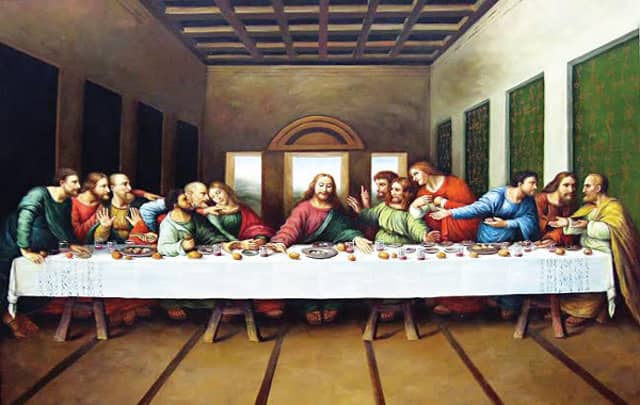
Jesus arranged that the celebration of his memory would be in a meal: ‘Do this in memory of me’
The risen Lord was recognised by two disciples on the road to Emmaus at the breaking of bread.
And would you believe what he asked of the dumbfounded apostles when he appeared to them in the Upper Room: ‘Have you anything here to eat?’
This theme of food continues into the Acts of the Apostles.
The breaking of bread was one of the cornerstones of the early community.
And when Peter was establishing his credentials as a witness his claim was: ‘We have eaten and drunk with him after his resurrection from the dead’.
That day when Jesus fed the multitude - as we heard in last Sunday’s gospel -could be described as a summary of his mission.
He first welcomed the crowds even though they were wrecking his plan for a day retreat and rest with his apostles.
He taught them about the kingdom of God.
He brought healing we are told to those who needed it and he fed them in their hunger.
He ‘took the bread and broke it and gave’ it to feed the multitude.
This welcome to fellowship, this enlightenment, this nourishment and healing all happen again every time we celebrate the Eucharist. Praise God!