

Ulster University's vice chancellor believes a tuition fee increase would aid Derry campus

Professor Paul Bartholomew believes it would help student numbers
Ulster University’s vice chancellor would support the increase of university tuition fees to over £9,000.
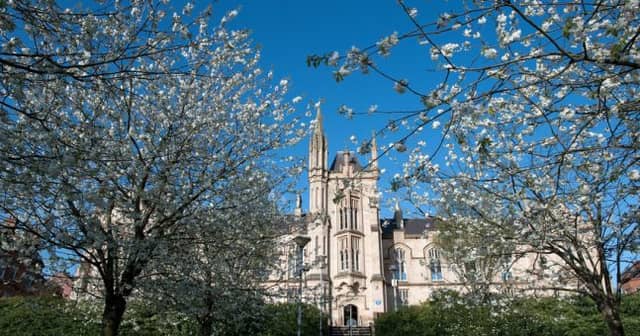
Professor Paul Bartholomew stated his support for the idea while in conversation with Dr William Crawley at Derry’s Ulster University Magee campus.
The current undergraduate tuition fees at Ulster University are £4,750; however, Professor Bartholomew believes the increase will help expand the number of students on the Derry Campus.
He said: “Back in 2011, there was a divergence in the UK funding system and the Northern Ireland funding system. Whereby this white paper in 2011/12, English institutions could kind of broadly take as many students as they wanted, but for that, fees went up to £9,250.
“Higher education is a dissolved matter, and here in Northern Ireland that didn’t happen; instead, that was split between student contribution into the system and the Department for the Economy.
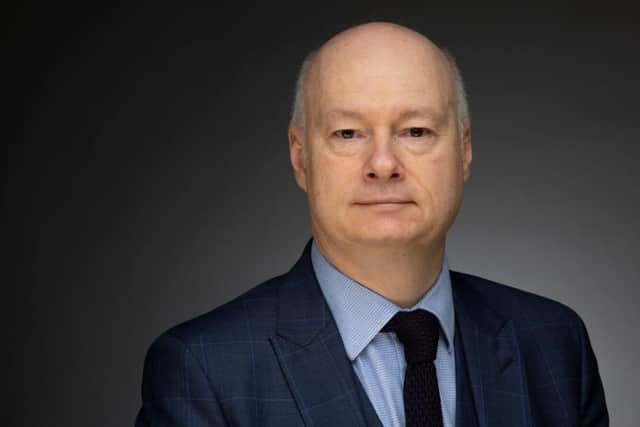
(Professor Paul Bartholomew)
The Ulster University Magee Taskforce was established in March by Economy Minister Conor Murphy to develop and oversee an action plan to expand Ulster University’s Derry~Londonderry campus to 10,000 students, under the stewardship of Stephen Kelly.
The taskforce released their interim report that suggested it could meet this target by 2032, with a significant investment of £700 million.
Professor Bartholomew expects an uptake of student applicants for universities across the United Kingdom in the year 2028.
And he believes the increase in student tuition fees could help the expansion of the university and allow for sustainable planning.
He said: “If we look at the English model, it is tempting to think that the English model raised fees and universities got more money; they did get a bit more money but not as much as people think; the tripling of fees didn’t mean that universities got triple the money; it meant the government didn’t have to subvert them, but there was a bit of an increase.
“The main prize in relation to what happened in England is the monies became consistent monies; prior to that money being allocated by hefty, you could have a funding round that did a clawback midyear, and actually universities didn’t know what money they were going to get from year to year and couldn’t plan on a long-term basis, so the real prize in relation to that system has actually been stability of money to allow people to invest in long-term capital projects.”
Professor Bartholomew explained that during the teacher-assessed period of grades, during the COVID period there was a ‘four-figure flight of students’ to Belfast, so there is a future focus on making regional campuses desirable, including Magee.
In Scotland, the universities currently charge Scottish nationals £1,820 for an undergraduate degree.
However, Professor Bartholomew believes that students can benefit from the increase in tuition fees.
He said: “Universities would get no more money; the entity that would get more money would be DfE; they wouldn’t be putting half the amount of fees on behalf of students; that is a real opportunity to power social mobility; it is a real opportunity to address student poverty; it is a real opportunity to ensure that students don’t have to keep doing these part-time jobs while they are trying to study, and that has to be the prize that is pushed out more.
“There is a sense in some ways that we are saying, put up fees so that universities can have more money, but that is not the prize here; it won’t happen. The prize is there is something else we can do with the money that would actually help students in the here and now, but we aren’t really seeing a great appetite for it; there are very limited opportunities to generate the ways to pay for it, as you say.”