

Derry firm among recipients of controversial Renewable Heat Incentive scheme

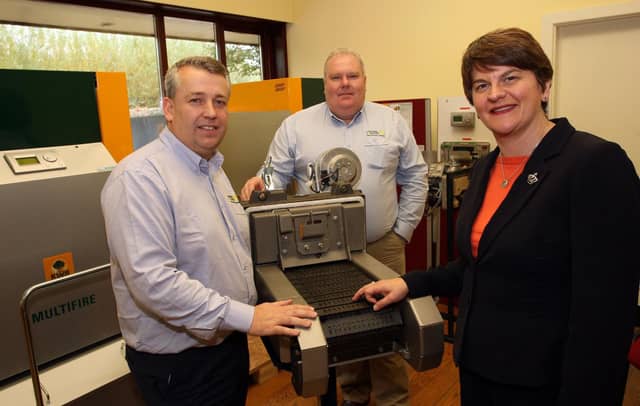

A Derry company was among those to benefit from the delay in bringing the controversial Renewable Heating Incentive (RHI) to an end last year.
The political fallout from the scandal surrounding the mismanagement of the RHI scheme has sparked a crisis in the Northern Ireland Assembly.
First Minister Arlene Foster is facing calls to resign amid claims that taxpayers will have to pay an £400m over the next 20 years because of the botched scheme.
The RHI scheme was set up in 2012 by the Executive to help to increase consumption of heat from renewable sources.
It was run by the Department of Enterprise, Trade and Investment (DETI) of which Mrs Foster was the Minister.
The RHI offered a financial incentive for businesses and other non-domestic users to install renewable heat systems on their premises.
The original budget for the scheme was £25m over four years.
However, there was no cap on the subsidy payments which effectively meant the more heat you generated, the greater the subsidy you were paid.
In a TV interview last week, former DUP Minister, Jonathan Bell, who took over from Mrs Foster at DETI in May of last year, said he was told by his officials that the scheme needed to be closed down because of spiralling costs.
Mr Bell said he wanted the scheme to be amended from October 1 last year to reduce the subsidy rate.
However, he claimed that he was told by his special adviser that other members of the DUP did not want the scheme altered.
The delay in making amendments to the subsidy rate, which were eventually introduced in mid-November last year, led to a huge spike in the number of applications to the RHI scheme.
There were 429 new applications in October and 452 in November.
It has been claimed that the applications during those two months could drain the public purse of £485m.
There have been calls for details of all those who successfully applied to the scheme to be made public.
However, the Derry News can today reveal details of one local company who successfully applied to the scheme last year.
Original Heating, which is based at Culmore, designs and supplies biomass heaters.
Biomass is organic products which can be burned to generate electricity.
Eddie Meenan, a director of Original Heating, told the Derry News that they made an application to the RHI scheme on November 1 last year.
Mr Meenan said the application was successful.
However, he said that his company had not yet drawn down any money from the scheme because of a major fire at their base earlier this year which destroyed some of their equipment.
There is no suggestion of any wrongdoing on the part of successful applicants to the RHI scheme.
The controversy surrounds the mismanagement of the scheme by politicians and governments officials and the subsequent cost to the public purse.
It emerged at the weekend that the Department of the Economy has written to businesses in receipt of subsidies under the scheme informing them that they have been given until early January to decide if they will allow their names to be published.
If they agree, both the company name and the name of its owner would be put on the public record.
Information about the accredited boilers and the amount of subsidy being generated could also be given out.
The Department of the Economy said the step was being taken in the ‘interests of openness and transparency’.
Pictured above - First Minister Arlene Foster, who was then Enterprise, Trade and Investment Minister, pictured with (left to right) John Gilliland and Eddie Meenan, directors of Original Heating Ltd, during a visit to the Derry company's headquarters in 2014.