

Coroner issues stark warning about Tramadol following death of Derry man
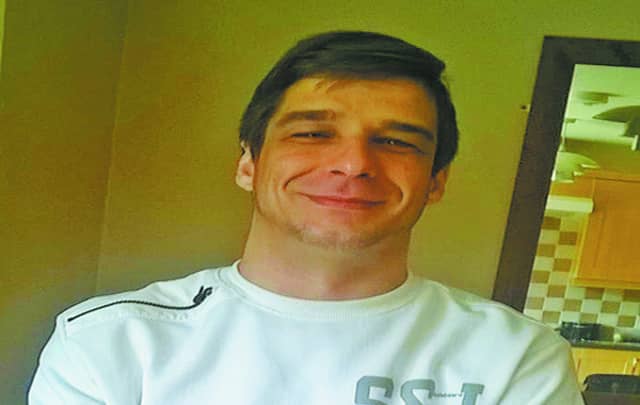

The prescription drug Tramadol is causing more deaths in Northern Ireland than heroin, the inquest into the death of a Derry man was told this week.
Stephen Booth was 33-years-old when he died of Tramadol toxicity combined with Alprazolam and Diazepam last July. Tramadol is a prescription drug that is an opoid pain medication to treat moderate to moderately severe pain while Alprazolam and Diazepam are used as calming aids for anxiety. Mr Booth, whose family home is in Old School Lane, Shantallow, had been living temporarily at the Methodist Mission in Crawford Square while awaiting permanent housing. He was found dead in his room at the Methodist Mission on July 2, 2016. Christina Booth, Mr Booth’s mother, spoke about her son at his inquest at Derry Coroner’s Court on Tuesday. She said that Mr Booth had been ‘very ill’ as a child and had part of his bowel removed, spending a year and a half in the Royal Victoria. She said that he complained of constant pain all his life and told her he had pains in his ‘back, chest and heart’. Ms Booth said she had seen her son the day before he died and she was aware that he would take Diazepam. She said that she also knew that he had smoked cannabis but believed that he stopped and became aware that he was taking prescription medication. Ms Booth said Mr Booth had been living in a flat in Waterloo Street but that he was ‘innocent, very vulnerable and very easily led’ and that he had gotten into ‘bad company’. She said that people were using Mr Booth’s flat for drinking. Ms Booth said that Mr Booth had told her he had been the victim of an attack some time before his death and that he was stabbed in the thigh after being ‘jumped’. She said that she got Mr Booth to leave the flat in Waterloo Street and had told him he would need to find a ‘stable home’. She said he had been ‘sofa surfing’, staying here and there, until he went into the Methodist Mission in Crawford Square around a month before his death. Ms Booth said that she was aware by the sound of her son’s voice if he was taking prescription medication. She said she knew he wasn’t getting the medication from his doctor but she was not aware that he was taking Tramadol. “I would know right away when he was on anything and I came down on him like a ton of bricks,” she said. Ms Booth said that when Mr Booth had lived with her for three months a while before his death and had been ‘off everything’ but she said that he didn’t understand the dangers of Tramadol. “A lot of people die from [Tramadol],” she said. “It’s been terrible. Never in a million years was I expecting him to die,” she said. “He was with his brother on the Friday night and said he would go back over on the Saturday but he was found dead. He was just getting his life together and trying to sort himself out.” Coroner Paddy McGurgan thanked Ms Booth for speaking about her son and said: “It’s not easy but it’s very, very important that the public get the message by hearing stories like your own with the hope that something positive comes of Mr Booth’s passing.” The evidence of a police officer who dealt with Mr Booth’s death was also read to the court. The officer said that Mr Booth was found face down on his bed in the Methodist Mission and was found to have ‘a damaged knee’ from the stab wound sustained a ‘week or fortnight’ prior to his death and ‘a small amount of blood’ coming from his nostril. Prescription medication blister packs and tablets were recovered from the scene. Another officer, a detective, gave evidence detailing an investigation into the ‘drug element’ of the sudden death acting on information that led police to believe someone had illegally supplied Mr Booth with the drugs. An arrest was made and police interviews were conducted and the file is currently with the Public Prosecution Service and has not yet come before the court. However, the detective said that police could not prove a ‘solid link between the suspect’s involvement in this instance’. She added that in her experience as a uniformed police officer for five years and one year as a detective, ‘drugs are a massive problem in the city with Tramadol becoming more evident’. She said that people were under the impression that prescription drugs are not as harmful and that the public ‘doesn’t understand the dangers of different drugs’ and that many people ‘might not even know what they’re taking’. Support workers from the Methodist Mission also gave evidence at the inquest. A senior support worker told the Coroner’s Court that he had spoken briefly to Mr Booth the night before his death. He said that Mr Booth had been watching TV then left the shelter after 9pm with another man who was going to collect the winnings from a bet. They both returned around 2.20am and Mr Booth had asked for some milk at the front desk so that he could make a cup of tea. A short time later, the support worker said that he could smell cannabis in the area where Mr Booth’s room was and mentioned to him that if he was using it that he could lose his bed in the shelter if this was discovered. The support worker said that he was very surprised to hear what had happened to Mr Booth as he was not aware he had an issue with prescription drugs. He said that the Methodist Mission houses 47 homeless men and ‘more often than not it’s a full house; it’s very busy and always has been’. The support worker said that he had noticed over the 12-year period working there that the men staying there had gone from mainly older men with drink problems to younger men with drug issues. He added that ‘legal highs’ were a problem for some time but that prescription medication had become ‘very popular’ with drug users. Speaking about Mr Booth, he added: “I liked him, he was troubled but he was a nice guy.” The support worker and counsellor who found Mr Booth’s body told the court how she had found him. She said that Mr Booth had failed to turn up for a meal at 6.30pm and that she had not seen him all day, which was unusual. When she went to his room, she knocked and called his name and then tried the door but it was locked. She used a master key to gain entry and found Mr Booth’s body. She described him as ‘grey, cold and stiff’ and said that she knew he was dead but called his name a number of times in the hope that her fears were unfounded. She said he was lying face-down on his bed with his head turned slightly to the side, wearing shorts and a t-shirt. She said that it appeared that he had died as he lay watching TV. The support worker and counsellor said that she has also experienced an increase in the use of prescription medication and said that she works with men addicted to these substances. Professor Jack Crane, State Pathologist for Northern Ireland, presented the findings of the autopsy performed on Mr Booth by Dr Alastair Bentley to the Coroner’s Court. Coroner McGurgan told the court that Professor Crane has a particular interest in ‘the difficulties of Tramadol’ and has been seeing increasing deaths in Northern Ireland from its use. He said that the findings of the post mortem were that Mr Booth’s death was caused by a dangerous level of Tramadol in his system and that this was exacerbated by the use of the other two drugs, Alprazolam and Diazepam. However, they were both at an acceptable dosage. Professor Crane said that Tramadol used above a therapeutic level would give rise to ‘toxic symptoms’ such as agitation, hypertension, increased heart rate, seizure, coma and respiratory depression. He said that the use of Alprazolam and Diazepam would have made Tramadol ‘more potent’. He added that cannabis was also detected in Mr Booth’s system but said that this may still be detected in the body a number of days after use. There was no alcohol present in his body. The superficial stab wound on Mr Booth’s knee was found to play no part at all in his death. Professor Crane said there has been ‘a significant increase in the number of fatalities caused by this drug’ particularly when taken with alcohol or other drugs that affect the central nervous system and Alprazolam and Diazepam are two such drugs. He added that Tramadol is ‘quite widely used and misused’ and that it appears that Mr Booth was not prescribed the drugs. Professor Crane said: “Some of these drugs, when taken in isolation, may not pose any risk of toxic effects but people don’t realise that combining this cocktail has very significant effects indeed. “We are seeing many fatalities through the combined use of these drugs because they are prescription drugs; people assume they are relatively safe. They are when taken in the proper dosage but when taken excessively or in combination with alcohol or other drugs, serious risks arise. “Particularly with Tramadol, which is an opoid drug, if taken regularly you build up a tolerance but for people not used to taking it, that tolerance is absent. The drug may have a more potent effect on a person that they may not fully appreciate.” He continued: “We are seeing more deaths in Northern Ireland than from any other drug; that includes heroin and morphine. “Because of this I have brought my concerns to the Chief Medical Officer of Northern Ireland. Part of the difficulty is that Tramadol is not being obtained on prescription for prescribed medical complaints, it is being obtained from illegal sources and is being used and misused inappropriately.” Coroner McGurgan agreed, saying: “It is only through the widespread publicity of tragedies such as this that the public will take on board how dangerous this can be.” Professor Crane said that in many instances of death there has been no deliberate attempt made by the person to take their own life and it has been accidental overdose that has caused death as people are ‘unaware of the potential lethal effects’ of Tramadol, particularly when taking a combination of drugs and/or alcohol. He said there needs to be a ‘multi-agency’ approach to educating the public about Tramadol. When asked if she wished to ask Professor Crane any questions, Mr Booth’s mother asked how her son died and if he would have suffered or ‘did he just fall asleep’. Professor Crane told Mrs Booth that her son would have gradually lost consciousness and ‘would’ve appeared to have been asleep’ before slipping into a coma. He said that after losing consciousness, that consciousness becomes so deep that he would have stopped breathing then died. Professor Crane said that people who have died through the use of Tramadol would appear, at first, to be sleeping. “People around them would assume that they are sleeping but they are going into a coma and unless they receive urgent and prompt medical attention, they won’t come out of that.” Coroner McGurgan offered his condolences to the Booth family and said that Mr Booth was ‘much-loved young man’ who was the eldest of a large family. He said that it is ‘all too often’ that he sees a grieving mother having to bury her son who has ‘succumbed to the scourge of society; drugs’. He said that Professor Crane is so concerned about the increase in Tramadol deaths that he is taking the matter up with the Chief Medical Officer of Northern Ireland and that these are concerns that he, himself, would echo. Coroner McGurgan also agreed that a multi-agency approach in tackling the problem of Tramadol was needed. He said that the inquest had heard from three people ‘at the coal face, dealing with this problem on a daily basis and all indicated that they noticed a rise in prescription medication problems and abuse’. He added: “The public need to understand just how dangerous taking a cocktail of medication can be. Mrs Booth has asked that the public pay attention to the death of her son and realise when they take medication not prescribed to them, particularly combined with other drugs or alcohol, they are risking death.” Coroner McGurgan said that Mr Booth was a 33-year-old man who was ‘trying to turn his life around’ and ‘sort himself out’ when ‘a cocktail of drugs led to his death’. He added: “The public really do need to take this on-board and if anything positive can be taken out of this tragedy it is that someone’s life could be saved by reading about this.”