

Archbishop Martin reflects on Pope Leo XIV message on artificial intelligence
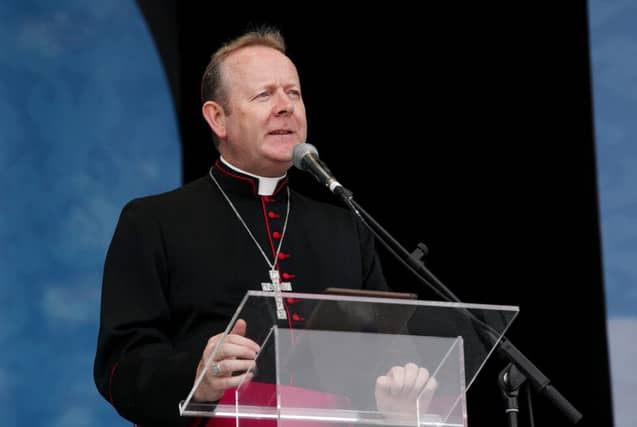

Church leaders prepare to observe the sixtieth World Day of Social Communications this Sunday
Archbishop Martin has issued a comprehensive pastoral reflection ahead of this Sunday’s 60th World Day of Social Communications, praising Pope Leo XIV’s "courageous choice" to dedicate his annual message to the rise of artificial intelligence (AI).
The statement addresses the deep ethical and spiritual challenges posed by digital advancement, warning against a world where technology can clone human voices, simulate affection, and manipulate images.
Archbishop Martin calls on families, schools, parishes, and public figures to actively protect human dignity in a rapidly accelerating digital landscape.
Archbishop Martin emphasized the core message of the Holy Father, stating: “In a nutshell, Pope Leo XIV is asking us to preserve human voices and faces. He is speaking into a world where technology can now copy a voice, create a face, imitate emotion, and produce words that sound human. But the Pope asks us to go deeper and think about … What is a person? What does it mean to truly communicate?”
The reflection highlights that a human being must never be reduced to a profile, statistic, screen-name, or mere data. Pointing to the foundational Christian belief that the Word became flesh, the Archbishop noted that God did not communicate from a distance, but with a human voice and face.
Addressing the mechanical nature of digital platforms, Archbishop Martin said: “Christian communication should never be cold, manipulative, faceless or mere strategy. It must seek to carry something of the way Jesus communicated: truthfully, personally, mercifully, courageously.”
While acknowledging that AI and digital tools are beneficial for learning, creativity, and accessing knowledge, the statement warns against surrendering human intellect and conscience to automation.
“One of the Pope’s strongest warnings is that we must not give up the human capacity to think, judge and discern,” Archbishop Martin noted. “AI can produce polished answers. Algorithms can feed us what holds our attention. Social media can reward anger, speed and reaction, but none of these can replace conscience, wisdom and the slow work of truth.”
The Archbishop concluded with a specific call to action for different sectors of society, invoking the legacy of Saint Carlo Acutis, who famously used early digital tools to foster genuine connection.
“Technology becomes dangerous when it becomes a substitute for real presence, real friendship and real communion,” the Archbishop warned. “Technology is at its best when it helps us to see Christ more clearly, and to love one another more deeply.”