

Young breast cancer survivors in NI describe ‘living life to the fullest’

One in eight women in Northern Ireland will be diagnosed with breast cancer in their lifetime and 310 women die from breast cancer each year.
Women under 40 diagnosed with breast cancer have described “living life to the fullest” and the unique difficulties that come with being a younger cancer survivor.
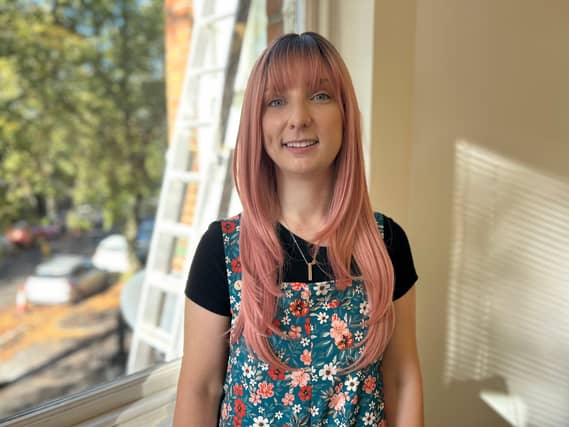
Entering breast cancer awareness month, two women from Belfast have discussed their cancer, including Emma Irvine, 29, who has been placed in medically induced early menopause as part of her treatment.
One in eight women in Northern Ireland will be diagnosed with breast cancer in their lifetime and 310 women die from breast cancer each year in the region.
Ms Irvine was first diagnosed with breast cancer when she was 26, and after having a mastectomy said it felt as though life “went back to normal”.
She said: “At that point I didn’t use a lot of cancer services and stuff because I was like, ‘oh, I’ve got off really lightly and I’ve caught it early and it’s fine and I can move on’, and I was told very low risk of it coming back.”
In November 2025 Ms Irvine found lumps in her armpit that were cancerous and “aggressive”.
She underwent five months of chemotherapy including 15 sessions of radiation and is now on four different long-term maintenance therapies.
“So this time’s definitely been a lot more intense,” she said.
“It’s been sort of nine months of active treatment, which has been difficult after I thought I was sort of done with the whole thing, it’s definitely been a rough journey.”
Ms Irvine said being diagnosed with cancer in her mid 20s was something she “never thought would happen”.
“I didn’t really know that you can get breast cancer that young,” she said.
“I’ve heard of a few people, but it would be very much the exception, not the rule.”
She added: “When the woman started doing the ultrasound, her manner changed, and she started talking about lots of biopsies and clips and stuff and I sort of knew at that point, I was like, ‘this is cancer’.
“It wasn’t something that was on my bingo cards for that year by any stretch.”
Ms Irvine, a doctor, who is training to be an anaesthetic consultant, said she has no evidence of cancer at the moment, but because it can lie dormant she will “never be told I’m cured”.
The treatment she is on to prevent recurrence involves being put into medically induced menopause, which she described as “rough in your 20s”.
“Things have moved forward, and you know, as much as the side effects aren’t pleasant, you just have to be grateful that you have those options that other people didn’t have,” she said.
She added: “I still have all those things I want to do, and until something comes and stops me, I’m going to live my life to the fullest and it’s given me a real appreciation for everything.”
She said the experience makes “you just appreciate everything that you took for granted before”.
“Even having my eyebrows again, having my eyelashes, like little things that that just a month ago even seemed like a faraway goal, and every day I’m just feeling more like myself again and getting back to the life that I want to have,” she said.
Ms Irvine attends a Cancer Focus support group specifically for women under 50.
“You go up to the waiting rooms for chemo and for the oncology appointments, and you’re the youngest person there, and you get the puppy dog eyes, or people think you’re there with your mummy or your granny,” she said.
“So having women your own age that get it, and the challenges are so different, like the fertility stuff, the early menopause.”
She added: “Just having somebody that totally gets it and you can be open and honest with has been really invaluable.”
Ms Irvine’s husband also attended counselling through Cancer Focus, and she said cancer was something a household “goes through together”.
“Having somebody impartial that he can go and just talk about how he’s feeling about the whole thing, rather than speaking to me and worrying he’s going to upset me, he found that like so helpful,” she said.
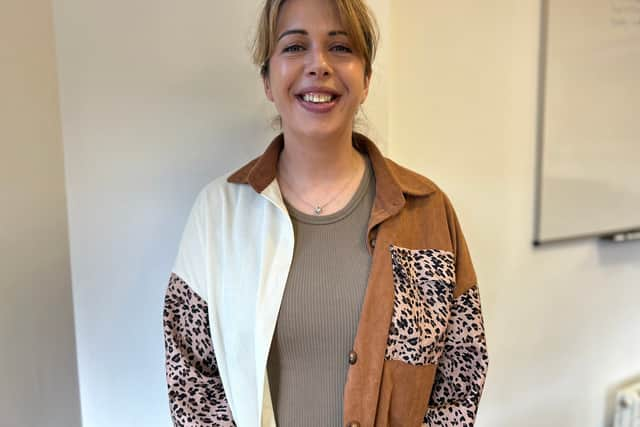
Holly McKeown was diagnosed with breast cancer at 38 and despite her age said “deep down” she knew it was cancer when she sought medical advice.
She said that emotionally, it has been “tough”.
“I was worried about telling my daughter because she had lost her grandfather when she was 13 to cancer,” she said.
“I have a get-up-and-just-get-on-with-it attitude, I did struggle emotionally sometimes, but I used to take the dog for a walk, and I relied heavily on my friends and my family and my support network really, and leant on them.”
Ms McKeown took up running for the first time, before starting radiotherapy, after reading about exercise helping with the side effects of treatment.
“So couch to 5k, I started in the early morning in the park because I didn’t want anybody to see me running,” she said.
“It was awful at first, but then after that I graduated and I am in my running club, Monkstown Spartans, and I love running.
“I’ve run 10 half marathons, two full marathons, and other distances in between and, honestly, it’s really beneficial for me.”
She attended a retreat with Cancer Focus to connect with other women who have cancer.
“I’ll never be who I was pre-cancer, don’t think I want to be anyway,” she said.
“But it’s just really understanding and having people who know what you’ve went through, because obviously people can be sympathetic and empathetic, but until you’ve actually been through that yourself, you can’t really understand what it’s like.”
Ms McKeown advised all women to “get to know your own breasts” and check them regularly.
“You’re better off going over something that could potentially be nothing than it being too late and it being too late to be diagnosed,” she said.