

School meals ‘not a luxury’, watchdog warns, as prices set to increase
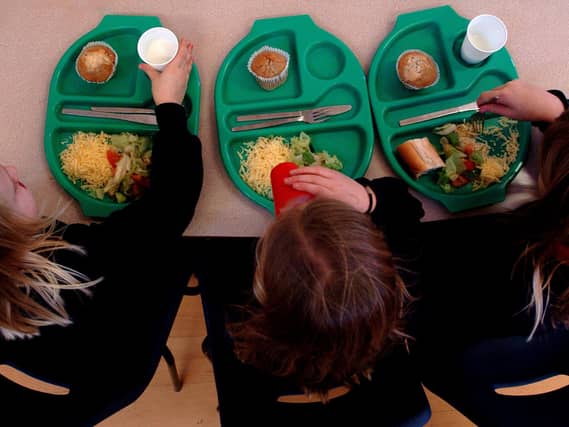

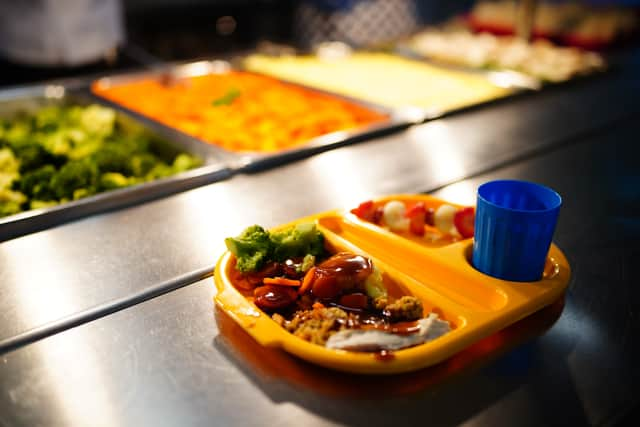
School meal prices will rise in January 2027 by 30p, meaning primary and special school students will pay £3.40 per meal.
Northern Ireland’s children’s watchdog has warned that “school meals are not a luxury” as prices are set to rise across the region.
Chris Quinn, Northern Ireland Commissioner for Children and Young People, said children “did not create the financial crisis in education and they should not be expected to pay the price for it”.
Charges for after-school music classes and offering parents a financial payment rather than commissioning a taxi service are also among the cost-saving measure being implemented by the body responsible for delivering education services in Northern Ireland
The Education Authority (EA) has said it is in “an exceptionally challenging financial position” whereby it is being required “to deliver important services to children and young people with insufficient funding”.
Stormont Executive parties have not agreed to a budget seven months into the current financial year as they argue they cannot do so with the financial package being made available by the UK Treasury.
Departments have been operating on contingency budgets of 95% of last year’s spend, with the EA highlighting that that does not cover inflationary pressures – including rising school energy costs.
The EA says it faces further pressures from the full-year costs of previous decisions on public sector pay or areas of rising demand across services including SEN provision.
The EA board said the announced cuts were a result of “difficult decisions which sought to balance our commitment to children and young people alongside the requirement to live within the funding allocated for the year”.
School meal prices will rise in January 2027 by 30p, meaning primary and special school students will pay £3.40 per meal and nursery and pre-school £3.30.
There will be a 15% increase in prices for post-primary schools.
The EA said these charges “will remain well below” the current price of producing a school meal which is £5.28.
Free school meals will not be impacted.
Mr Quinn said he is “genuinely flabbergasted that families are being asked to absorb another significant increase in the cost of school meals”.
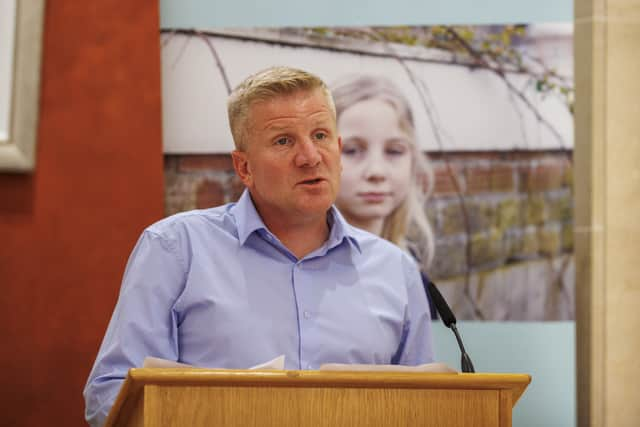
“A primary school dinner which cost £2.60 at the end of last year will now cost £3.40. That is an increase of almost 31% in around a year,” he said.
“What makes this particularly difficult to accept is that it comes shortly after schools were directed towards energy-saving guidance advising people who were cold to wear more clothes rather than turn up the thermostat.
“I strongly advised the Education Authority to remove that guidance and also made clear that responsibility for financial pressures in education should not be transferred to children and families.
“The same principle applies here. Children did not create the financial crisis in education and they should not be expected to pay the price for it.
“School meals are not a luxury. For many children they are an essential part of the school day and these increases will hit families already struggling with the cost of living the hardest.
“Research that we published last year showed that 41% of children living in poverty do not qualify for free school meals. EA have clearly overlooked or ignored this worrying statistic.
“The Department of Education and the Education Authority need to explain how these increases were arrived at, how their impact on children and families has been assessed and, crucially, what is being done to stop the burden of an inadequate education budget continually being passed down to children.”
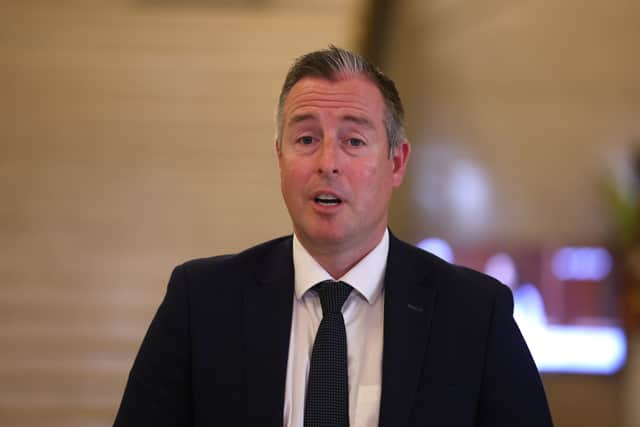
Education Minister Paul Givan said he is “concerned” about the impact of the measures on families.
He told BBC Radio Ulster’s Good Morning Ulster programme: “Today is disappointing that the Education Authority have been left in a position where their board have worked through a series of measures to try and save money because of the financial pressures that we face within the Department for Education and within EA.”
He added: “I make the case at the Executive for a fair allocation out of our existing resources within Stormont, but I also make the case to the Secretary of State as recently as last week that the inadequate funding to the Executive, collectively, is bearing down on a huge number of public services in Northern Ireland, and education is often bearing the greatest burden whenever it comes to these kind of cost-saving exercises that need to be put in place.
“So, this isn’t something that I support. I don’t want this to be introduced but it is a result of the Education Authority not having sufficient funding in order to maintain the services at the level that we would all want them to be.
Mr Givan referred to measures taken in the Department of Infrastructure, headed by Sinn Féin’s Liz Kimmins, to freeze bus fares and claimed “other departments have balanced their books on the back of the Department for Education”.
“That is the reality and it’s a point that I have made around a fairer allocation of funding whenever this is brought to the Executive – that it needs to be based on actual need and choices have to be taken by the Executive collectively,” he said.
“And, year after year, education, when it makes the case, does not get the appropriate level of funding.”
Other measures announced by the EA include a new taxi provision to tackle transport costs, whereby parents will be provided by payments rather than the body commissioning taxi services.
There will also be a new charging structure for music classes and the ending of free transport for some music activities.
Schools will also see a “significantly reduced” delegated expenditure limit, meaning a cut in the amount of goods and services schools are able to buy without prior EA approval.
The body has also warned that its contribution to the school milk subsidy scheme is reporting a significant shortfall in funding, projected to be at least in excess of £100 million.