

‘Not enough money in the pot’ to deliver a balanced budget, says O’Neill
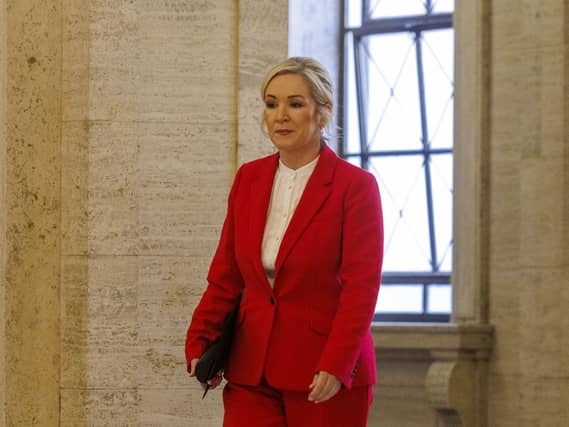

First Minister Michelle O’Neill also challenged Prime Minister Andy Burnham to step in.
The sums “simply don’t add up” to agree a Stormont budget, First Minister Michelle O’Neill has said.
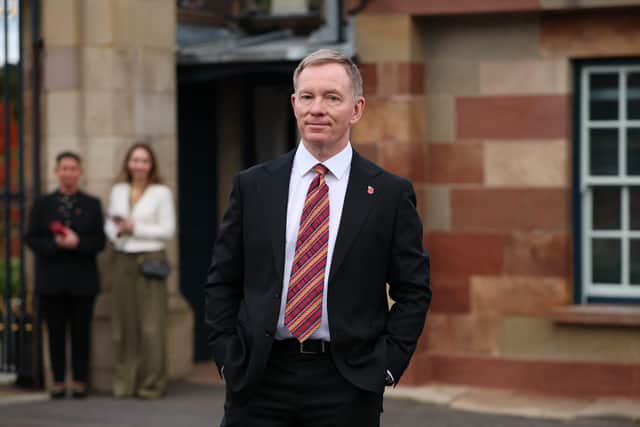
Ms O’Neill also challenged Chief Secretary to the Treasury Emma Reynolds and Prime Minister Andy Burnham to intervene, saying she believes they have gone as far as they can with Secretary of State Sir Chris Bryant.
The First Minister was speaking after a meeting of the Stormont Executive which she described as “constructive”, but reiterated the long-held unanimous view of multi party ministers that they do not have enough money to deliver a balanced budget.
“Quite simply, the sums do not add up,” she said.
“There is not enough money in the pot in which we can deliver a balanced budget that allows us to deliver on public sector pay and invest in public services.
“That’s not good enough for the people here and, quite frankly, my opinion is that the Secretary of State is not listening, and what we now need is a direct discussion with the Chief Secretary to the Treasury.”
Pressed on the long-running discussions, Ms O’Neill said Sir Chris is asking them to agree a budget that “simply cannot add up”.
“We’re not giving up, but what I am saying is it’s very clear that we’ve taken this to where we can with the Secretary of State and we now need it elevated, and we need the Chief Secretary to the Treasury, and even the Prime Minister if he wants to get involved because they need to listen to what all Executive ministers collectively are saying, that they simply cannot make this add up,” she said.
Earlier, Stormont Finance Minister John O’Dowd set out his concerns over the “widening disparity” in how Northern Ireland is funded compared with Scotland and Wales.
However, Sir Chris hit back, stating the region is “funded above its independently assessed level of need”.
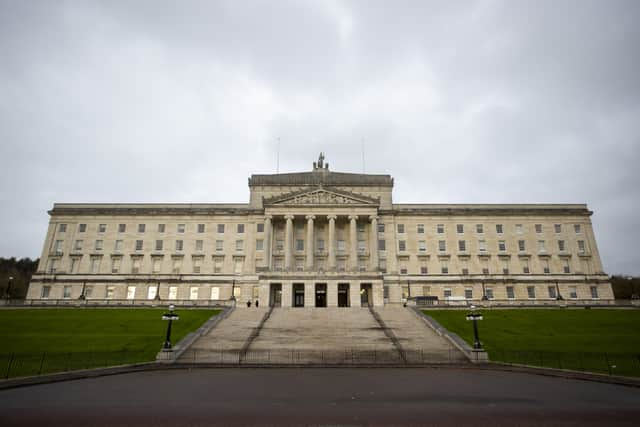
Ministers in Belfast have said they cannot strike a budget for 2026-27 without additional financial support from the Treasury.
The UK Government has offered about £1.5 billion in extra funding over the next three years, with £525 million delivered this year, in an effort to help balance the books, but Stormont’s leaders have said that is not enough.
It is understood the extra funding would be dependent on Stormont committing to raise about £200 million annually of its own revenues.
Last month’s UK Budget allocated a further £131 million of extra funding to Northern Ireland in the current financial year and a total of £270 million across three years.
However, Mr O’Dowd said the relative funding gap between Northern Ireland and Scotland and Wales is “growing”.
He said: “Throughout engagements with the British Government, I have repeatedly made the comparison between our level of funding and that afforded to our devolved colleagues in Scotland and Wales.
“As part of the autumn Budget, Treasury provided its assessment of our relative funding per head position across the spending review period.
“Treasury’s own assessment shows that we are underfunded, relative to our current estimate of need, in 2027/28 and 2028/29.
“My officials’ analysis also indicates that we are underfunded this year, and therefore in each year of the spending review.”
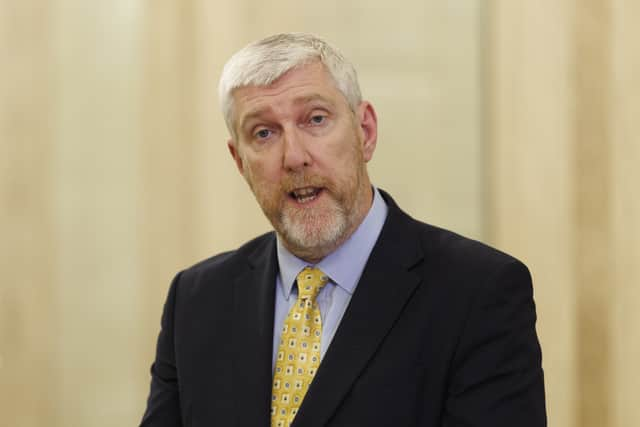
The minister added: “Around one third of the currently proposed financial package from the British Government is required on its own to merely bring us to the 124% level of need.
“The package, in its totality, only provides the additional funding that we would receive in one year, if funded on a comparable basis to Wales.
“This demonstrates how the proposed financial package fails to meet the test of fairness and equal treatment of families, workers and businesses here compared to Wales and Scotland.”
The Sinn Féin minister said there was a duty on the Westminster Government to “fairly fund us”.
He added: “I am writing to the Chief Secretary to the Treasury and Secretary of State setting out my concerns on this widening disparity.
“We need to move beyond the cycle of short-term financial interventions that have constrained long-term planning and investment in public service transformation.
“People here want to see public services properly funded.
“They want families to be able to access the support they need, and they want the investment that will help grow our economy.”
In a social media post, Sir Chris responded: “Let’s be clear, NI is funded above its independently assessed level of need.
“While relative funding levels fluctuate across the UK as spending plans change, the NI executive has been offered an additional £1.5bn over the next three years, which would mean NI remains funded above 126% in all years of the Spending Review.
“I have been engaging extensively with the Executive and with party leaders to reach an agreement.
“As we have repeatedly said, public finances are particularly tight.”