

A5 is ‘worst road in Ireland’ for fatalities says Sinn Fein MLA
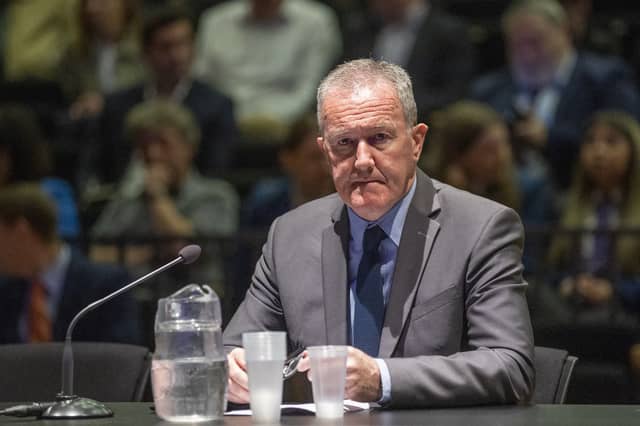

Continued delay on the A5 road project is “hugely frustrating”, and the road is the “worst road in Ireland for deaths” the Minister who greenlit proposed upgrades has said.
Sinn Fein MLA Conor Murphy was Regional Development Minister in 2007 when the plan to upgrade the A5 to a dual carriageway was first approved.
The A5 – which connects Derry City in Co Londonderry to Aughnacloy in Co Tyrone – has seen repeated calls for improvement due to the high volume of fatal traffic collisions occurring on the road.
Despite gaining approval in 2007, the scheme has not been able to proceed, in part due to legal proceedings taken by an opposition group called the Alternative A5 Alliance (AA5A), founded in 2010.
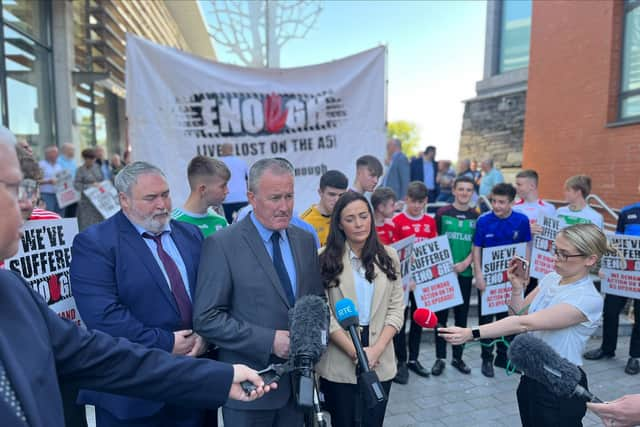
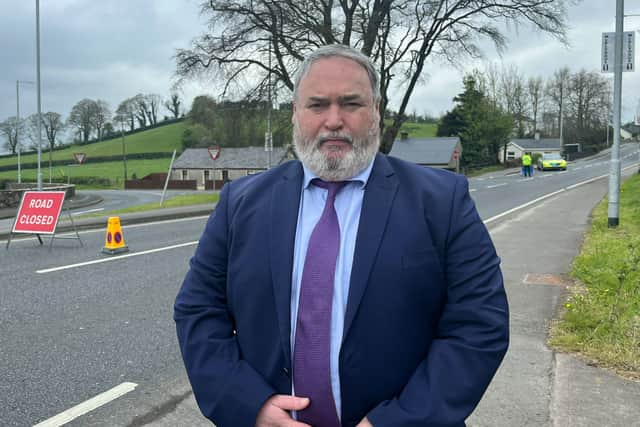
Speaking to reporters before the inquiry, Mr Murphy said work on the road needs to “move quickly”.
“It is hugely frustrating that over this period of time, we’ve had multiple deaths on this road when this road should have been built, contracts were signed 16 years ago,” he said.
“And it is very frustrating, not just for myself, but for the people that you see here gathered, that we’re still discussing the beginning of the work on this road. It needs to move on, it needs to move on quickly.”
Mr Murphy said the A5 was the worst road on the island of Ireland in terms of number of fatalities.
“The number of deaths on this road has been shocking, and it’s no secret to say that this is the worst road in Ireland for deaths,” he said.
“And the work needs to get on and get done very, very quickly, so we end this catalogue of fatalities on the road.”
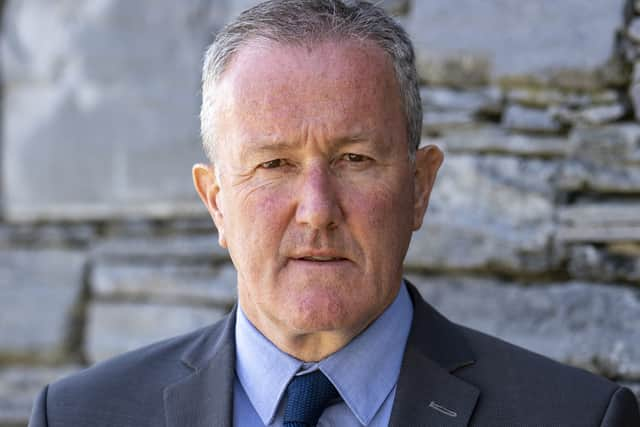
Mr Murphy said Sinn Fein is committed to funding the project, through cooperation with the Irish government and at a restored Stormont executive.
“Michelle O’Neill has been in dialogue with the Irish government as well, we’re very confident they will come back to the table in a very, I suppose positive manner, in terms of making a contribution to this project,” he said.
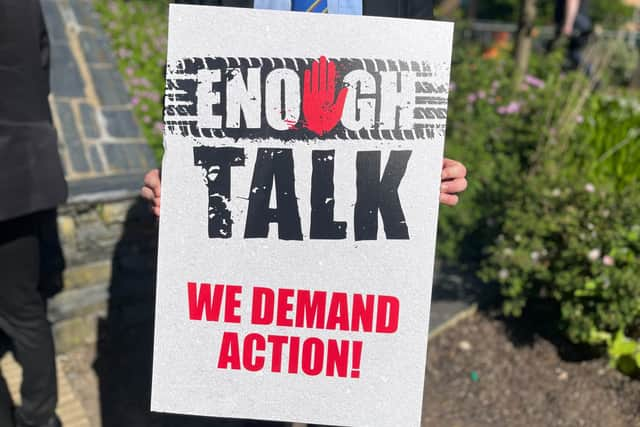
The group opposing the project, the AA5A, has raised concerns about land use and environmental impact stemming from the transformation of the A5.
A statement from the AA5A was read during the inquiry where the group said it did not oppose increased road safety measures, but the choice to turn the A5 into a dual carriageway, as proposed by the Department for Infrastructure (DFI).
“The Alternative A5 Alliance’s position has been this is over-provision, representing a disproportionate impact on the livelihood of affected landowners with significant long-lasting and irreversible environmental harm,” the statement read.
The inquiry was further told: “The alternative the Alternative A5 Alliance has consistently argued for is the use of two plus one overtaking opportunities with suitable bypasses.”
Sinn Fein MLA Colm Gildernew said “balance” needed to be maintained between the needs of the population of those objecting to the scheme.
“It has been very difficult to establish exactly who is behind the A5 Alternative Alliance, and I believe that this process today is very transparent in the sense that family members are standing up in front of the public telling their own stories about the loss that has been rigged upon their families,” he said.
“And I believe that there’s an onus on us all to respond to that and to ensure that the A5 is safe for this community and for those people travelling across this part of Ireland to do so safely.”
During the road safety module of the inquiry, families of those killed in road traffic collisions were invited to give evidence.
Mr Gildernew said the stories being shared by families at the inquiry were “harrowing”.
A further point of contention with the delay A5 scheme highlighted by groups in support of the project, is the disparity between road safety measures in the west as compared to the east of Northern Ireland.
Speaking to the inquiry, Retail NI Chief Executive Glyn Roberts said the project would help to address economic imbalances.
“The A5 is a crucial road network that connects the region as far up as Donegal with Belfast, Dublin, and the rest of the island of Ireland,” he said.
“One of the most common issues raised by many of our members is the economic imbalances which have persisted in Northern Ireland, largely on an ‘east-west’ basis. Over the years of peace, I fear we have never really got to terms with the issue and it will require significant investments in infrastructure to drive real change.
“I don’t think it is an exaggeration to say that this project would be transformational.”
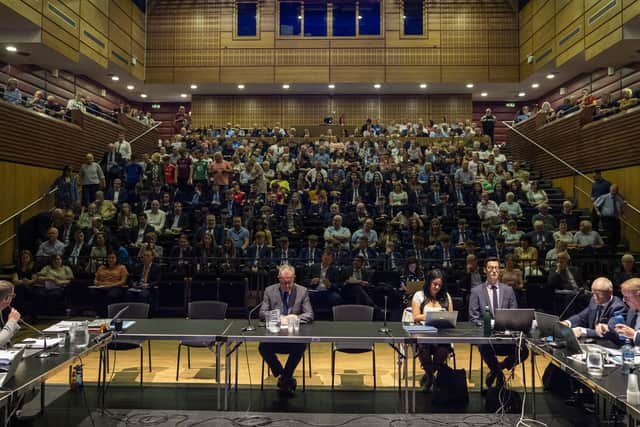
The meeting on Tuesday was the beginning of the second week of the resumed public inquiry, which will continue this week.